
Why is everyone suddenly talking about Tier Two disability supports and why is it important? Todd Winther investigates.
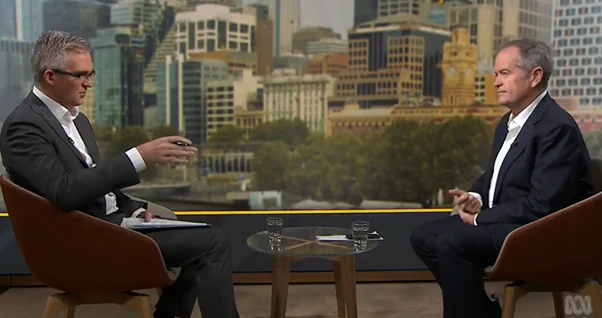
When the new NDIS Minister Bill Shorten appeared on Insiders a few weeks after the Labor Party's Federal election victory, I was waiting with bated breath. Finally, were we going to have an honest policy discussion about the NDIS on a mainstream political television show? And if so, what would that entail?
To my surprise, Insiders host David Speers asked a question about Tier Two, and I gasped. Shorten explained the concept of Tier Two and its overall importance. I've been writing about Tier Two a lot recently and it was finally on the policy agenda! So, what is Tier Two exactly, and why is it important?
What are the Disability Support Tiers?
You could be forgiven for thinking that the NDIS is available for everyone who requires disability support services. Especially given that Shorten's title is 'The Minister for the NDIS'. However, according to the NDIS website, only 8.5 per cent of those who classify themselves as disabled are eligible for the scheme. Contrary to popular opinion, the NDIS wasn't designed as a simple mechanism for anyone with a disability. The scheme was only intended for people who require the highest level of disability supports.
What is supposed to happen to the other 91.5 per cent who are not supposed to be eligible for NDIS funding? That's where the Tiers come in.
In the Productivity Commission report that instigated the formulation of the NDIS, it was recommended that disability support services be divided into three criteria: Tier One, Tier Two and Tier Three.
- Tier One is designed to focus on the broader community and targets everyone in the country to promote inclusion and the 'Social Model of Disability’.
- Tier Two provides targeted support for people with disabilities and their families to supply generalised information about disability support services throughout the community.
- Tier Three is designed explicitly for people who are eligible for the NDIS and uses a plan to receive appropriate funding using 'reasonable and necessary’ criteria.
Policymakers and politicians, in particular, have primarily focussed on the third tier, and sometimes they seem to forget that the first two tiers exist.
The importance of the first two tiers
The last 12 months have been dominated by discussions about whether the scheme is financially viable. Although Shorten's predecessor, Linda Reynolds, mentioned Tier Two occasionally, its importance never took hold.
Now that Tier Two is finally on the political agenda, it's time to seize the opportunity and have a sensible discussion about how both Tier One and Tier Two can contribute to the disability sector and the longevity of the scheme. Rather than solely focusing on the scheme and Tier Three, the first two tiers represent an opportunity for the wider community, not just those in the disability sector. We must work collaboratively to ensure the presence of those with a disability is entrenched and that we can thrive in the broader community.
Crucially both tiers aim to build capacity to ensure that the right supports are in place for people with disabilities. This principle acknowledges the neglected letter in the NDIS acronym and that the NDIS is an 'Insurance' policy at heart.
The Insiders conversation on Tier Two was primarily directed to an audience of people not directly involved in scheme policy. However, if the average viewer and member of the political class are aware of Tier Two's existence, perhaps we can finally discuss scheme sustainability seriously?
Support for people with disabilities goes beyond dollars and cents. Proper 'choice and control' means that we should seamlessly aim to achieve our goals alongside the rest of the community. That was the original intent of the scheme. It's time to return to this core principle.

Todd Winther
Todd is an NDIS subject matter specialist in home and living who provides training for service providers in housing policy and best practice, the NDIS in a public policy context and the social model of disability. Todd has two degrees in political science and contributed an essay to the 2021 anthology Growing Up Disabled in Australia. He has also had political commentary published in The Conversation, and multiple news outlets.