
When my sister, Camilla was born with Down syndrome, the doctors told my parents that she probably wouldn’t live very long. At six months, it was found that she had a small trachea which led to breathing difficulties. A paediatrician advised my parents to ‘let her die’ and ‘under no circumstances give her antibiotics to stop any infection she may get.’ He said this was the kindest option.
Camilla is now 38.
Camilla and I have a three year age difference and have always been close. We grew up in Hong Kong, a vibrant city that is a melting pot of many different cultures. Yet, as a child, I noticed many people had, what I thought, were strange opinions about her. They ranged from: ‘what an inspiration she is’ to ‘she must have done something terrible in a past life to live with this disability’. As her sibling, I found these comments hard to swallow. To me, she was just Camilla – as I was just Hannah, a person made up of complex and individual traits.
I recall being asked as a young adult if Camilla experienced much discrimination growing up. My answer was yes and I described the way doctors had treated her when she was a baby. I recalled the ways in which no one wanted to employ her, and the times as a teenager she was told by educational professionals that she couldn’t have a boyfriend on campus. But a few hours after speaking with this person, I realised I hadn’t answered this question well. There were pieces missing.
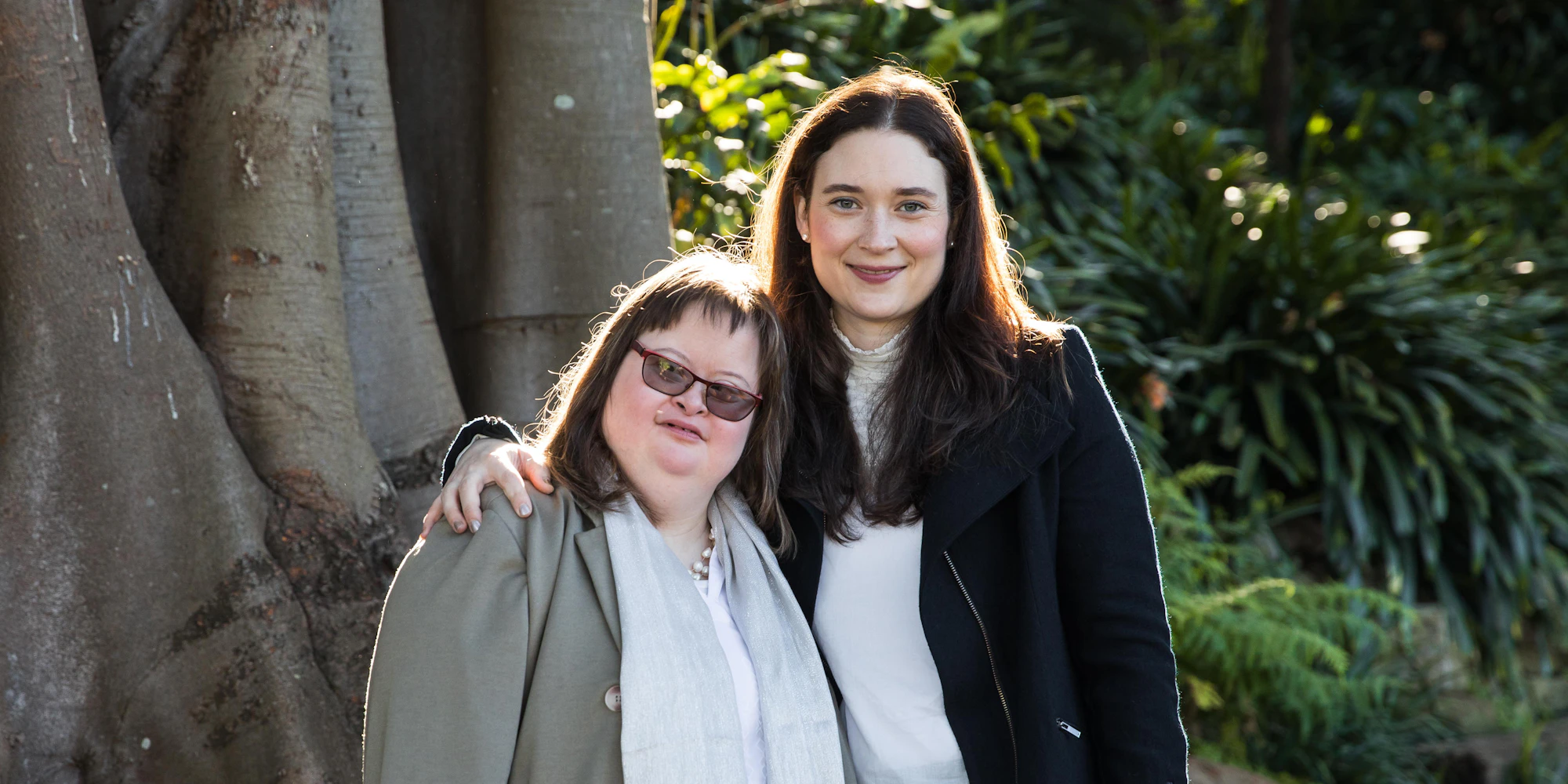
The discrimination I witnessed my sister experiencing was insidious and complex. So much so, that it was one of the themes of a recent novel I wrote: When Things Are Alive They Hum - inspired by Camilla. The real, and perhaps more subtle discrimination built up over time. It was something that was not only in Hong Kong, but also in the countries I visited – often Europe and Australia to see extended family. It was in the tilt of a woman’s head as she threw my sister a ‘sympathetic’ look and said: ‘Down syndromes are angels sent only to families who are blessed.’ There were further comments that my sister was ‘always happy, loving and innocent.’ And one common remark that involved me, was ‘as Camilla’s sibling, you must have been deprived of attention from your parents growing up.’
The truth is that Camilla has a whole range of emotions just like anyone else. Sometimes she is happy, sometimes she is angry, sometimes she is sad. As her sibling, I have felt that at times she can be loving and at times she can be incredibly frustrating. But I feel this about our elder brother too who does not live with Down syndrome. Growing up, I did not feel deprived of attention just because I had a disabled sister. My parents were just as present for me as they were for my brother and sister.
Camilla loves to take her time getting ready in the mornings and is known for wearing four necklaces and eight bangles at once. She always chooses colourful outfits, makes sure her nails are painted in bright colours, takes her time eating breakfast and if at any point you ask her to hurry up, she will adamantly ask you to ‘be quiet.’ She loves music and is a wonderful artist. She has empathy and intuition in spades and can read another’s emotion in seconds. She has her own unique rhythm which she listens to closely. Camilla is wonderfully Camilla.
