
Please note: this article mentions people in distressing situations, sensitive material and natural disasters.
Please check Beyond Blue or Black Dog Institute for mental health resources and support.
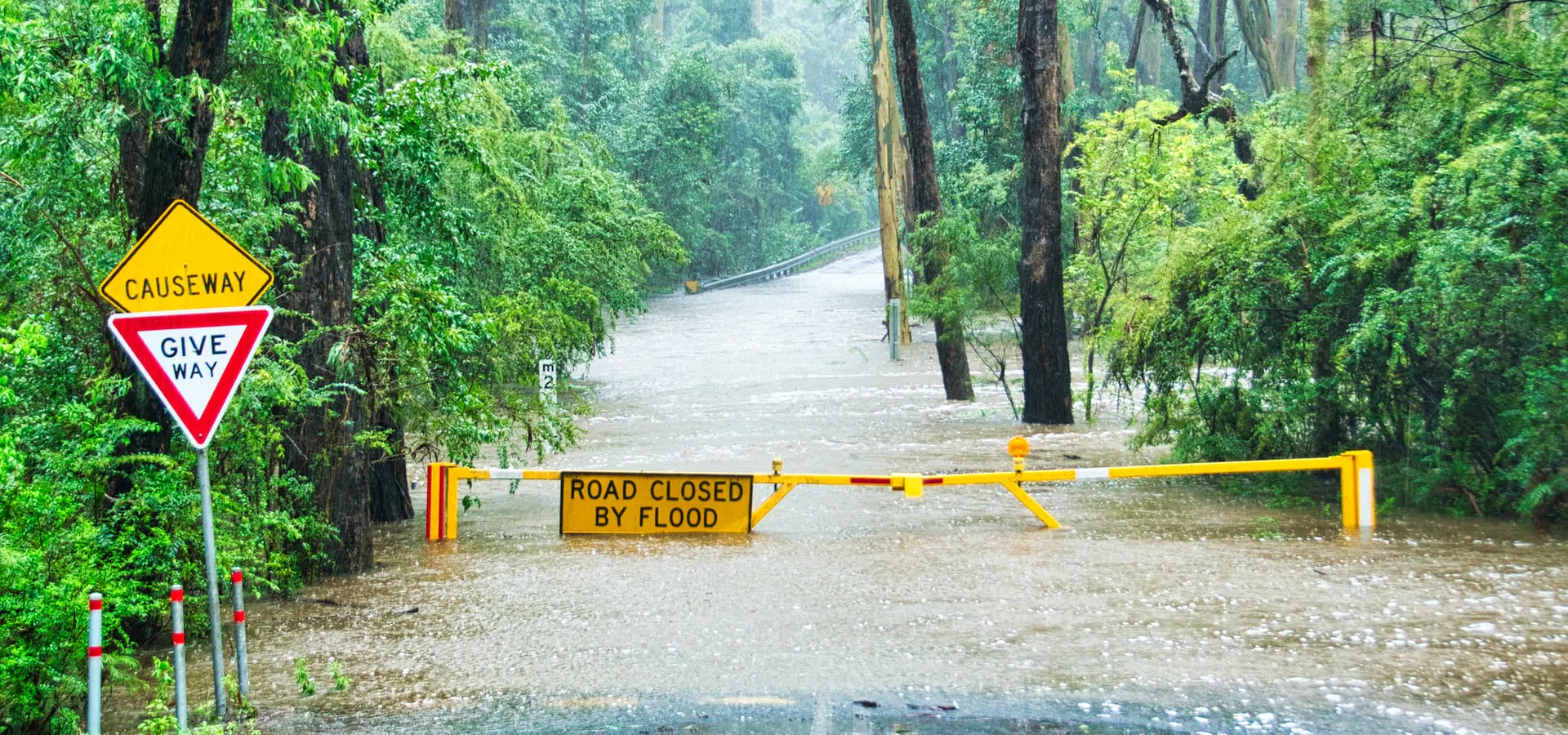
Image: This is from the floods in Annangrove in 2020. Source: Phillip Flores on Unsplash.
“A woman rang, saying ‘I’m about to drown’ and then she was screaming, and then the mobile cut out.”
For Samantha Connor, President of People With Disability Australia (PWDA), calls like this are weighing heavily on her mind.
Australia is once again experiencing ‘once in a century’ flooding, and Samantha knows that, for people with disability, escaping rising floodwaters is especially difficult.
The usual methods, like climbing on to the roof, are not always options for people with mobility issues, and many are cut off from the people who would otherwise assist.
With emergency services inundated, people with disability and their families have been turning to social media for help. Samantha says watching the disaster unfold in real time has been harrowing.
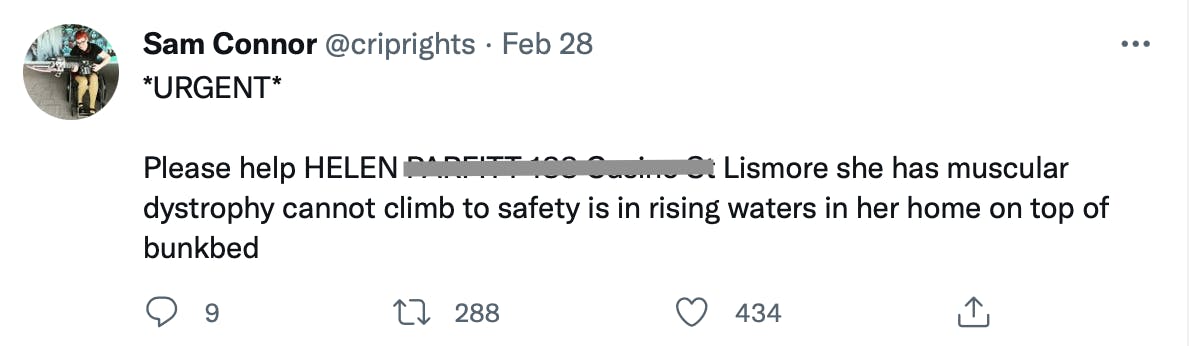
“People on social media are saying ‘my mum has muscular dystrophy, she’s on the top bunk bed and [the water] is up to her neck and she can’t get up any further.’
“They keep being told to get up higher. The family has crawled into the roof space and they’re banging on to the inside of the roof, and the floodwaters are up there and they’ve just got mouthfuls of air.”
“There was a stream of accounts…people in streets that can’t get on to the roof. There are people in crawl spaces and they can't get out. There’s another lady trapped in the shed roof.”
The PWDA chief took it upon herself to retweet these digital SOSs in the hope of getting rescue crews to those at risk.
In other situations, PWDA directly intervened.
“There was this young woman. Her aunt has muscular dystrophy. She was also on her back-up oxygen tank. They had to leave her wheelchair behind so her wheelchair’s back where she left it - under water. She ended up going to the [evacuation centre at the] school with her brother. A boat came to get them, but all her equipment was lost. There are so many stories like this."
"We mobilised, rang the National Disability Insurance Agency and within hours, they had put in place a dedicated hotline and phone approval to replace wheelchairs and other assistive technology."
Even when the immediate danger is over, Samantha says people with disability can find themselves without crucial supports.
“Some of the common issues are around lack of access to their support workers, because they’ve been cut off by flooding. There is a lack of access to essential medications, critical medications. And for many people with disability, their equipment has been lost, and their homes.”
Mali Hermans, from Woman With Disabilities Australia (WWDA) experienced some of this first hand when her home in Brisbane lost power due to the rain.
“I live by myself so I don’t really have support. I have reduced mobility, so that was scary. I also have essential medication that is refrigerated and I had to throw it out.”
She says in emergency situations, there can appear to be very little thought as to how people with disability can respond or recover.
“Whether it be because communication about the natural disaster isn’t accessible. Still we have to fight for Auslan interpreters to be on the screen or for there to be Easy Read translations for women with intellectual disability.
“But then you [also have to] factor [in] people's mobility issues or the fact that a lot of us don’t have a spare $100 or $200 dollars sitting in the bank (with which) we can go buy to replace food in the fridge because the power went off,” Mali said.
The NDIA says it will fast track repairs to Assistive Tech and other necessary support items for people on the National Disability Insurance Scheme.
In a statement released online, the agency says it will prioritise calls from participants impacted by floods, and is urging people to get in touch if they need help.
People with disability are being encouraged to keep across all weather warnings and evacuation orders in their region and the latest updates by the NSW SES and the Queensland SES.
People needing specific disability-related advice or advocacy due to flooding can also contact PWDA for information:
- Phone: 02 9370 3100
- Toll Free: 1800 422 015
- Email: pwd@pwd.org.au
People in an emergency should call 000.
Samantha Connor doesn’t know if the woman who called her in distress got the help she needed. But - like many in the disability community - the PWDA President knows that, for those who have already made it to safety, the road to recovery will likely be a long one.
If your Hireup supports have been impacted by the floods in NSW and QLD, please contact our team on (02) 9113 5933 or email hello@hireup.com.au
