
In celebration of Feeding Tube Awareness Week, The Blend magazine editor, Melanie Dimmitt, shares what the tube-feeding community has taught her about the power of personalisation.
Millions of people, all around the world, are thriving with the help of feeding tubes. Thousands of health challenges could require feeding tubes – temporarily or permanently – including neurological conditions, gastrointestinal issues and chronic illnesses. And yet, as a socially understood (or, misunderstood) concept, tube-feeding is a monolith.
A medicalised monolith, at that.
When my young son received his gastrostomy (G) tube, he was prescribed a singular way to tube-feed. And, in the true nature of a one-size-fits-all approach, it failed. It was only once we connected with the online tube-feeding community that we discovered there was more than one way to do this thing.
So, in the spirit of paying it forward, I’ve made an annual habit of putting some of our stories in print. Launched every year during Feeding Tube Awareness Week, The Blend magazine is a celebration of people and families that have made tube-feeding their own, in countless different ways. Some of which I’d love to share with you here:
Name it to tame it
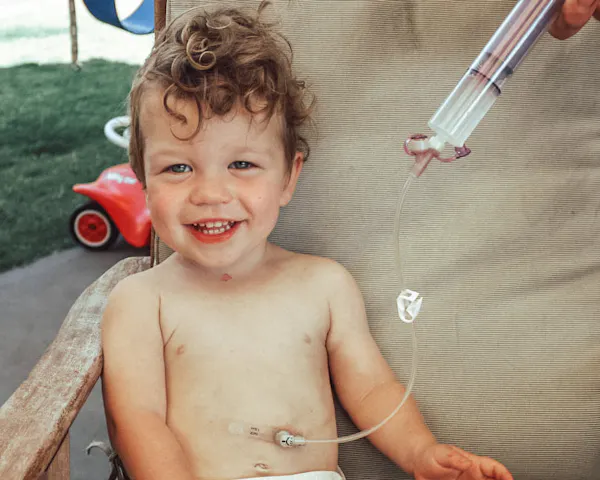
People often introduce me to their tube by name. Our Issue Two cover star, The Nil By Mouth Foodie Loretta Harmes, has “Jeff” the jejunal tube. Meanwhile, over in Issue Three, having listened to the Harry Potter audiobooks over 1000 times, Maddy Reid’s nasojejunal tube has earned the name of “Tubius Hagrid”.
Psychologically speaking, naming something gives us a sense of ownership, control – even pride. I’ll never forget the first time I heard of this happening, back in Issue One, where Amy Purling shares the story of her younger son, Jack, who has a G-tube. “He calls it his Billy and if I’m talking to someone about his Billy, he’ll lift his shirt up and show people. He doesn’t hide it.”
Make it fashion

During her interview for our latest issue, mother, multisport athlete and PhD candidate Juliette McAleer said that personalising the experience of tube-feeding made her feel more confident. “We are lucky to have companies like Tubie Fun and a few Etsy sellers who make and sell cute accessories for tubies,” says Juliette, who has a G-tube.
“When I first got my tube, one of the things I focused on was choosing a matching tubie pad, clip and port cover set to go with my work outfits each day. I think it was a way of asserting my own style and personality over what felt like a very clinical and medical thing.”
Initially Juliette put away her clothes that didn’t accommodate tube-feeding – but she missed her long, flowing dresses. “One of the best things I did for myself was to take them to a clothing mending service to have large buttonholes sewn into the sides to fit my extension and tubing through,” she says. “This made such a difference to my mindset.”
Flaunt it
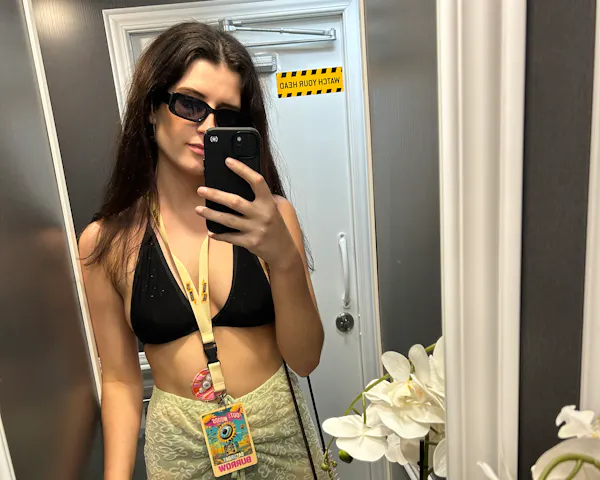
Disability support worker and trainee nurse, Elli Kilpatrick, says it took her a long time to accept her gastrojejunostomy (GJ) tube. Then, Elli’s best friend Angie said to her: “You’re gonna make feeding tubes look SO HOT. If anyone can, it’s you.”
Chatting with me for our newly launched issue of The Blend, Elli says that conversation shifted her perspective.
“I’d had plenty of people tell me they thought I was brave or that I inspired them, but that didn’t translate at all to how I felt about myself or wanted to. Not once had I heard anyone talk about tube feeding as fun, hot, or anything positive at all, so it hadn’t even occurred to me to embrace and own it. So, Angie, thanks for the bathroom pep talk. It kinda changed my life.”
A smorgasbord of choice
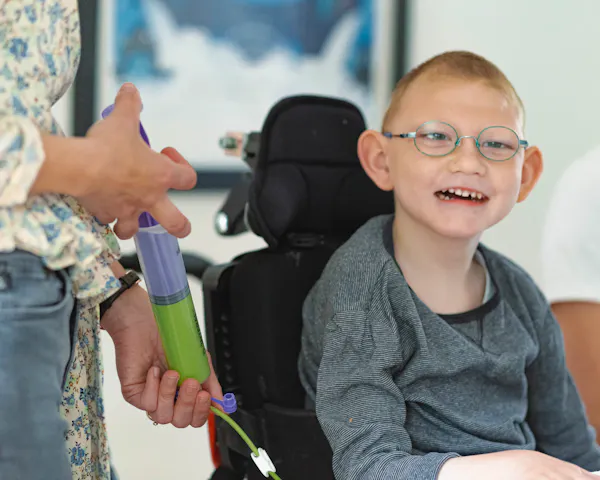
What people drink and eat through their feeding tube will depend on their health and dietary needs. And for many in our community, there are a multitude of options. All around the world, innovative folk like Line Pedersen, the founder of Bellyfood, are cooking up a storm so that tube-feeders can enjoy variety.
“I hope we can provide even more diversity in the food that we offer people with a feeding tube,” says Line from Denmark, where her business offers ready-made wholefood blend pouches. “They should have the opportunity to choose between different meals – as all other people do.”
Bellyfood was inspired by its creator’s tube-feeding son, as was Australia’s Blended by Sarah.
Speaking with me for Issue Four of The Blend, founder Sarah Thomas says: “We want tube-feeding families and people to be fully informed so they can have the choice about what they put in their bodies, with the full support of their medical teams.”
Make a stand

Just as we were going to print with our latest issue, one of our interviewees was dubbed the most influential disabled person in the UK. Celia Chartres-Aris is a multi-award winning adviser and campaigner who has long relied on feeding tubes and total parenteral nutrition (TPN).
“I wish people would be able to see [tubes] as these incredible life-giving things, not something disgusting that we don’t want to talk about or see,” Celia told us.
“The ultimate goal would be – and I hate the word ‘normal’ but I’m going to use it – to normalise tube-feeding as part of everyday life. It’s just your body.”
Advocating for our community might just be the ultimate act of owning a feeding tube. And for those who are new to this experience, words from people like Celia can make all the difference: “The biggest thing I’ve always wanted to be told is that you don’t need to do things the way everybody else does.”

Melanie Dimmitt
Melanie Dimmitt is a freelance journalist, author and broadcaster. Since her debut book, Special, was published by Ventura Press in 2019, Melanie has written, spoken, podcasted and advocated far and wide for disability families. Creator and host of the award-winning NDIS Know-how and Tubie Talks podcasts, Melanie also publishes an annual magazine, The Blend, for the tube-feeding community.