Unbroken: The Paralympics and its record
With Annabelle Williams
In an exciting new four-part audio documentary, gold medal-winning Paralympian Annabelle Williams talks to athletes, administrators and archivists to tell the story of how the Paralympics began and what it’s become.
Unbroken is hosted by Annabelle Williams and the series producer and executive producer is Sarah Allely. Research is by Kylie Grey and sound engineering by Isabella Tropiano. Andrew Thomas is the commissioning editor.
Unbroken is powered by Hireup.
Listen to the latest episode
Records are broken at every Paralympics. But what’s the record of the Paralympics itself?
Every four years, the Paralympics shines a spotlight on the world best athletes with disabilities. The Paris Paralympics – which start August 2024 – promises to be the biggest yet.
In Unbroken, Annabelle hears countless stories – both affirming and affronting – of athletes' experiences. And, from people with disabilities who have no interest in sport whatsoever. Combined, they tell the story of what the Paralympic movement has – and hasn’t – achieved for the cause of disability representation and advocacy.
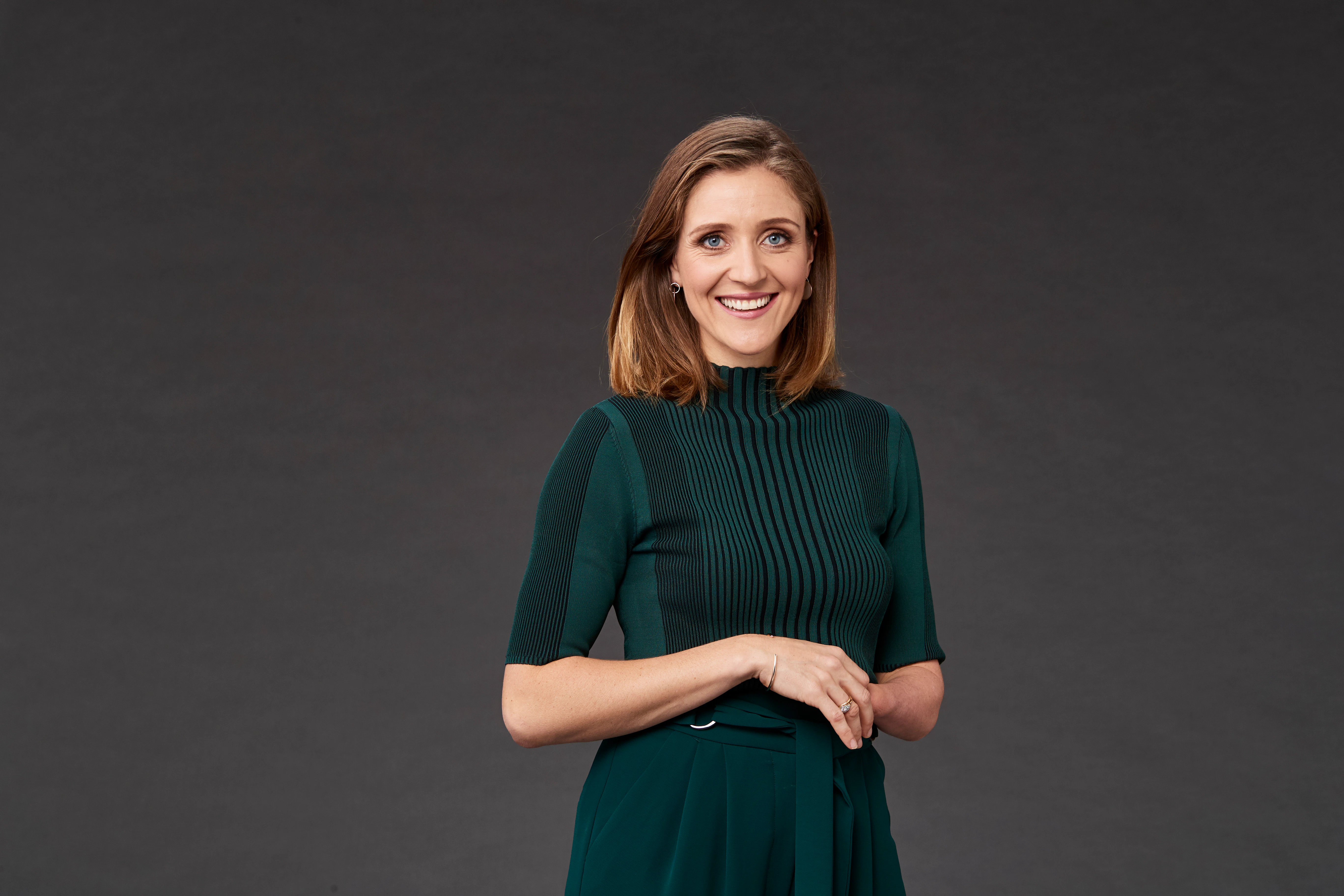
One of the things I'm most proud of is being a Paralympian.
The Paralympics itself has an incredibly rich history, and the athletes who are, and have been part of it, have their own remarkable stories to tell. I'm privileged to count myself among this diverse community of people who celebrate and champion their differences.
As the host of 'Unbroken', I go on a journey to explore the stories and the record of the Paralympic Games: its successes, challenges, and its impact on the disability community at large.
'Unbroken' gets to the heart of the power of the Paralympics and equal representation, and my daughter Josie is a great example. After I'd visited her preschool in Episode 1 to talk about the Paralympics and disability, Josie came home spouting that she too wanted to be a Paralympian... I didn't have the heart to tell her she isn't disabled! But it proves the point - representation matters.
I hope you learn as much as I have from the wonderful people in this podcast.
Annabelle WilliamsHost

New to Hireup?
Hireup is an NDIS-registered online platform that makes finding and booking trusted support workers easy.
AD: Unbroken. The Paralympics and its record is sponsored by Hireup, Australia's largest N D I S registered platform for people with disability to find and manage their own support workers. To find out more, head to higher up.com au. That's Hi r e up.com au
[00:00:20] Ethan Sonta: I never been able to ride a bike properly,
[00:00:22] SAM HARDING: have you, um, done a bit? Any triathlons before or anything?
[00:00:26] Ethan Sonta: No. Nothing like that? No.
[00:00:27] SAM HARDING: Any, swimming or running or riding?
[00:00:29] Ethan Sonta: Swimming all the time? Yeah. Running a lot. Yeah. [00:00:32] SAM HARDING: Very good.
[00:00:33] SAM HARDING: You could jump on this one if you want. .
[00:00:34] Ethan Sonta: I've always been told from a young age, that I've gotta keep active or my body's gonna seize up,
[00:00:38] FINAL NARRATION: It's a chilly May morning in a big sports hall in Canberra, and this young man from Wollongong is deciding the sport in which he'd like to win gold.[00:01:00]
[00:01:02] Ethan Sonta: Uh My name's Ethan.
[00:01:03] Sarah Allely: Ethan. What's your last name ethan
[00:01:04] Ethan Sonta: Sonta.
[00:01:06] FINAL NARRATION: This ParaSport Have A Go Day is organized by Paralympics Australia to find the champions of tomorrow. But what will they be champions of? Well, that's what today is all about.
[00:01:17] FINAL NARRATION: Ethan came to one of these about 15 years ago when he was only five.
[00:01:38] Ethan Sonta: So I've just made the commitment to come back this year just to see if I could try out for, one of the sports and, hopefully maybe become a Paralympian one day.
[00:01:46] Sarah Allely: And any particular sport you're interested in?
[00:01:48] Ethan Sonta: Uh, just any, I'm just coming to have a look and see what like I like best. . I'm actually a soccer coach who teaches young kids with disabilities , ,
[00:01:55] Ethan Sonta: my disability is a, left side of my body, cerebral palsy. [00:02:00] So left hemiplegia.
[00:02:01] FINAL NARRATION: Ethan heads over to the rowing machines where James sets him up.
[00:02:21] ROWING COACH: Have you done any rowing before?
[00:02:22] Ethan Sonta: Yes.
[00:02:23] ROWING COACH: You have? Yeah.
[00:02:23] ROWING COACH: So you're gonna be like a duck Water on this then I assume
[00:02:26] Ethan Sonta: Yes
[00:02:28] ROWING COACH: Pick it up straight away
[00:02:29] ROWING COACH: star ROWING UPSOT . That's it.
[00:02:33] ROWING COACH: So Ethan, just stop there a moment. What I want you to do is reach all the way forwards. Yep. Okay. What I'm gonna do is I'm just gonna hold the handle for a moment . .
[00:02:40] ROWING COACH: There we go So big legs You can still grow as hard as you were rowing But reach nice and long
[00:02:44] Ethan Sonta: Getting the technique down.
[00:02:45] ROWING COACH: Yeah.
[00:02:51] FINAL NARRATION: I'm Annabelle Williams. I'm a paralympic gold medalist. I've been the vice president of Paralympics Australia, the Legal Council of the Australian Olympic Committee, [00:03:00] and the chair of the Paralympics Australia Athletes Commission.
[00:03:03] FINAL NARRATION: In this series, we'll explore what the Paralympic movement represents and whether it's lived up to its potential. The experience of athletes, but also its impact on the disability community at large. Ahead of the 2024 Paris Paralympics, we'll be hearing from those who've competed at the highest level.
[00:03:25] Siobhan Paton: I heard the words Go, go, go , from the crowd. And I just went touch first. Couldn't believe it.
[00:03:35] FINAL NARRATION: From those who oversee the movement.
[00:03:38] Kate McLoughlin: I think the Paralympics represent changing perception of disability
[00:03:44] FINAL NARRATION: But also those with concerns that too much focus is put on the Paralympics for people with disability more broadly.
[00:03:53] Hannah Diviney: I have two younger sisters who happen to be able bodied, and I'd be like, hold on. You're not asking them what their [00:04:00] Olympic sport is going to be.
[00:04:01] FINAL NARRATION: This is Unbroken, the Paralympics and its record. For now, back to that drafty basketball court in Canberra, where our producer, Sarah Allely is chatting to Matthew Leggett, who coaches wheelchair tennis.
[00:04:21] Matthew Leggett: Just here today to help out give some people a bit of an understanding of what wheelchair tennis looks like. .
[00:04:26] Sarah Allely: And what do you get out of tennis? What does it do for you?
[00:04:29] Matthew Leggett: It's something you can play for a long time. You can play against able-bodied people, you can play against other people in wheelchairs.
[00:04:35] Matthew Leggett: Unfortunately there wasn't a lot of these things in Canberra when I was growing up. , and because of my disability I couldn't play contact sports.
[00:04:41] Sarah Allely: are you interested in trying to get into the Paralympics?
[00:04:44] Matthew Leggett: It was goal of mine when I was a lot younger, ,, , . . But, , unfortunately never got into sport at that level early enough, tennis is a tough one cuz there's only four players from the country,
[00:04:56] Matthew Leggett: probably didn't pick the right sport if I was, thinking practically about it
*********
[00:05:00] KID: hello? Hello? Hello?
[00:05:03] FINAL NARRATION: The Paralympics brings disability to the fore. It's a way to introduce the idea of disability to people who don't live it every day. Like these children and their educator, Jo, at my daughter's preschool.
[00:05:25] KID: Why do you have headphones on?
[00:05:26] Sarah Allely: Would you like to have a listen? That’s so I can monitor it, so I can hear exactly what's on the microphone.
[00:05:31] Sarah Allely: Can I get my headphones back now?
[00:05:33] KID: I didn't have a turn
[00:05:34] Sarah Allely: You didn't have a turn?
[00:05:36] FINAL NARRATION: We're at the preschool to follow up on an earlier chat I had with my Paralympian. But these kids are pretty focused on Sarah's recording gear. Jo, the educator, tries to bring the conversation back to the Paralympics.[00:06:00]
[00:06:08] KID: Hello? Hello? Hello?
[00:06:11] Jo: And do you remember when Annabelle came to visit us last time? What did she bring with her?
[00:06:16] KID: A medal.
[00:06:18] KID: A swimming race.
[00:06:21] Jo: And do you remember where she did that swimming race? It was a very special swimming race?
[00:06:28] KID: at nippers.
[00:06:29] Jo: It's like a grownup nippers.
[00:06:31] Jo: I know. Paralympics
[00:06:34] UPSOT/ATMOS: From centre
[00:06:36] Annabelle Williams: And remember, I also spoke to you about the fact that I was born with one hand.
[00:06:43] Annabelle Williams: Has anyone seen anything that looks like this? No. No? Could you have a guess what you think this might be?
[00:06:51] KID: A prosthetic arm.
[00:06:53] Annabelle Williams: Good job, Josie..
[00:06:54] FINAL NARRATION: That's my daughter Josie.[00:07:00]
[00:07:04] KID: They usually, yes. Uh, um, not real. Yes, . And it's metal. Some of them can be metal.
[00:07:15] Annabelle Williams: Would you like me to show you how I put my prosthetic arm on?
[00:07:17] KID: Yeah, yeah.
[00:07:18] Annabelle Williams: So first of all, I have this thing , it's made of silicon. And this one is made to fit my arm perfectly. And that's really, really tight.
[00:07:28] KID: I can't see… I can see.
[00:07:31] Annabelle Williams: This screw locks into this carbon fiber cast. Listen to see if you can hear it.
[00:07:42] Annabelle Williams: Does this look like a hand? No. What does it look like? A crane.
[00:07:50] Annabelle Williams: A crane.
[00:07:51] KID: Oh, clock. A claw. .
[00:07:53] KID: , it's a bit like a duck face.
[00:07:56] Annabelle Williams: Oh, I see that too. Quack, quack, quack. . [00:07:59] KID: [00:08:00] Medal! Can I hold it again?
[00:08:04] FINAL NARRATION: As these kids pass around my gold medal from London 2012, I think about how this is where conversations about disability need to start, with preschoolers.
[00:08:14] FINAL NARRATION: If we can sow the seeds before they go to school, it's much easier to foster acceptance and understanding.
[00:08:20] FINAL NARRATION: When I was 10, there was a boy in my class who asked if I would sit next to him the next day at lunch. As a 10 year old, that is as close as you get to being asked out on a date. And I remember feeling so excited about it. And awkwardly asking my friends to sit next to us. And he asked his friends to sit close by as well.
[00:08:44] FINAL NARRATION: And the lunch itself was fine, but at the end of lunch, he stood up and said as loudly as he could in front of everyone in the playground, that he would never sit next to me again because he thought I was so weird for having one. A comment like that hurts, especially when you're 10 and already feel pretty different.
[00:09:07] FINAL NARRATION: I didn't want to go back to school ever. But with a lot of encouragement from my family, I fronted up the next day feeling incredibly vulnerable. I remember my teacher started off the day saying that we were going to do a creative exercise. We had to draw our own versions of a superhero. And then she said that every single superhero had to have a disability.
[00:09:35] FINAL NARRATION: And by the end of the class, there were 25 superheroes with one arm. And my teacher hung those artworks at the front of our classroom for the rest of the year.
[00:09:45] MINOR MUSIC TRANSITION:
[00:09:46] FINAL NARRATION: The Paralympics can be a catalyst for these kinds of conversations. Kate McLoughlin from Paralympics Australia agrees.[00:10:00]
[00:10:08] Kate McLoughlin: I think the Paralympics represent changing perception of disability by using sport as the vehicle and as sport, using sport as a vehicle to change people's lives as well.
[00:10:20] FINAL NARRATION: Kate's the Chef de Mission, in effect, the team boss for the Paris Paralympics, and her main role at Paralympics Australia is Head of Games and International Engagement.
[00:10:39] Kate McLoughlin: Once every four years. The Paralympic Games shines a light on the ability of these amazing humans, and regardless of whether people with disability in Australia, the Australian community are sporty or not, it just reminds people that of what's possible and not to just push these people away as, oh, they've got a disability and they're not able to. [00:11:00] Participate in life in the same way an able-bodied person can.
[00:11:03] Kate McLoughlin: When parents with kids with disabilities, see people on the world stage competing in sport and seeing athletes like their kids doing these amazing things, it just changes their sense of what's possible. I think for people that have had accidents, who have previously been someone who've competed in sport, all of a sudden it just opens up this whole new world of opportunity for them.
[00:11:25] FINAL NARRATION: That's the official view from Paralympics Australia. And undoubtedly it's true. But a tiny percentage of people with disabilities end up being Paralympians.
[00:11:35] FINAL NARRATION: People like Hannah Deviney find this kind of perspective limiting.
[00:11:44] Hannah Diviney: Look, I think the Paralympics as an institution and as a series of events, definitely have a place in the way we celebrate disability and it's visibility because to be honest, it's [00:12:00] really the only vehicle of visibility that disabled people have had for a very long time. The issues I have, come from the fact that when I was growing up, the only two narratives of disability that I ever saw were the Paralympics or road safety ads.
[00:12:14] Hannah Diviney: Like if I had a dollar for every time I was asked some variation of the question, what's your paralympic sport going to be? I'd be like, Scrooge, McDuck, SW swimming in gold,
[00:12:25] Hannah Diviney: And whenever I would get asked that question, I would always kind of take issue with it because I have two younger sisters who happen to be able bodied, and I'd be like, hold on. You're not asking them what their Olympic sport is going to be.
[00:12:36] Hannah Diviney: And I think. The reason for that is because people see the Olympics as a very elite, like specific pinnacle of sport. Like only the best are gonna qualify. Not everyone wants to, all of that kind of stuff. And that same respected way of thinking isn't necessarily applied to the [00:13:00] Paralympics.
[00:13:00] Hannah Diviney: And I think that is a disservice to the amount of training and skill and talent that Paralympic athletes do. So I think , if a disabled person wants to be a Paralympian, great, I just take an issue when that's like what they think they have to be. Cuz that's the only path to visibility and success. And there's also a lot to be said for the fact that the Paralympics exist with this narrative of like, People overcoming and triumphing and doing all of these amazing things.
[00:13:29] Hannah Diviney: And it's like, well, I, I have the kind of disability, having cerebral palsy, then I'm never gonna like, overcome it or triumph. Like, everything I achieve is going to be with cerebral palsy firmly in tow. , so yeah, I think I just want there to be more options for people with disabilities than just paralympic success.
[00:13:48] FINAL NARRATION: Amongst Paralympians themselves, there are nuances in opinion about what the Games mean and represent.[00:14:00]
[00:14:15] SOP UPSOT:
[00:14:57] Tim Hodge:
[00:14:57] Tim Hodge: When people look at the Olympics, [00:15:00] they see the pinnacle of human achievement, whereas they look at the Paralympics and see the pinnacle of human resilience and they can relate to the resilience more because no
matter what they're going through in their life, the resilience is what inspires them to do the things that they think they should have, but never got round to
[00:15:20] FINAL NARRATION: Tim is a leg amputee swimmer.
[00:15:25] UPSOT FROM SOP POOL :
[00:15:27] Tim Hodge: They can look at the Paralympics and go, well, if he can do that with no arms, no legs in a wheelchair, I should be able to do it. Versus they might look at the Olympics and go, that guy's six foot five built, like he can swim like no tomorrow or something like that.
[00:15:44] Sarah Allely: And tell me about what's your fight been like? How have you been able to be resilient?
[00:15:48] Tim Hodge: Funny thing was initially when I started sport, I was very shy. I was very shy about my leg. I had a skin colored prosthetic leg cuz I, I didn't want people seeing it and asking [00:16:00] questions and stuff like that.
[00:16:01] Tim Hodge: Through sport over the time and with support from my parents as well, I've grown into, being more resilient, being more, confident in myself. Now I've got orange and red flames on my leg, so I stand out. Just being able to compete on the world stage, and have no issues with taking my leg off, everyone seeing my, um, impairment, stuff like that, I think, has helped me grow to become a better person.
[00:16:28] Tim Hodge: Like the first time I took my leg off, , and really didn't want to do it. , but slowly just repeating that pattern, , built up the confidence and built up the resilience.
[00:16:37] UPSOT FROM SOP POOL
[00:16:39] Tim Hodge: I was born without the fibular bone in my lower leg, , in my tibia. The other bone is bent, so that meant that my foot, right foot fused at an angle. And, , , as I got older, , my right leg wouldn't grow at the same rate as my left. , .
[00:16:53] Tim Hodge: , so they said best chance is to amputate. I can get a prosthetic leg, , and then I can run, jump, play [00:17:00] sport, do things like a normal kid. , , my parents made that decision when I was four and a half to amputate. , and yeah, obviously the best decision in my life cuz it's given me the opportunity , to do all these things. .
[00:17:10] Tim Hodge: I remember, , the day we headed to the hospital, my mom put me in the car seat and I definitely didn't want to go. And I remember, , like kicking and screaming, stuff like that.
[00:17:19] Tim Hodge: I remember that day in the car. And then I remember after the surgery, , kind of waking up in bed, , with a bandage around my right leg.
[00:17:26] FINAL NARRATION: just over a decade later, Tim Hodge swam at the Rio 2016 Games.
[00:17:31] Tim Hodge: Yeah. I was lucky enough to be , the youngest male on the team that year. , and it was, , just an amazing experience. ,
[00:17:38] UPSOT FROM SOP POOL :
[00:17:41] FINAL NARRATION: What Tim describes as initial embarrassment about his disability morphing into pride is something that many Paralympic athletes share. It's something that Australia's Chef de Mission says is so central to what the Paralympics achieves
[00:17:54] Kate McLoughlin: and hopefully identifies massive opportunities in the community as to how people with disabilities, [00:18:00] you know, they contribute in such amazing ways, whether it's in sport, in the arts, in employment, , and hopefully opens people's minds to what's possible , and. Yeah, their perceptions change.
[00:18:13] Sarah Allely: Tricky, isn't it? Because I've spoken to people with disability who aren't sporty and, growing up and being asked, oh, so what's your paralympic sport gonna be? Yeah
[00:18:22] Kate McLoughlin: there's a lot of trickiness there and , I think we I know that our athletes are really aware , of how they're perceived by their disability community as well.
[00:18:32] Kate McLoughlin: . Our athletes are amazing. They're starting to realize how, how they can better advocate not just for Paralympic sport, but also for their community of people with disabilities as well. I think there's a lot more athletes who are. Advocating more strongly and not focusing wholly and solely on athletic ability, which is really important.
[00:18:50] Sarah Allely: So using their platform
[00:18:52] Kate McLoughlin: Using their platform to, yeah, for their community and not just for those who happen to be good at sport. Cuz you're right, , not every able-bodied person [00:19:00] is going to either aspire to be or going to be an Olympian. , and it's no different for the Paralympics.
[00:19:05] Kate McLoughlin: And I think as well, like in the last couple of years with the improvement in, , Visibility of the Paralympic Games, people are more and more saying, oh, actually it's hard. You don't, just because you happen to have a disability and you happen to like sport, you don't automatically get onto the Australian Paralympic team.
[00:19:21] Sarah Allely: 'I'll just wait for that car...hoons!
[00:19:26] Tony Naar: You're in Tassie, you're in rural tassie. They're not hoons, they're locals.
[00:19:31] Sarah Allely: Sorry. Sorry.
[00:19:32] Tony Naar: That's okay.
[00:19:33] Sarah Allely: Any Tasmanians Listening to this
[00:19:35] Tony Naar: They're local hoons.
[00:19:38] FINAL NARRATION: Tony Naar was a sports administrator and worked for Paralympics Australia in various capacities for 20 years. One of his roles was as an historian of the Paralympic movement and in that role created the Australian Paralympic History Project. Sarah went to visit Tony in the tiny town of Lillydale he's retired to north of Launceston.[00:20:00]
[00:20:07] Tony Naar: , it's possible to see a number of turning points in the Paralympics, but the Sydney games was definitely one and. Australia changed the way that Paralympic sport was conducted , in that Australia was the first country to treat its paralympic athletes as elite athletes and train them as elite athletes.
[00:20:27] Tony Naar: , , it was basically , the concept was to prepare the athletes the same as able-bodied athletes would prepare. So to give them the same level of coaching, same level of sports science support, sports medicine support, , the intensity of preparation and the focus to be blunt on winning. And before that, I think there was a, and many other countries in 2000 still operated on it. It was, it was a rehabilitation activity and it was participation. And so, , even in 2000 there were a lot of athletes who [00:21:00] still felt that they should be on the team because they played sport and they had a disability, and we were looking to change that.
[00:21:09] Sarah Allely: It's interesting you bring that up like
[00:21:11] Tony Naar: yep. , well this goes right back to the beginning of the games. You know, the 1960's , people like Bill Mather-Brown, who were fierce competitors and saw that they were there as athletes. , and, you know, , the founder of the Paralympic movement, Ludwig Guttmann, and the founder of the Paralympic Movement in Australia.
[00:21:30] FINAL NARRATION: That founder was George Bedbrook, an Australian orthopedic surgeon who established Australia's first spinal injury unit in Perth. Bedbrook revolutionized the treatment of spinal injuries in Australia with sport and exercise and later organized the Australian Paralympic team to go to Rome in 1960
[00:21:58] Tony Naar: , the founders of Paralympic movement, Ludwig Guttmann and George Bedbrook, their attitude was very much that it was a participation event and it was a rehabilitation event. And so , there was conflict between the athletes and the administrators right back from the beginning of the games.
[00:22:16] Tony Naar: I'd have to say that in 2000, one of the things that Australia did was that the administrators and the athletes were pretty much on the same page. And it was about the sport , the fact that it's limited by numbers and that you have to qualify.
[00:22:28] Tony Naar: To me, it's nothing but an elite sporting event. And I don't think there'd be many people these days who would see it as anything else.
[00:22:36] FINAL NARRATION: So the founders of the Paralympics saw the games as essentially rehab. The game started in the United Kingdom and were called the Stoke Mandeville games named after the hospital in which Ludwig Guttmann worked
[00:22:49] Tony Naar: The Paralympics came out of rehabilitation of soldiers in the Second World War with spinal injuries . , a doctor called Ludwig Guttmann, who was a refugee from Germany, [00:23:00] was given the task of creating the first spinal unit, , to rehabilitate soldiers with spinal injuries.
[00:23:09] Tony Naar: And until then, those soldiers had a really short life expectancy. Most of them died, and they died pretty horrible deaths because they got, , bedsores and they turned to sepsis and they died from blood poisoning in fairly short time and, Guttmann saw that there was another way, and he saw that people could be rehabilitated and his aim, as he said, was to turn those soldiers into taxpayers.
[00:23:34] Tony Naar: So basically to give them their lives back.
[00:23:37] FINAL NARRATION: Dr Guttmann used antibiotics and had patients in bed, but there was another significant part of the rehabilitation program.
[00:23:59] Tony Naar: they needed to [00:24:00] exercise. And so introduced a program of.
[00:24:04] Tony Naar: Exercise of one of the first parts of rehabilitation. Of course young men being young men, if you're exercising, then you want to turn it into sport and you want to turn it into competition. And pretty soon they found that the best way to introduce exercise was to create sports that the people with spinal cord injuries could play.
[00:24:27] Tony Naar: And that was the beginning of the Paralympic movement. [00:24:30] Sarah Allely: And so how did we get to the 1960 Rome Paralympics?
[00:24:34] Tony Naar: Well, the Stoke Mandeville games grew, and Goodman had a vision that, the Stoke Mandeville games would become the Olympics for athletes with a disability or people with a disability.
[00:24:46] Tony Naar: As the Stoke Mandeville games attracted more and more countries, , the idea of holding it in the same city as the Olympics, , was seen to be something that was desirable.
[00:24:55] Tony Naar: So in 1960, . Organizers of [00:25:00] the Stoke Mandeville games worked with the, , disability organizations, in Italy to run the, and it was an international Stoke Mandeville games. It wasn't called the Paralympic Games officially until 1976, I think was the first time it was called officially the Paralympic Games.
[00:25:19] Sarah Allely: So that term, Paralympic. I've seen some, , reports that say that it was actually parallel games and then others that say that sort of came later and it was a reference to paraplegic. What is the correct, , origin of that word, Paralympic.
[00:25:34] Tony Naar: , everything that I've seen indicates that it was, that the term parallel came later and that really was the paraplegic games.
[00:25:48] FINAL NARRATION: Now, the para part of Paralympic firmly refers to the games being parallel to the Olympics.[00:26:00]
[00:26:05] MINOR MUSIC TRANSITION: music
[00:26:05] FINAL NARRATION: That Grassroots Have a Try Day in Canberra that Sarah went to is a combination of talent scouting by Paralympics Australia and just a chance for anyone with a disability to discover a sport they might enjoy.
[00:26:16] FINAL NARRATION: A lot of Paralympians actually got their start at one of those sorts of events. Corena Harrison and Dylan Schwartz are Australian boccia players
[00:26:43] Sarah: Are you hoping to get more people part of the Paralympic team or just more people playing in general
[00:26:48] Corena Harrison: both. Both. Both. Yeah.
[00:26:49] Sarah Allely: Yeah, what is it about this sport that you'd be telling people to come along and play more? It.
[00:26:59] Corena Harrison: Yeah. Yeah. [00:27:00] More girls. More girls. Yeah.
[00:27:04] Corena Harrison: Only girls
[00:27:06] Corena Harrison: how long have you been playing for him? 16 Years. Yeah. [00:27:11] Sarah Allely: Hi, Dylan. , .
[00:27:12] Sarah Allely: , did you go to the last Paralympics?
[00:27:15] Dylan Schwarz: No, I did not.
[00:27:16] Sarah Allely: You'd like to go to Paris? I am
[00:27:24] Sarah Allely: . And are you hoping to go to Paris as well?
[00:27:26] Dylan Schwarz: Yes, I am. , yeah, I wanted it. Someday to become Paralympic champion. Yep. At an international competition and many gold medals. Hopefully.
[00:27:45] FINAL NARRATION: Dan Michel has been a bit of a trailblazer in Boccia and won Bronze at the Tokyo games
[00:28:12] UPSOT/ATMOS:
[00:28:20] Annabelle Williams: What has the impact of the Paralympic movement had on the lives of people with a disability? Both athletes and, and beyond athletes? Yeah. And have you seen that change over the course of your career?
[00:28:32] Dan Michel: Definitely. I have. I've noticed a big change and I think, I think what if, if nothing else, what the pound big movement's done has for sure. , elevated the profile of, , people with disabilities and given people with disabilities, , who are paralympians mainly a platform, , beyond sport really to, to , really be able to, , whatever spread their message or to, to be able to, to go on, to do things beyond sport as well, that have an impact on society.
[00:28:59] FINAL NARRATION: Dan [00:29:00] feels that part of his role is helping to lift society's expectations of what people in the broader disability community are capable of.
[00:29:22] Dan Michel: , when you do have a disability, , , what people expect of you is just so much less than,, , people without disability. So for me, I experience it almost daily.
[00:29:33] Dan Michel: Yeah, people who will congratulate me just for being out and about. I've experienced all sorts of things like that. , . , , a lot of people talk about it now, but comes from this place where I think, , disability is still seen as a tragedy, , by a lot of people, and broadly in society it still is as well.
[00:29:49] Dan Michel: And there's a lot of people trying to change that narrative, but, , it has a long way to go. ,
[00:29:53] Dan Michel: you know, people always just assume that your life must suck because you're disabled , , but , it's just not my experience at all. Like, [00:30:00] I, , I think everyone has challenges in life.
[00:30:02] Dan Michel: What, whatever it might be. , for me, I do life from a wheelchair. , it's all I've ever known. , it's never something that's, , I, I don't wake up in the morning and think, oh shit, I'm disabled today. Like, it's gonna be a terrible day. I've got nothing to do. And I've got no hope or anything like that.
[00:30:16] Dan Michel: Like , I just live with my disability, just the same way everyone lives with whatever they're dealing with. , , , it's just life. , it is what it is.
[00:30:23] Annabelle Williams: You used the phrase severe disability. You referred to yourself as having a severe disability. I've heard some people refer to athletes who play butcher as athletes with higher needs. Yeah. Do you feel like there's a difference between those things? And is one term, would you prefer one over the other?
[00:30:37] Dan Michel: I don't love the term higher needs. I've rather say, , just because it's a little, I don't know, it feels a little invasive of like, don't assume what I need, sort of thing.
[00:30:48] Dan Michel: , I probably prefer the word severe disability, just cuz that's, that's what I think the reality of it is. For myself being in a wheelchair, and all that and the way that I am, I see it as a severe disability.
[00:30:59] Dan Michel: , I am probably on [00:31:00] the, like, higher end of, of SMA in terms of, , my level of disability. ,
[00:31:03] FINAL NARRATION: SMA, or Spinal Muscular Atrophy, is a genetic condition that affects the nerves that control muscle movement.
[00:31:32] Dan Michel: , I can't really move much of my body at all. , I have a small amount of movement in my left hand that I can use to drive my wheelchair and use my robotic arm and, and things like that.
[00:31:41] Dan Michel: But beyond that, I'm, I'm just generally very weak. So, you know, I, I can't basically move much at all. , and, and yeah, that's, that's, that's me.
[00:31:51] UPSOT WHEELCHAIR RUGBY: On him.
[00:31:53] UPSOT WHEELCHAIR RUGBY: Wait, wait, wait, wait, wait. 3, 3, 2 [00:32:00] one's. Got it back.
[00:32:12] Paul Kiteley: Wheelchair rugby is a simple game in a team of four. Matched against another team of four and they've gotta move the ball across the basketball court to get it across the trial line at the other end.
[00:32:25] Paul Kiteley: Uh, Paul Kiley is my,
[00:32:30] Paul Kiteley: uh, Paul Kiley is my name, and I'm National Performance Director for the Australian Wheelchair Rugby Program. , my role is to help and support, , all of the Australian team athletes, but also . Development athletes who'll be hopefully representing Australia in the future.
[00:32:46] Paul Kiteley: And their chairs are made by titanium steel and they use it as a blocking weapon to stop the, to stop the opposition from scoring. So the same as rugby able-bodied is they [00:33:00] tackle. Yeah. Wow. But in. In wheelchair rugby, they use their chair. Oh, that's quite amazing. So they work in a passing, blocking, supporting role to move the ball from one end to the other to score and the name of the game.
[00:33:14] Paul Kiteley: If you haven't got the ball, you've gotta get it back off. The opposition and the bashing and the crashing is why they love it so much is because a lot of them, before their accident or injury, were playing able bodied rugby or ifl. Okay. So they love the contact. They love the team aspect . .
[00:33:33] UPSOT WHEELCHAIR RUGBY: Ready.
[00:33:40] FINAL NARRATION: If you haven't seen wheelchair rugby, put it on your list. It's pretty fun to watch.
[00:33:45] FINAL NARRATION: This high performance wheelchair rugby camp at Melbourne's Essendon Sports Complex demonstrates the power of the sport
[00:33:54] UPSOT WHEELCHAIR RUGBY: Oh, oh.[00:34:00]
[00:34:00] UPSOT WHEELCHAIR RUGBY: Ready.
[00:34:09] FINAL NARRATION: Riley Bat uses a highly specialised wheelchair to play rugby, but the Paralympian used to shun all wheelchairs and refused to use one as a kid. When he eventually hopped into a wheelchair rugby at high school, He felt like he was finally on a level playing field with his friends.
[00:34:31] FINAL NARRATION: Now Riley is a world champion.
[00:34:57] Ryley Batt: So I was born with a limb deficiency. , , when [00:35:00] mum and dad got ultrasounds, , when mum was pregnant with me, all the ultrasounds showed that I was a perfectly, , healthy baby boy.
[00:35:07] Ryley Batt: Didn't show that I was missing legs. So when I entered the world, it was a huge shock for my family my mum and dad . Huge shock for them, , that, you know, , they had this new baby boy and was missing legs and , deformed fingers.
[00:35:20] FINAL NARRATION: But Riley says his family quickly adjusted and challenged and pushed him from the start.
[00:35:45] Ryley Batt: Yep. He's got some disabilities, but we're gonna treat him as a normal boy. So growing up my grandparents were, , huge influences of my life and I feel like I never really got. Like just wrapped in Cotton War and protected,
[00:35:56] Ryley Batt: ,, they wanted me to experience, um, a normal childhood. So [00:36:00] if I wanted to go motorbike riding, they would, , look into buying a motorbike or a quad bike and, and let me try it. , they really didn't say no to me very often if I wanted to try something. , and I really respect that.
[00:36:11] Ryley Batt: , and I think that's sort of created who I am today , , , my grandfather was a hu huge influence in my life and I remember him telling me behind a boat at three years old. , . And, , he , put me on a knee board and, , tied me behind the boat and yeah, I'm 10 meters behind the boat as a three year old who knows if I could even swim, but he, he saw the enjoyment I got out of it and he saw what I could, I could do with my body.
[00:36:30] Ryley Batt: And , , , , it's pretty risky for start a kid who probably couldn't swim that well with no limbs, , but to tow them behind a boat.
[00:36:36] Ryley Batt: My pop also bought me my first ever quad bike. And, , I was on it when I was about three and a half years old. I got on it for the first time and my parents were really worried that I was gonna fall off all the time, but, I didn't get off that quad bike for two days straight.
[00:36:49] Ryley Batt: , they're telling me stories and I sort of vaguely remember that I used to just go past the house and ask for a Vegemite sandwich with a crust cutoff. And because I didn't wanna get off the bike and I used to wet my pants on the bike because I just did [00:37:00] not wanna stop.
[00:37:00] Ryley Batt: And I guess in my head I'm thinking, this is my independence. This is a motor transport for me. I'm riding a quad bike and, , when there's all these other kids out there who have able to ride push bikes to that age, I couldn't do that. And I needed that sort of outlet.
[00:37:13] Ryley Batt: So something I look back on and very, very special moment. ,
[00:37:17] Ryley Batt: my parents were worried about me getting bullied when I was in, , primary school. It never happened. , never, never got bullied,. There was times that I was trying to walk around, , , at school on my prosthetic legs.
[00:37:27] Ryley Batt: , and trying to learn how to walk on prosthetic legs as a five year old was quite difficult. And I remember , you know, some kids would just play a bit of a joke and, yeah, trip you over or something like that and have a laugh about it. , but yeah, it, it was tough to get back up on those prosthetic legs.
[00:37:40] FINAL NARRATION: So little Riley has another idea[00:38:00]
[00:38:03] Ryley Batt: , I was probably grade one at school, , . I said to my parents, , I want to use a skateboard. So I used to sit on a skateboard, , and use my arms to propel myself around, , the schoolyard and around home. .
[00:38:14] Ryley Batt: That was my motor transport. My parents tried to get me in a wheelchair about eight years old after I used this skateboard for a bit because they obviously thought, you know, it's unhygienic. , this isn't how he's gonna be as an adult, say, let's get him in a wheelchair. And I said to my parents, and I remember it clearest day, I said, you can go take me into somewhere where there's sp wheelchairs.
[00:38:33] Ryley Batt: You can get me one. There's no chance I'm gonna use it. Because wheelchairs are fit disabled with people. So I guess I didn't like the wheelchairs and I wanted to be like my friends on skateboards. And that was the fun thing to do. My dad was a builder, so he, , built a bit of a skate park in our backyard , so all my friends would come over and we'd hit the halfpipe up and we had all these grinds and ramps and whatnot, and it was just a cool thing to do.
[00:38:58] Ryley Batt: , so wheelchairs for me were [00:39:00] defeating. I didn't want that.
[00:39:05] Ryley Batt: A few years went on and I started having these thoughts. I'm like, whoa. You know, maybe I need a look in this wheelchair. Maybe I need something else. Because I was starting to think of what people thought of me. ,, especially going into high school, , I was starting to think of, , what are other people gonna think of me?
[00:39:20] Ryley Batt: Other schools are combining into this high school and there's kids I haven't met before. Are they gonna bully me? I'm starting to worry about girlfriends. No girl's gonna want a guy, , with no legs cruising around in a skateboard with, you know, dirty hands. And half the time my hands were, , blood on 'em from running over 'em or just, , ripping the skin off on the floor.
[00:39:36] Ryley Batt: . And at the time, in grade seven when I had these thoughts, , you had to get your school electives in on time and, , for sport. And I was away that day.
[00:39:45] UPSOT WHEELCHAIR RUGBY: Whoa.
[00:39:51] Ryley Batt:
[00:39:51] Ryley Batt: So I got stuck with this sport called wheelchair rugby. , And went to this wheelchair rugby, , I guess come and try a day with all my able bodied [00:40:00] friends. And I remember all my mates who were very athletic people , jumping in these
wheelchair rugby chairs and bashing into each other and having an absolute ball of a time.
[00:40:07] Ryley Batt: And I sat back and just said to the teacher, I'm not getting in that wheelchair. I'm not doing it. That's embarrassing., deep down, I, I think I really wanted to jump in that wheelchair, but I just couldn't over overcome that fear of people looking at me weird in a wheelchair. So went on a family vacation,, to a beach,, close by.
[00:40:25] Ryley Batt: Had this off-road skateboarder and I wheeled this off-road skateboard down, down this dirt track down to the, the edge of the sand. I used to put my, the skateboard in the bushes and then crawl down the sand, , into the water and swam for a few hours. And I crawled back up and went to jump on my skateboard to get back home.
[00:40:41] Ryley Batt: And some bugger had stolen my skateboard and. . So I really struggled to get home that day. I had to crawl and my mates had to help me and, , eventually got their dad and I said, dad, look, I've got no skateboard.
[00:40:51] Ryley Batt: But it was at that time where I went, you know what, Riley, let's have a go of this wheelchair. . And I remember going to the school sport wheelchair rugby, jumping in the wheelchair rugby chair. And for [00:41:00] the first time in my life, I felt like I was on the level playing field as all my friends.
[00:41:05] Ryley Batt: And I guess because I had the upper body strength from years of, you, using the skateboard, I actually was stronger than my friends and faster in the wheelchair than my friends, even though I've never used one. , . It was for once in my life, I felt like I could actually exceed in a sport.
[00:41:19] Ryley Batt: So it was an absolutely amazing feeling
[00:41:23] Ryley Batt: and then I eventually made New South Wales team and then got selected to, , go to an Australian training camp and as 13 year old and got selected to the men's.
[00:41:32] Ryley Batt: At the time it was men's open wheelchair rugby, . And, , went and competed in Japan in 2003 as a 14 year old. And been playing for Australia now for 20 years.
[00:41:44] UPSOT WHEELCHAIR RUGBY: Whoa.
[00:43:56] FINAL NARRATION: And winning a few medals, might I add. Riley has won two [00:44:00] gold and one silver.
[00:44:00] TRANSITION: music up
[00:44:01] FINAL NARRATION: In the next episode of Unbroken, the Paralympics and its record, we'll dive into the murky area of classification, a system used to group athletes with similar impairments to try and create a level playing field.
[00:44:16] FINAL NARRATION: It's fraught, complicated, and pretty hard to get right.
[00:44:31] Siobhan Paton: we were very angry and very devastated because we all thought that nobody wanted us.
[00:44:37] Siobhan Paton: Well, this is what I thought, that nobody wanted us,
[00:44:41] FINAL NARRATION: Unbroken, the Paralympics and its record is hosted by me, Annabelle Williams. The series producer and executive producer is Sarah Allely. Research by Kylie Grey and sound engineering by Isabella Tropiano. Andrew Thomas is the commissioning editor and this series is brought to you [00:45:00] by Hireup.
HIREUP AD
AD: Unbroken. The Paralympics and its record is sponsored by Higher Up, Australia's largest N D I S registered platform for people with disability to find and manage their own support workers. To find out more, head to higher up.com au. That's H i r e u p.com au
[00:00:20] FINAL NARRATION: I'm Paralympic swimmer Annabelle Williams. I've been the vice president of Paralympics Australia, the legal counsel of the Australian Olympic Committee and the chair of Paralympics Australia's Athletes Commission.
[00:00:31] FINAL NARRATION: This is episode two of Unbroken, the Paralympics and its record
ARCHIVE - BROADCASTER: Welcome back. The incredibly successful Paralympics finished tonight and there'll be quite a few names that linger on. Siobhan Payton is one of those after her record six gold medals. .
ARCHIVE - REPORTER: Paton, who has an intellectual disability, last night displayed enormous strength to fight out the toughest race of her career for a record 6th gold medal at these games.
[00:00:58] Siobhan Paton: Don't really know how I'm [00:01:00] going to cope with all this fame and publicity.
ARCHIVE REPORTER: Less than
ARCHIVE REPORTER: an hour before
[00:01:07] UPSOT/ATMOS: DOGS
[00:01:15] FINAL NARRATION: There were many highlights at the Sydney 2000 Paralympic Games. That moment was one of them. But shortly afterwards, something happened that cast a shadow over the Paralympic world for years.
[00:01:27] Siobhan Paton: Hi, my name is Siobhan Paton. I'm 39 years old and I was Paralympian of the year for 2000 and won six gold medals individually.
[00:01:43] FINAL NARRATION: Siobhan competed in swimming's intellectually impaired classification.
[00:01:47] Siobhan Paton: It's a brain mental dysfunction. , it, cause at birth, , could also, if you have a [00:02:00] car accident and. Stuff like that, but mine was due to a lack of oxygen at birth. So, yes.
[00:02:10] Siobhan Paton: It affects my everyday life because I'm slower at grasping things.
[00:02:16] Siobhan Paton: Mentally challenged.
[00:02:19] Siobhan Paton: Some daily living skills are hard to grasp and take full on adult life to learn.
[00:02:29] FINAL NARRATION: Our producer Sarah Allely visited Siobhan in her Canberra home, where she lives with her mum and two dogs.
[00:02:35] Siobhan Paton: When I was younger, I had to swim because of my joints, because I had mild Ehlers-Danlos syndrome.
[00:02:43] FINAL NARRATION: So Siobhan has an intellectual disability, which is how she qualified for the Paralympics in 2000, but she also has EDS. EDS affects the body's connective tissue, which, as Siobhan describes, means her ankles and knees are weaker than the rest of her body, and her limbs are hyper flexible.
[00:02:58] Siobhan Paton: So the [00:03:00] professor basically told me to swim. So we swim. I did, and my coach noticed me being slow in the uptake of grasping the drills and stuff and.
[00:03:16] Siobhan Paton: That's how I was introduced to the Paralympic world was by my swim coach.
[00:03:23] FINAL NARRATION: So Siobhan was classified as an intellectually impaired swimmer. She was 13. And just a few years later, she swam at the Sydney Paralympics.
[00:03:31] Siobhan Paton: I heard the words Go, go, go , from the crowd. And I just went touch first. Couldn't believe it.
[00:03:41] Siobhan Paton: One of the happiest memories I have. Of touching first, of winning gold.
[00:03:48] Sarah Allely: How long did it take you to register that you'd won?
[00:03:52] Siobhan Paton: It took me a while because everybody was screaming. Yay. Yay. Good on you, Zach. What do you [00:04:00] mean you won? Holy shh. Baloney. I won. .
[00:04:08] Sarah Allely: How did it feel to win the gold medals?
[00:04:12] Siobhan Paton: Exciting. Real. Making me feel like I was a true champion. Very excitable. At 17 of age,
[00:04:24] Sarah Allely: Were you surprised?
[00:04:27] Siobhan Paton: Mm, only by one. I was surprised at one. But the others. Well, maybe two because I thought I lost the 50 fly, got silver, but I beat the chick, the English chick by one 100th of a second.
[00:04:45] Siobhan Paton: So, and it was a lousy finish
[00:04:50] FINAL NARRATION: Siobhan Paton was the golden girl of Australian Paralympic swimming in 2000. It should have been just the start, but instead her life took a [00:05:00] very different direction.
[00:05:01] Siobhan Paton: I didn't find out until the day that we were doing the Canberra Parade, and there was whispers on the bus that Spanish basketballs cheated, . Nobody was telling me what was going on. Was it true? Was it not true? , once I found out it was true, very upset, very angry.
[00:05:23] FINAL NARRATION: Siobhan had just found out that most of the gold medal winning Spanish team in intellectually impaired basketball had deceitfully feigned an intellectual impairment. They had cheated by pretending they had an intellectual disability, exploiting the classification system in an unimaginably egregious manner.
[00:05:41] Siobhan Paton: And Bob's your uncle, it was very disturbing that someone could, some people could just do that to line their pockets.
[00:05:55] FINAL NARRATION: Siobhan was legitimately in her classification. But the scandal [00:06:00] tarnished the credibility of the entire intellectually impaired Paralympic community.
[00:06:05] FINAL NARRATION: A decision was made to scrap intellectual impairment as a classification entirely.
[00:06:09] Siobhan Paton: So I P C banned us, like the whole intellectual disability through all the sports. Basically we were Guinea pigs with hope saying that we might be in. 2004 Olympic Paralympics. And when that didn't fruition until 2009, we were very angry and very devastated because we all thought that nobody wanted us.
[00:06:40] Siobhan Paton: Well, this is what I thought, that nobody wanted us, [00:06:43] FINAL NARRATION: Siobhan never competed in another Paralympics.
NARRATION: Siobhan was one of many intellectually disabled athletes around the world whose sporting careers were cut short by the Spanish basketball team's deplorable cheating. It took until London [00:07:00] 2012 for the International Paralympic Committee, the IPC, to reinstate the intellectually impaired classification at a Paralympic Games.
[00:07:08] Siobhan Paton: I was hospitalized for six weeks with depression and anxiety,
[00:07:14] Siobhan Paton: lot of different therapists and lot of different medication to find the right one. Now I have a great team behind me, so I'm on the road to recovery according to them.
[00:07:30] FINAL NARRATION: When Sarah visited Siobhan, she and her support worker were about to go to the local pool. Easing back into swimming is part of her support plan.
[00:07:38] FINAL NARRATION: Siobhan rummages around in a drawer to find her medals.
[00:07:41] Siobhan Paton: Now I feel that I'm great with my medals, but before I just could not look at them. I felt disgusted.
[00:07:49] Siobhan Paton: So when the Spanish basketball team cheated, there was a big media coverage and I would be the [00:08:00] face of the intellectual disability group as such, because I won six individual gold medals and. I just couldn't look at them because I felt I was depressed
[00:08:17] FINAL NARRATION: Siobhan's name and face kept featuring in media stories and she felt the association cast a negative shadow on her medals, but the feeling of winning gold stays with her.
[00:08:30] FINAL NARRATION: On the wall in her dining room is a framed photo of the Athens 2004 Australian Olympic swim team. In it, Siobhan's sister Sarah, also a champion swimmer, is at the Athens Olympics with fellow swimmers Ian Thorpe, Michael Klim and Grant Hackett.
[00:08:47] Sarah Allely: Was she younger or older?
[00:08:48] Siobhan Paton: Younger.
[00:08:50] Sarah Allely: So you might have inspired her then.
[00:08:52] Siobhan Paton: I hope so.
[00:08:55] Sarah Allely: When you got back into the pool? A few months ago. How long was it since you'd swam?[00:09:00]
[00:09:00] Siobhan Paton: Well, since I was 22, I'm 39. Quite a long time. [00:09:07] Sarah Allely: So you literally had not swam in that time?
[00:09:09] Siobhan Paton: Yes. I had not swam in that time. it's taken a few tumbles, but I got into the pool. At least I'm in the pool. Haven't started actual swimming yet. I'm just walking,
[00:09:23] Tracey Kimberley: Do you want me to come in?
[00:09:25] FINAL NARRATION: Siobhan's support worker Tracy arrives to take her to the pool. .
[00:09:28] Tracey Kimberley: you ready to go swimming?
[00:09:29] Siobhan Paton: Yes. Just gimme a few seconds.
[00:09:31] FINAL NARRATION: Siobhan has been struggling with mental health since her swimming career came to a sudden devastating end.
[00:09:37] UPSOT/ATMOS: PLEASE USE POOL TAPE FOR UPSOT HERE
[00:09:40] Tracey Kimberley: So walking in the water's actually really good. Cause it takes the weight off. It takes a lot of strain off. , but she's mighty strong in the shoulders, so let's keep. Doing that. That's why we've got the weights. Yeah.
[00:09:51] Tracey Kimberley: And then I've got leg weights and body weights for when we get a bit more advanced. Good one.
[00:09:56] Siobhan Paton: I lose the actual body weight.
[00:09:57] Tracey Kimberley: Think there might be a spare lane for us to walk in [00:10:00] to look. How you feeling? Alright. Yeah. Yeah. So when I first started walking with Siobhan, one of the things that, , the psychologist was working on with Siobhan was getting out back in public. Siobhan didn't like leaving the house and going out, and so now not only is she getting out in public being with people with and around out with me, she's also getting back in the water, which was a big deal too.
[00:10:26] Tracey Kimberley: So she's doing two things at once at the moment. Getting out and doing stuff, so we're all very proud of her.
[00:10:31] Tracey Kimberley: There's your weights my darling
[00:10:33] Tracey Kimberley: You ready?
[00:10:34] Siobhan Paton: Yes.
[00:10:37] FINAL NARRATION: Siobhan's story illustrates the human impact that decisions over classification can have.
[00:10:42] FINAL NARRATION: More than two decades since Sydney 2000, the classification system is still under review. Its purpose is to group athletes with similar impairments so the competition is fair.
[00:10:53] FINAL NARRATION: But as swimmer Tim Hodge told Sarah, there are ongoing rumors that athletes intentionally misrepresent their disability [00:11:00] during classification to gain an unfair advantage.
[00:11:03] Tim Hodge: Kind of built into the system at the moment is the ability for, , what they call intentional misrepresentation. , Where athletes might exacerbate their disability to get a lower classification, and then that will, , effectively increase their chances of winning a medal because they're competing against people with greater disabilities.
[00:11:22] Tim Hodge: , and similar to, , doping or drug, , drug doping, , there's ways to mitigate that, , and ways to prevent it. , but at the moment, , talking about people in the wrong classification is a bit of a, a taboo subject, , in, , a lot of places because , the classification system, like we all go through it, but it is quite secretive because everyone has their own, , medical issues, medical disability, stuff like that.
[00:11:47] Tim Hodge: And the classification requires everyone to go through and, , Yeah, investigate all those, , medical impairments and stuff like that, and short of everyone making their medical records public,, unfortunately , there's not a [00:12:00] lot we can do in terms , of oversight and some people, their conditions do genuinely change and they do change classification, , and other people, , intentionally misrepresent themselves and it's hard to determine who's.
[00:12:13] Tim Hodge: Intentionally misrepresenting themselves and who's genuinely, , what their condition has changed. And it's up to I p C and , their classification system to kind of weed out the people who are intentionally misrepresenting themselves and then who are, are genuinely, , change in classification. And it's not been successful so far, I believe.
[00:12:36] Sarah Allely: , what have you heard directly or, you know, heard rumors of or even experienced yourself in terms of classification in those sort of grey areas?
[00:12:44] Tim Hodge: , yes. So I've heard of instances of athletes, , Attempting to game the classification system through, , multiple different methods.
[00:12:52] Tim Hodge: We never know who it is. Often it's kept very, , secret or, , anonymized and stuff like that. So I p C can do their own [00:13:00] investigation or things like that
[00:13:01] FINAL NARRATION: Again, the IPC is the International Paralympic Committee, the organisation that governs the games and sets the rules.
[00:13:07] Tim Hodge: , You, you always hear rumors and stuff like that. , yeah, I've heard rumors of, , Australian athletes misrepresenting themselves, , in, , multiple different sports.
[00:13:16] Tim Hodge: , and, , unfortunately there's, there's not a really a way to confirm this. , the only way is to, to pass your concerns on to higher ups and hope that something, , gets done about it. , Sometimes an athlete might brag that they went down the classification or something like that, and that can be , a kind of a clear indicator that, , that they possibly intentionally misrepresented themselves.
[00:13:38] Tim Hodge: But, , again, , it is hard to distinguish between intentional misrepresentation and simple, like change in impairments.
[00:13:46] Tim Hodge: A lot of the time athletes don't want to, , like get other athletes in trouble. , so we might behind the scenes say, oh, so-and-so's intentionally misrepresenting themselves. , they're more or less cheating. , but a lot of the time, [00:14:00] Without significant hard evidence, which is extremely hard to come by.
[00:14:04] Sarah Allely: Have you ever been in a, in a race, , in Australia or overseas where you've felt like, or you've heard that someone that you're competing against, someone who's , maybe misrepresented themselves on purpose or just seems like they're in the wrong classification?
[00:14:16] Tim Hodge: , Yes, I have, I have raced with people who, , have seemed like they're in the wrong classification, , . But, , unfortunately with paralympic sport, , it's hard to tell exactly who has what disability and stuff like that, especially if they've got impairments like cerebral palsy and stuff like that.
[00:14:35] Tim Hodge: , like you might think in the back of your head, he shouldn't be in this class, she shouldn't be in this class. . But in the end, it's not up to you. , things have to be corroborated and multiple people have to say it.
[00:14:44] Sarah Allely: What about, , coaches, like coaches encouraging
[00:14:47] Tim Hodge: yes, there is, especially with younger athletes who are a little less aware of stuff. , sometimes coaches might say they can, , to like hard training beforehand to exacerbate some of their symptoms. , it, it really depends on what type of [00:15:00] disability. , so obviously being an N pt, I can't really exacerbate my symptoms without taking any more of my leg off.
[00:15:05] Tim Hodge: there's some known methods of exacerbating symptoms of like CP
[00:15:10] FINAL NARRATION: CP is Cerebral Palsy.
[00:15:12] Sarah Allely: Have you heard about that in swimming or in the other sports? [00:15:15] Tim Hodge: , I've heard about it in swimming and other sports.
[00:15:18] Tim Hodge: So in, in swimming, , if you are a CP athlete, , For example, , some of the easiest ways to make the CP appear more severe is to train really hard beforehand, prior to classification, , or to do things like ice baths, , which obviously make the muscles tighter and CP can cause, , symptoms to become more severe.
[00:15:38] Tim Hodge: , and this whole involved system, it makes it a little bit harder to be able to. Do those spot checks with drug testing. You win a cup and they send it off the lab. It gets tested every now and again, whereas classification, , , , unfortunately I don't know how spot checks can be done without a huge involved process.
[00:15:58] Tim Hodge: As athletes, we might look on pool deck and [00:16:00] say, someone shouldn't be in that classification. They're, they're too able bodied they're, they've got more limbs than everyone else. Things like that. But we don't know. They might have a few spine or they might have other things, and classifiers could be open to the same, , judgment, the same bias without access to medical records.
[00:16:17] FINAL NARRATION: What Tim talks about isn't new. When I was on the Australian Paralympic team, I heard athletes being advised to take cold showers before classification, which would mean they couldn't perform at their best during the assessment and as a result, might receive a lower classification in an easier to win category.
[00:16:34] FINAL NARRATION: There is a lot of work being done to identify and weed out intentional misrepresentation, but I wonder if we'll ever be able to really fix it. I'm not sure what can realistically be done to totally eradicate it.
[00:16:49] FINAL NARRATION: Kate McLaughlin is the chef de mission, in effect the team boss, for the Paris Paralympics. Her main role at Paralympics Australia is head of games and international engagement.[00:17:00]
[00:17:15] Kate McLoughlin: I think classification is something which is continuing to improve. It's never gonna be perfect, you know? , athletes with disabilities. Are all in a hundred percent different to each other. You can't put everyone into one box and say they're exactly the same. So there are limitations to classification.
[00:17:34] Kate McLoughlin: The system is being, you know, it's far more evidence based than it's ever been, and will continue to be more and more evidence based, which is gonna help. , I think the IPC are doing their best to make sure that the classification system is, is as robust as it possibly can be.
[00:17:48] Kate McLoughlin: we run our national. Classification system within Australia.
[00:17:52] Kate McLoughlin: But yeah, classification's a tricky one. It's,, it's never gonna be perfect, but I think as long as we recognize that there's continual
improvements that [00:18:00] need to be made to tweak it, to try and make it as fair as possible,
[00:18:03] Sarah Allely: . Yes. It's never gonna be perfect, but, how do the Paralympics and how does Paralympics Australia ensure that the credibility of the Paralympics going forward?
[00:18:11] Kate McLoughlin: Think we probably need to invest more in classification. , and I think the Australian sports system needs to recognize that classification is the cornerstone of Paralympic sport.
[00:18:21] Kate McLoughlin: , if there was something similar in Olympic sport that was so critically important to make sure that it was fair for athletes , and , meant that athletes had access to sport, then I think, , It would be prioritized.
[00:18:35] UPSOT/ATMOS: OR MUSIC TRANSITION INTO NEW SCENE
[00:18:37] FINAL NARRATION: Classification came up a lot in our conversations with people while making this documentary. When Sarah went to Tasmania to talk to Paralympics historian Tony Nga, he also brought it up
[00:18:48] Tony Naar: As long as people compete, they'll cheat.
[00:18:50] Tony Naar: , , classification is an issue that just absolutely haunts Paralympic sport and still has a long way to go, , to be satisfactorily resolved.
[00:18:59] FINAL NARRATION: [00:19:00] Tony worked for Paralympics Australia from 2000 until 2020.
[00:19:04] Tony Naar: , there's multiple events in the a hundred meters athletics. For men. And the reason is that athletes are divided according to their level of impairment to make it as fair as possible.
[00:19:16] Tony Naar: So you won't have a person in a wheelchair competing against, , a person who's missing their hand, for example. , but that means that when you're putting people into classes, there's always borders or edges where people could be in one class where they might be uncompetitive, but if they're in a different class, they might be more competitive.
[00:19:39] Tony Naar: And of course, people are looking to be, , as competitive as possible and have the best possible chance.
[00:19:44] FINAL NARRATION: Tony says the classification process is far from an exact science.
[00:19:48] Tony Naar: There are attempts to make it as exact as possible and you have very, very experienced people doing classification They don't always get it right . And if athletes make it very difficult for them, , and there are ways to [00:20:00] make it very difficult for them, then, , that can be unfair as well.
[00:20:03] Sarah Allely: What about coaches making it difficult too, because there has been reports of coaches encouraging athletes to make it difficult for the classifiers
[00:20:11] Tony Naar: , well, you know, as Paralympic sport becomes more desirable to win, then , it's more desirable for everyone to win. You know, not just coaches, but administrators, everyone, you know, gets kudos and gets funding from. Results and , if results bring funding, , it's the same in able bodied sport. It's the same in almost any human activity. There are a group of people who will cheat
[00:20:33] Tony Naar: As long as Paralympic sports been played, they've been suspicions of people cheating. They've been people cheating.
[00:20:39] FINAL NARRATION: Tony says another issue with classification is that it's confusing for the audience when athletes don't look equally matched, even when they are.
[00:20:46] Tony Naar: So if you're watching a swimming event and you see a person who's got one arm and , and another person looks as if they're, um, they have no disability, and another person obviously has cerebral palsy and they're all in the same race, and you say, well, how [00:21:00] is that fair?
[00:21:01] Tony Naar: I think one of the challenges of paralympic sport is just, um, to explain the classification system in conjunction with events. So if people who know nothing about Paralympic sport are watching events, that there is an explanation of the classification system and what it means.
[00:21:14] Sarah Allely: When you were working with Paralympics Australia, did you hear about, , misrepresentation and classification or cheating going on in Australia?
[00:21:23] Tony Naar: I mean I know of cases where people have changed their lives and changed the way they interact with others, , for the benefit of their para, you know, the participation in sport.
[00:21:37] Sarah Allely: And did they actually go to the Paralympics? 11
[00:21:39] Tony Naar: , you hear rumors, so yes, , you hear rumors about people. [00:21:45] UPSOT/ATMOS: ANGIE BALLARD TRAINING AT TRACK IN CANBERRA
[00:21:48] FINAL NARRATION: Paralympian Angie Ballard has been wheelchair racing for 30 years. Sarah met her at the training track one very chilly Canberra morning.
[00:21:57] UPSOT/ATMOS: Angie training
[00:21:57] FINAL NARRATION: Later Angie explained another [00:22:00] nuance and challenge with classification.
[00:22:02] Angie Ballard: Disabilities are wide and varied . , I give the example of, , the T 52 classifications. So t means track, so it's track racing, and 52 means, , a wheelchair racer.
[00:22:13] Angie Ballard: , and in the 52 level it's someone with impairment in four limbs. So originally this class was invented for quadriplegics. So a quadriplegic is someone that has a higher spinal cord injury and has limitations on their hand and arm function as well as their legs. When you acquire a spinal cord injury as a quadriplegic, , you have, , temperature control issues.
[00:22:41] Angie Ballard: You stop sweating. So that means when you're in really high heat, you. The body gets hot, but it doesn't cool itself, so you just get hotter and hotter. , quadriplegics also have trouble with their blood pressure and heart rate. They won't go
up as an average persons does. [00:23:00] So one of the things that's happened with classification in a few years is to include more people in that class.
[00:23:05] Angie Ballard: But so now you're getting people in that class that have impairments in four limbs, but they can sweat and their heart rate can go to 180 as opposed to one 40 or something like that. So you are putting people against each other that maybe don't match up, and that becomes more pronounced. Say if we choose to hold the T 5,200 meters in the middle of the day, in the highest heat in Tokyo, all of a sudden part of your field is affected way worse than the other part of your field, because one can sweat and one cannot.
[00:23:37] Sarah Allely: why have they changed that?
[00:23:39] Angie Ballard: That came about, I believe, about being more inclusive. So some of these people that , have disabilities that affect them in all four limbs I'm the class above. They probably can't compete effectively fairly in my class.
[00:23:54] Angie Ballard: So they get moved into the quad class, but then there's other issues there. So the [00:24:00] important issue here is like, how do we maintain the integrity of, and that fairness within these classes, , and opportunities for people, even though, there's quite a lot of nuance that needs to be taken into account and that a lot of that I think sometimes requires that feedback and that, that, um, feedback of the people that are experiencing this and that ability to take on criticism , and fix things.
[00:24:25] Sarah Allely: can you tell me about your classification and, and what is required to fit that classification?
[00:24:30] Angie Ballard: Okay, so I'm a T 53, so in the wheelchair classes, there's four classes, 51, 52, 53, 54. The higher the number, the more function you have. So in the 54 class, you might have some leg amputees, , , , , , very functional paraplegics, maybe some people that have had polio or something like that so that, they're walking but probably not running kind of territory.
[00:24:55] Angie Ballard: So they might use a wheelchair or they might walk a little bit. , that's that class. I'm [00:25:00] the class below. I have full function of my arms and my upper body, like my. Pecks and shoulders and things, but I have some limited function of my abdominals. And that with racing, being able to use your abdominals to sit up in the chair, which I can't do.
[00:25:16] Angie Ballard: So once I'm in that tipped over position, I can't lift my body back up. So if I could do that, I could use that to add power to my push. So that's sort of the big difference between 50 threes and 50 fours. When we move into the 50 twos, it's all four limbs affected and then the 50 ones are actually generally down to just having their biceps.
[00:25:40] Angie Ballard: I also think it's really important to remember that at a Paralympics, not every classification gets to go. Not every classification gets to do the distance or the event that they want to do. , and that actually changes opportunities for people. I'm really fortunate I get, I've had events at every games,
[00:25:57] FINAL NARRATION: Sometimes the events for a particular [00:26:00] classification are changed from one games to the next.
[00:26:02] Angie Ballard: . So by not having an event at the games, there's no support, there's no funding, there's perhaps no coaching.
[00:26:10] Angie Ballard: So , it kind of puts you on the outer again, , and so that's one of the things that actually is a struggle sometimes too for inclusion, because you might have an event this games or someone might have an event at Tokyo, and now it's not on the program in Paris.
[00:26:25] Angie Ballard: So what is that person meant to do? Like, do they stop being an athlete? Do they change events? If they change events, are they gonna be any good at that other event? Like, , we wouldn't ask, , You know, some of our top runners to go suddenly do pole vault or something because that just doesn't make sense.
[00:26:40] Angie Ballard: In athletics at the Paralympic games, it's not just the male and the female race with rounds, it's the males and the females and about 20 classifications that need to run. So logistically there's a lot to do and not enough time to do it in.
[00:26:55] Angie Ballard: So not everyone gets a bite of the cherry.
[00:26:59] FINAL NARRATION: This [00:27:00] classification business is rife with challenges, so I was fortunate to ask the person at the very top of the Paralympic movement about them.
[00:27:09] FINAL NARRATION: Brazilian Andrew Parsons is the president of the International Paralympic Committee known as the IPC.
[00:27:15] FINAL NARRATION: It's in the middle of a major review into the classification system. I met with Andrew in France where the games are going to be next year. Please forgive the quality of the recording. Without our producer, I failed to plug the microphone in properly.
[00:27:30] Andrew Parsons: It's a very robust process. It's taking more than three years because, of course, classification is the foundation of the Paralympic movement. Some people point to classification as our Achilles heel, and I don't agree at all. I think classification is what makes the Paralympic movement possible.
[00:27:47] Andrew Parsons: It's super challenging because we are trying to do something that not even medicine does, which is to classify sometimes, , human beings with similar levels of impairment and the fact that this impairment, , has on the performance [00:28:00] of particular sport.
[00:28:01] Andrew Parsons: why it's taking so long. Three years because we are doing rounds of consultation . So from athletes to the national Paralympic committees scientific community, , or expert classifiers in the field, , lawyers, you know, there, there is a legal, , there are legal implications in all these processes.
[00:28:17] Andrew Parsons: It's not only, you know, about putting athletes , in categories, a wrong decision here or there can have a dramatic effect on lives of human beings. And this needs to be addressed in the code, for example.
[00:28:29] Andrew Parsons: And still we have people in our own movement who don't understand classification.
[00:28:36] Andrew Parsons: So I think we also have , to have in mind that classification is not only to be consumed by the Paralympic movement, but also the external movement, meaning media sponsors, government funding agencies.
[00:28:48] Annabelle Williams: People always say to me, you know, I have one arm and I competed against people with one leg. And people always used to say, , but how is that fair? And I've always found the best way of explaining [00:29:00] it is that classification isn't intended to make sure that everyone looks the same.
[00:29:04] Annabelle Williams: It's trying to make sure that we all have the same level of ability in the water , and people respond to that. , but classification has become a really significant topic in Australia. And, , as you said, it is fundamental to the Paralympic movement and it also has the potential to undermine the movement.
[00:29:25] Annabelle Williams: Intentional misrepresentation is an integrity matter in the same way that doping and match fixing and all of those other issues are. But this one goes to the core of the movement.
[00:29:36] Annabelle Williams: As a lawyer, it also occurs to me that the, you know, Paralympic Australia or the International Paralympic Committee, , , there is a real issue with proving cases of intentional misrepresentation. .
[00:29:47] Annabelle Williams: do you think that the ability to prove cases of intentional misrepresentation is sufficient to properly address the issue in the sport?[00:30:00]
[00:30:00] Andrew Parsons: So to me, these are two different things. Of course we know about, , coaches that they, , try to instruct athletes, , to do this or do that before classification assessment. But if they do the same during competition, no. Then what's the point? So I think two different issues here.
[00:30:18] Annabelle Williams: Okay. So you think that , the element of in competition observation , is the crucial aspect of the evidence collection?
[00:30:26] Annabelle Williams: I guess , because you think that the, uh, classifiers would be able to tell that if during classification they were not putting in the same effort, or their times were substantially different to in competition, it would demonstrate that they were intentionally misrepresenting.
[00:30:42] Andrew Parsons: I think it's an important element.
[00:30:44] Andrew Parsons: It's not only, , let's, you know, let's wait and let's hope actually that during competition, the classifiers will be able to observe. We cannot do that. We need to be very strong in the administration part of it,
[00:30:55] Annabelle Williams: . Okay, , so in theory, I, , I could imagine a situation where an athlete might [00:31:00] intentionally misrepresent or, you know, have cold shower or whatever.
[00:31:03] Annabelle Williams: And then if the competition where they're being observed is not the Paralympics, potentially they might swim more slowly or run more slowly or whatever, and sacrifice their performance in that competition, because it's not the Paralympic games.
[00:31:19] Annabelle Williams: But you are saying that they are observed at competitions that from then on, and yes, the Paralympic games, surely no one is going to risk, or, you know, swim more slowly, run more slowly than they, than they can. So is is, is that kind of what you're saying? You know, it, it's not just one particular competition where they're observed.
[00:31:41] Annabelle Williams: They're observed from then on.
[00:31:43] Andrew Parsons: Yeah, that's why they, you have, when you see, , classifiers, , after the classification, p assessment period in a, in a swimming meet, for example, or swimming championship, you see the classifiers observing every race
[00:31:55] Annabelle Williams: yeah.
[00:31:56] Andrew Parsons: in every sport you have athletes, coaches, families pointing their [00:32:00] fingers and say, look, these athletes in the wrong class, He's in the right class, what we need to make sure is that there is a system that works and, and that the classification systems in the different sports, uh, they are robust enough,
[00:32:14] Andrew Parsons: of course the artists who are border liners, as we call them, they are the tricking ones.
[00:32:18] Andrew Parsons: Yes. Because normally if they are in the lower class, they will be very competitive. If they go to the higher class, then they will be less competitive. But this is part of the Paralympic movement. And again, we cannot have one class per athlete
[00:32:29] FINAL NARRATION: Rapid advancements in technology could also impact classification. Changes in prosthetics, wheelchairs, even artificial intelligence could all pose dilemmas for those overseeing the classification system.
[00:32:41] FINAL NARRATION: Paralympian Dan Michelle is a medal winning boccia player. Boccia is played by people with more severe disabilities. Dan uses an electric wheelchair with a robotic arm, which he can't use during competition.
[00:32:53] Dan Michel: Even with with with, with me and my classification with BC three, with the ramp, , I'm not even allowed to use my arm, like the robot [00:33:00] arm to, so I, I have to be the last person to touch the ball, , before it goes down the ramp.
[00:33:05] Dan Michel: And to do that, I use like a mouth pointer in my mouth. I hold it and it's got like a long telescopic pointer thing on it that actually adjusts, so it meets the ball and then I push the ball off. , so that's how I do it, but I'm not even allowed to use my robotic arm to like, touch the ball to make it go, so I have to use something else.
[00:33:22] Dan Michel: , they want it to be, I think like the person's own physical. Propulsion that causes the ball to go. So you're not allowed to, you know, for example, if I was in a manual wheelchair or whatever, and like I had a pointer on my head or something, and that was on the ball,
[00:33:37] Dan Michel: it'd have to be my own physical exertion to make it happen
[00:33:41] Annabelle Williams: I think, I think the reality is the classification system in every sport is regularly changed and updated.
[00:33:48] Annabelle Williams: And I think it will be very interesting to see how technology comes into it. And I think that it will become part of the conversation at least, and it'll be a headache for [00:34:00] classifiers and people who draft classification systems over the next decade or so in every sport. Not just Paralympic sports in every sport, but in particular, I think it would be very, it would be fascinating to see how it may impact a sport like Botcher.
[00:34:14] Dan Michel: I , yeah, the questions are gonna be asked and, , I would hate to be a gasifier. I'll leave about that.
[00:34:19] FINAL NARRATION: Yes, me too.
[00:34:21] MUSIC UP: MUSIC
[00:34:22] FINAL NARRATION: On the next episode of Unbroken, the Paralympics and its record, we'll look at money and the media and how access to both continues to change the landscape of the Paralympics and how that evolution affects the broader disability community.
[00:34:35] MUSIC UP: MUSIC UP
[00:34:36] FINAL NARRATION: Unbroken, the Paralympics and its record is hosted by me, Annabelle Williams. The series producer and executive producer is Sarah Allely. Research is by Kylie Gray and sound engineering by Isabella Troppiano. Andrew Thomas is the commissioning editor for Hire Up, which brings you this series. [That's great...yay]
HIREUP AD
AD: Unbroken. The Paralympics and its record is sponsored by HireUp, Australia's largest N D I S registered platform for people with disability to find and manage their own support workers. To find out more, head to higher up.com au. That's H I r e up.com au
NARRATION: This is Unbroken, the Paralympics and its record. Episode three - Money and the Media.
NARRATION: I'm Paralympic swimmer Annabelle Williams. I've been the vice president of Paralympics Australia, the legal counsel of the Australian Olympic Committee and the chair of Paralympics Australia's Athletes Commission.
NARRATION: In this series, we look at the record of the Paralympics. Money - and the media, are a big part of that story.
[00:00:45] Kevin Coombs: We were beggars, We used to shake tins outside of footy grounds in freezing cold, but nowadays you just go in train, go home.
[00:00:55] Kevin Coombs: When we used to play basket train at basketball, we'd have to sweep the floors [00:01:00] at the stadium , , then train and then go.
[00:01:05] Kevin Coombs: It was pretty hard in those days, but that's all changed now.
NARRATION: That's Kevin Coombs, a wheelchair basketball Paralympian who went to the very first games in Rome 1960.
[00:01:13] Kevin Coombs: the Paralympic movement has just gone from strength to strength and , I think when Channel seven got behind it, and,, the corporates , come on board, , , that's been marvelous, for our Paralympic family.
NARRATION: Kevin Coombs competed in four more Paralympics after Rome. But it was decades before Paralympic athletes got any funding at all.
[00:01:34] Tracy Barrell: It cost so much money. It was 30, 000 dollars a year to be doing the coaching and the traveling and all the equipment and everything.
NARRATION: Tracy Barrell was a Paralympic swimmer. She’s a triple amputee who won two gold medals at the Barcelona 1992 games. But Tracey told us she had to end her swimming career because it wasn't financially viable unless she was sponsored.
[00:01:57] Annabelle Williams: Was there any funding? Did you receive anything? [00:01:59] Tracy Barrell: No, we shook buckets
[00:02:01] Tracy Barrell: I didn't know if I was actually traveling. Going in the team till the night before because my mum had to sell the farm and we didn't know if I was going to be able to afford to go or not.
[00:02:11]Tracy Barrell: yeah
[00:02:13]Sarah Allely: The night before?
[00:02:15] Tracy Barrell: Yeah, the night before we didn't know if the money had cleared to pay for my ticket.
[00:02:20] Tracy Barrell: We had a farm out at Golgong, and so, you know, we spent heaps of time, um, we, we even went to school up there, and we had horses, we had sheep, so I used to ride horses, it was so awesome just being out on the farm and stuff like that, just being crazy farm kids, and yeah, so that, that was a real big thing for my mum to sell, and um, she had to because I wasn't going to be able to go.
[00:02:44] Annabelle Williams: So she, she sold the farm so that you could go to the games?
Tracy Barrell: Yep.
[00:02:48] Annabelle Williams: Wow.
NARRATION: These days some Paralympic athletes have sponsorship deals equal to or greater than Olympic athletes. In the US, Paralympic swimmer Jessica Long starred in a SuperBowl ad in 2022. Things have changed a lot. But they still have a way to go. Lots of gold-medal winning Paralympians have never been paid a cent in sponsorship.
NARRATION: But back in 1960 Australia, an Indigenous Paraplegic athlete had trouble just leaving the country.
[00:03:13] Kevin Coombs: they told me to get a passport and me, and. Me being as dumb, dumb as dog shit. What's a passport? British passport. .
NARRATION: Kevin showed our producer Sarah Allely the British passport he secured to get to Rome.
[00:03:28] Kevin Coombs: Well, you gotta remember the date. 1960 Aboriginal people didn't get their rights till 1967. So, uh, that's the reason why that,
[00:03:38] Sarah Allely: so you couldn't get an Australian passport as an indigenous person in Australia.
[00:03:43] Kevin Coombs: British subject. I reckon I was a British subject.
[00:03:46] Kevin Coombs: I wouldn't have been the first because. , my uncle and my grandfather went to the First World War.
[00:03:55] Kevin Coombs: They would've been, went on one of those honorary British passports.
NARRATION: So Kevin Combs had trouble leaving Australia but at least when he got to Italy he could join his team mates at the bar. Back home in New South Wales, Aboriginal people weren't allowed in pubs. But Kevin still wasn't welcomed by everyone at the games in Rome. A quick heads-up. This next part includes an offensive word.
[00:04:14] Kevin Coombs: I went to, a bar one night, , well, whilst we were in Rome, and a Zimbabwe , couple were there.
[00:04:21] Kevin Coombs: And, , he said, you could hear him, , cuz he was sitting , too down from me where I was sitting, , I was having a cold beer. , he said They're opening, opening the bars for niggers now.
Sarah Allely: Wow.
Yeah. Nearly, nearly. He created a storm between, And my teammates and him, and I told, I said, no, don't, don't get involved boys.
NARRATION: Instead Kevin pointed out the Zimbabwean to the team manager the next morning.
[00:04:46] Kevin Coombs: I said, that's him. And he went over and grabbed him and pulled him up by the front of his shirt and he said, don't ever do that to , one of my team, , members ever again. And he was just about to , , take a swing at him, but [00:05:00] a lot of people jumped in and stopped it
NARRATION: Jump forward to today and in some ways race relations have triggered an improvement in disability inclusion. The killing of George Floyd by US police in 2020 sparked the Black Lives Matter protests and led to an increased focus on diversity & inclusion in companies. Corporate Australia has responded by focusing on not just racial and cultural inclusion, but disability too. And there’s been increased interest in companies sponsoring the Paralympic movement and Paralympic athletes.
NARRATION: But not much changed between Kevin Coomb's first experience in 1960, and Sydney 2000. It was during the Sydney games that we saw a real shift. [00:05:38]
ARCHIVE: Spain going very well…in lane no 6… but slightly down on Australia…in lane no 2… it’s Williams for Australia….
NARRATION: At every other games before 2000, the Paralympics looked a little like the poor cousin to the Olympics. But in Sydney the momentum of the movement really started to build - stadiums were packed, the standard of racing was fierce and the public fell in love with athletes like Louise Sauvage. I was in year 6 at the end of primary school. I remember feeling so proud to have a disability because my whole school was talking about the Games.. The Sydney Paralympics was a gamechanger for the movement but it was really London in 2012 - where the movement exploded.
[00:06:11] ARCHIVE: They cannot believe it… Australia from lane 2…got the win… it looks like…
NARRATION: That was one of the most memorable moments of my life, winning gold. But there are a number of things that have stuck with me about London 2012. The Australian Paralympic team caught buses into London after a staging camp in Wales and I remember driving past these huge billboards that were all along the highway and they just said "Thanks for the warm-up" meaning thanks to the Olympics for the warm-up and now here's the main event, the Paralympics. I remember thinking that seems really significant, there was a build up for the Paralympics that I'd never seen before.
[00:06:42] MUSIC TRANSITION:
NARRATION: The UK had also introduced this system where a percentage of lottery tickets went to the athletes. I remember having a conversation with one of my rivals - she was in the same classification as me - and earning 80,000 pounds a year because of the lottery system and that kind of money just didn’t exist elsewhere in 2012. It meant they were earning enough money so they could focus just on training. There was also a massive financial investment from one particular media outlet.
[00:07:19] Liz Rodriguez: Think I've always been really fortunate when I look back at my Paralympic career that I, I really was, I was involved at the right time.
NARRATION: Liz Johnson was a swimmer who won 3 Paralympic medals before retiring in 2016.
[00:07:32] Liz Rodriguez: , but that, I mean, like a lot of change happened. , and one of the big things was around the broadcasting rights. , because historically in the UK, what would happen. is they would bid, a production company or organisation would bid for the Olympic coverage and they would get the Paralympic coverage almost as like a bolt on.
[00:07:52] Liz Rodriguez: Um, so obviously then the majority of the budget would go on the Olympics, the expertise was involved with the Olympics, [00:08:00] and then there'd be... a considerably smaller budget left to deal with the Paralympic Games. But when London 2012, when London won the bid and became the organising committee, they put a lot of different stipulations in place.
NARRATION: Liz is now a broadcaster and media executive and she's currently the executive producer for the Paris 2024 Paralympics for Britain's Channel Four. She spoke to us remotely from London.
[00:08:23] Liz Rodriguez: I think the perception of people with disabilities has changed and the Paralympic Games and the coverage of that has had a massive impact. But again, the role that the coverage plays has evolved. over the 11 years since London 2012. So, for example, in the beginning, London 2012, it was like, this, it showed what people with disabilities and disabled people can do.
[00:08:49] Liz Rodriguez: Like, if you give them what they need to be successful. If you remove the unnecessary barriers. It really helped, like, shine a light on what was possible, which was brilliant [00:09:00] in one sense, and it really helped move the dial in terms of Paralympic sport and para sport generally. But, what then happened was...
[00:09:10] Liz Rodriguez: Actually, people watched the game for those two weeks, they got it, they understood it, but they didn't try, like, didn't take those lessons and those learnings into society.
NARRATION: I’ve been friends with Liz for 20 years and she’s a high profile and celebrated athlete. In her executive producer role for Paris she’s keen to shine a light on disability more broadly.
NARRATION: Back in Australia we're also preparing for the Paris games. Channel Nine has bought broadcast rights for both the Paralympic and the Olympic Games. In the UK, Channel Four has the Paralympics and the BBC has the Olympics.
[00:09:44] Kate McLoughlin: Since I've been involved since London 2012, where ABC did a fantastic job. You know, the trajectory of the way that broadcasters treat Paralympic sport has just improved every single games.
[00:09:54] Kate McLoughlin: And so it's really exciting to see what Channel Nine will do.
[00:09:58] Sarah Allely: What , are you hoping they do? [00:10:00] That didn't happen last time?
[00:10:02] Kate McLoughlin: I believe at the moment they've committed to 14 hours a day, I believe. , I would love to see that increased. You know, , I think what they probably have the potential to do that we didn't see last time is, the breadth of, , newspaper, radio.
NARRATION: Nine is a major media conglomerate that includes radio stations like 2GB, print and online publications like the Sydney Morning Herald and streaming service Stan.
[00:10:25] Kate McLoughlin: And I think that has great potential to spread the word.
NARRATION: Kate McLoughlin from Paralympics Australia is chef de mission of our Paris 2024 team. She tells Sarah there are pros and cons of one broadcaster getting rights to both games.
[00:10:38] Kate McLoughlin: In 2012, we saw this in London when Channel four had the Paralympic games, . BBC had the rights to the Olympic Games. I think what that did was it, , you know, channel four took full advantage
[00:10:50] Kate McLoughlin: And they did an amazing job. ,
[00:10:51] Kate McLoughlin: There's elements where if what, you know, a channel only has the Paralympics, they put all of their energy into those games and really make the most of it. , that said, I [00:11:00] don't think we are gonna see a disadvantage with that from a Channel nine perspective, cuz when you've got a broadcaster already in country, , They'll have learnt from the Olympics as well.
NARRATION: the Paralympics starts two weeks after the Olympics finishes
[00:11:13] Kate McLoughlin: There'll be things that will go wrong or there'll things that they'll probably change and do better for the Paralympics. From a Paralympic perspective going second. There's huge advantages to that. , , , the Olympics, unfortunately, when they go in first, they're the Guinea pigs.
[00:11:24] Kate McLoughlin: Whereas when we go second, they've corrected a lot of those teething problems
NARRATION: But we're still grappling with this problem of inequity in funding and sponsorship for athletes.
[00:11:33] Sarah Allely: Something that's sort of come up with, , athletes is the difference in treatment by sponsors and, and funding between like Olympians and Paralympians?
[00:11:40] Kate McLoughlin: I think it's shifted dramatically. , in the time I've been here in London, we had very few, I could have counted our sponsors on one hand. , and by the time we got to Rio and then obviously Tokyo, we shared a lot of common sponsors with the Olympic team, which has been a huge shift. , and in some cases we've got sponsors who are only sponsoring us this time around.
[00:11:58] Kate McLoughlin: You know Bupa is [00:12:00] one, , who are not sponsoring the Olympic team, , but are sponsoring Paralympics Australia, which is brilliant. And , I think. Companies are increasingly seeing the value in the Paralympic team and the stories that our athletes tell and, you know, their backgrounds.
NARRATION: This is what I referred to earlier – corporates supporting the paralympics and athletes with disability as part of their diversity and inclusion strategies.
[00:12:21] Kate McLoughlin: I'm obviously very biased. , you know, I love, I love Olympic sport, but I feel like the stories of our athletes are a massive benefit for the Paralympic movement over the Olympic movement. , and I think sometimes Paralympic athletes are more relatable to everyday Australians because everyone goes through.
[00:12:39] Kate McLoughlin: You know, hardships and problems and so on. And you, and when you see people at the Paralympic team who have overcome these amazing, you know, amazing adversity, , to compete for their country, I think it's a little bit more relatable perhaps than, you know, the amazing Olympic athletes who do amazing things, but you know, perhaps are just gifted in, in elite sport.
[00:13:10] Kate McLoughlin: , so I think there's been a massive shift and I do feel like, , A lot more of our athletes are getting sponsored. And if I'd looked at that list back in London, I reckon there would've been five.
[00:13:20] Kate McLoughlin: You know, now we're seeing vast. Swathes athletes who've got personal sponsors.
[00:13:26] Sarah Allely: Do you think that's directly tied to the increase, , support from broadcasters or the increased interest from broadcasters?
[00:13:32] Kate McLoughlin: Yeah, absolutely. I do. Yeah. I think the success of the Australian Paralympic team's been amazing too.
[00:13:37] Kate McLoughlin: You know, , we, we do, well, we punch above our weight is a small country. But
[00:13:40] Kate McLoughlin: and I think as well, the way they speak
[00:13:42] Kate McLoughlin: , the wider team and about their performances is just so honest and raw, and, , relatable.
[00:13:48] Kate McLoughlin: Brad Scott in Rio, , he won a bronze medal, , in athletics and he came straight to the microphone after his race and gets me all choked up just the way he spoke. But he, he looked down the barrel and he said,
BRAD SCOTT RIO ARCHIVE: To all those kids back home with a disability, your disability doesn't have to be your excuse, it can be your greatest opportunity. Just like out here, you guys need to get out here because this is amazing. So don't use that as an excuse, use it as an opportunity, become a Paralympian, and do yourself and your country proud.
[00:14:11] Kate McLoughlin: they're so selfless in the way they come. They don't just take the time to go, do you know what, this is my moment and I'm gonna talk about my performance.
[00:14:18] Kate McLoughlin: They think about what the impact of that performance has on the wider community and those kids out there who look like them and who rarely get to see people that look like them on TV and all of a sudden they take advantage of that , and yes, see their role. And their, the platform they have and the good they can do, which I just think it's just something which is really exciting that Paralympic athletes.
NARRATION: It’s exciting but also tricky. Paralympians want to be interviewed as elite sports people first and foremost rather than people with disability who happen to be good at sport as a bonus. It’s really individual in the way Paralympians like to use their platform.
[00:14:58] Kate McLoughlin: I think there's a nuance [00:15:00] between inspiration for what they do on the field of play versus inspiration as a human.
NARRATION: This is where we don't like getting praised for going about everyday tasks like catching a bus or doing the grocery shopping.
[00:15:18] MUSIC TRANSITION: MUSIC MUSIC MUSIC
NARRATION: Paralympics Australia receives some government funding but it's not enough to send a team to a games. So they fundraise in other ways. But Tony Naar, who worked for the organisation for 20 years, is uncomfortable about some of the approaches that are taken.
[00:15:31] Tony Naar: There's still a hangover from the rehabilitation days, so there is still that feeling. , , , a sort of, , sympathy for people with disabilities, which has no part in the Paralympics.
[00:15:43] Tony Naar: , I think one of the things that Paralympic movement has struggled with, , we always were aware that we were raising funds, and often the easiest way to raise funds was based on sympathy.
[00:15:55] Tony Naar: And so you'd make a sympathetic appeal. , and so you played, , sort [00:16:00] of on the disability level. , but at the same time, we were promoting our athletes as elite athletes, and we were treating them as elite athletes. And so there was this dichotomy between, , what we were doing to raise money, , and what we're doing to actually achieve results.
[00:16:14] Tony Naar: , , there's a real role for the Paralympic movement to play in influencing the way the community and society see people with disabilities.
[00:16:26] Tony Naar: , for better or worse, you change perceptions when other people see achievement. And see higher achievement and changes their perception, not only of the person who's achieving, but of that entire community. And so in that respect, , Paralympians are representing the wider disability community .
NARRATION: But Tony says Paralympics Australia needs to be mindful of its messages when fundraising.
[00:16:49] Tony Naar: , it's easy to fundraise based on the sympathy. If you're looking for sympathy, , it's very easy to tug the heartstrings and raise funds.
[00:16:55] Tony Naar: But by the same token, you're saying,, here we are, we're elite athletes. . We did have [00:17:00] lots of debate over whether or not that was something that we should do. , and , there was definitely an argument that says, no, you don't go down that path.
[00:17:05] Ruth: Tony doesn't like some of the letters he receives from Paralympics Australia asking for donations.
[00:17:10] Tony Naar: So-and-so's in a wheelchair. Her life wasn't worth living until, , , you can make it better for her. . , , it's the approach where you're looking for sympathy rather , than looking for support.
[00:17:23] UPSOT: Angie upsot from track
NARRATION: Angie Ballard’s won four silver and four bronze Paralympic medals and has been wheelchair track racing for 30 years.
[00:17:31] Angie Ballard: sponsorship in the Paralympics, I find it a challenging space. It's way better than it was. , but it could still be better. . There's a couple of things that come up as that the same people get sponsored. So you'll have like someone with six sponsors and making quite good, , money.
[00:17:45] Angie Ballard: And then you'll have other people like myself who have never had a sponsored chair in my life. So I've been racing since I was 12 and I'm gonna be 42 next year. So that's 30 years of buying all my own equipment and so on. , and that [00:18:00] can be really frustrating. Like I remember, , 2015, I was having some of the best racing I've ever done.
[00:18:04] Angie Ballard: I'd broken World Records. I went to an awards night and I was up against some other people and the person that ended up winning it. So I was like, top of, I thought peak of my career, I'd won a world championship medal, like gold, sorry, I'd, I'd won bronze and silver before, but I'd top of my tree breaking world records.
[00:18:22] Angie Ballard: And the person that got Athlete of the Year was someone that was selected…for the men's cricket, Australian cricket team.
NARRATION: Angie is referring to the able-bodied cricket team here .
[00:18:32] Angie Ballard: And I was just like, really? Like, this is the. Top of like, the only thing that would be better than this would be a paralympic gold medal. And that, that's what happens.
[00:18:45] Angie Ballard: And I find often with Paralympic athletes, they have to be the whole package. You have to look good, speak good, speak good. Wow. Um, I won't be one of those people, um, uh, speak really well, be really [00:19:00] aware of politics , and almost play it safe to a certain extent. It often means that there's lots of other people out there with different disabilities, different things to add to the conversation that aren't getting highlighted.
[00:19:13] Angie Ballard: And I think that's what I find frustrating is it's just sometimes very black and white. , we get certain people that we wanna back and then we keep on backing those same people. And those people are great. That's not the problem. It's just could we get a few more people at a table?
NARRATION: So why hasn’t Angie been sponsored?
[00:19:30] Angie Ballard: I don't know. This is like, sometimes it's just a bit of a kick in the ego. Like I've had, , teammates sponsored before me. I've had people who have been offered chairs and things.
NARRATION: Angie requires highly specialised wheel chairs for track racing and they're expensive.
[00:19:49] Angie Ballard: I don't put myself forward. , I do a lot of work behind the scenes. I do like being in the room and saying, Hey, This is a different way we could approach this, or this is the way that, [00:20:00] you know, some people with on the pathway of experience things so we could make some changes.
[00:20:05] Angie Ballard: , so I definitely operate more in that behind the scenes thing, but I actually think sometimes it comes down to sponsors not even taking the time to figure out who's on the field and who deserves some support or things.
[00:20:18] Angie Ballard: I remember I won gold at the 2014 Glasgow Commonwealth Games, so I won the race.
[00:20:27] Angie Ballard: And I remember someone saying there was someone else that won gold medal that night. And I remember the media person saying to me, you're gonna be like untouchable after this. Like, they'll just, everyone will want you, everyone. Like untouch, what was the wrong word there? But you know, no, , like everyone will want you blah, blah, blah.
[00:20:43] Angie Ballard: And I'm like, look, I don't believe that, but, ooh, we'll see what happens. And nothing. But even when I went into 2018 Gold Coast Games defending gold medalist, Not a lot.
NARRATION: Angie really does give so much to the paralympics and is a wonderful ambassador, yet she’s one of the many who have never received sponsorship.
[00:21:05] Sarah Allely: Have you got thoughts and experiences about just the general pool of money for Paralympians versus Olympians is another way? Look at it.
[00:21:12] Angie Ballard: , look, that is getting better, but it's, that one's a really hard, , fight.
[00:21:16] Angie Ballard: So sometimes sponsors will say, Hey, we want four Olympians, four Paralympians, but they won't necessarily pay them the same and then they might keep that stuff secret. So you're relying on the athletes to talk to the other athletes and go, Hey, what are you getting paid? Oh, I should be paid more, you know?
[00:21:34] Angie Ballard: , And so there's a lot of, that at least is improving. I know there's a lot more conversations behind the scenes and a lot more of the athletes are really open to taking phone calls from other athletes that are just getting into this and going, Hey, like what do I even charge for doing this or that, you know?
[00:21:54] Sarah Allely: And obviously a key part of sponsorship is media coverage.
[00:21:57] Angie Ballard: , media coverage has definitely gotten a lot better over the years, [00:22:00] both in terms of quantity and quality, like, , Honestly, if I read something and it's got the facts right, that used to almost make me cry because I was like, oh, wow, you actually took the time to do a little bit of research.
[00:22:12] Angie Ballard: , because back in the day, you know, someone would write something up in your like, well, that none of that is right.
[00:22:17] Angie Ballard: they would just like splat something against the wall and that was enough.
[00:22:20] Angie Ballard: Back then, like if someone wrote something about you, you didn't have social, like in the early two thousands, we didn't really have a way to say, hang on, like, that's not right, or Here is the actual information you should be doing and dealing with. .
[00:22:34] Angie Ballard: . They have to write, I don't know, 400 words about me having a car accident when I was seven. And then I get maybe a hundred words on that. I went to a competition. It's getting better. , and people ask better questions .
[00:22:44] UPSOT: Dani upsot and atmos: 3.02-3.21 WC table tennis training
NARRATION: Danni Di Toro is another successful Paralympian who has really given so much time and energy to the movement over the years as a mentor and advocate over so many years. I think you could almost ask anyone on the team and they would describe her as the heart and the soul. Danni had a 25 year career as a wheelchair tennis player and after a bit of a break came back as a wheelchair table tennis player in 2015. Dani has some thoughts about the nuances of the narratives that are used by sponsors and other organisations.
Upsot TAPE: WC table tennis
[00:23:07] Danni Di Toro: I understand how kind of, , it can get wrapped up into some uncomfortable things for people. But I think generally speaking, when they see the athlete with a disability or the Paralympic movement, they're seeing people that have had to figure out a way that maybe is a bit different, that it's taken a bit more time, it's taken a bit more energy, but that it's been possible and that it's worth it.
[00:23:28] Danni Di Toro: , and you can kind of connect to that, , in a way that gives a humanness to it. , and that's where I think that aspiration piece can become really powerful because when you see people who are like, okay, I'm just having to figure out a different way to do this, or I'm trying to just, you know, work hard towards this and it looks different for me than it does for you, but I'm figuring it out and.
[00:23:47] Danni Di Toro: I think that makes people go, I can figure that stuff out too. You know, life doesn't need to be cozy and easy. It's okay for it to be difficult. In fact, that's awesome because it's never easy. So if you're okay [00:24:00] with it being difficult and you're excited about how to just work with that, then , yeah, you can barely imagine what your life can look like.
[00:24:08] Danni Di Toro: You know, like when I went to Atlanta in 1996, , just even the kinds of disability you'd see like, Just so diverse, like really, really, really diverse, you know, sport at that level.
[00:24:21] Danni Di Toro: We have an incredible privilege. You know, , we get offered a lot of things that so many within the disability community in Australia don't, like…
[00:24:28] Danni Di Toro: It's, it is easier to have doors open when people recognize you in a sporting environment.
NARRATION: And like Angie, Dani has been frustrated over the years with media focus on how she acquired her disability as a kid. For the record - and only to explain what Danni's about to say - she acquired her disability when a wall collapsed on her at a swimming meet .
[00:24:46] Danni Di Toro: If it was kind of TV in any sort of way, whether it was like a long or a short interview, it would always start with an image of a brick wall.
[00:24:55] Danni Di Toro: . And that the day of the accident, like if there was a 10 minute [00:25:00] piece, five minutes, would be about this accident.
[00:25:02] MUSIC TRANSITION: MUSIC MUSIC MUSIC
NARRATION: Another thing happened in 2021 in Australia. Writer and disability advocate Hannah Diviney remembers the moment:
[00:25:10] Hannah Diviney: Okay. The world at large found out about, about a year or two ago that Australian paralympians weren't paid for winning medals,
[00:25:20] Hannah Diviney: In the same way that Olympians are, and at the same rate
[00:25:24] Hannah Diviney: and Instagram and Twitter in particular just went, what the heck?
NARRATION: It was announced during the Tokyo games that Paralympic medallists would receive the same payments as Olympic medal winners.
[00:25:38] Hannah Diviney: And I think that that was a really great example for a lot of people, , of the inequity between the able-bodied experience and the disabled experience. We all know that it exists in so many areas, but the general public doesn't necessarily
[00:25:59] Hannah Diviney: this was just a [00:26:00] plain and simple, here's column A, here's column B, compare, compare the pair kind of thing. , and people couldn't argue with that cuz it's pretty black and white.
NARRATION: It’ll be interesting to see if Paralympians receive medal funding in Paris next year.
NARRATION: I think the significance of London 2012 can't be underestimated. I mean just he way in which the organising committee embraced the Paralympics. I remember the Lord Mayor at the time who was Boris Johnson. I remember him saying that the Olympics were the anti pasto and the Paralympics were the main course. I remember walking out of venues and being swamped by kids wanting to get my Autograph. They wouldn’t have known who I was, just that I was a Paralympian. And that sort of thing had never happened before
NARRATION: Andrew Parsons is the president of the International Paralympic Committee, and he’s pretty enthused about the future of the movement.
[00:27:15] Andrew Parsons: we are seeing a lot of improvement and in terms of the broadcasting and every edition of the games and every, and in many competitions in between games, we have more broadcasters interested than ever before.
[00:27:25] Andrew Parsons: , the funny thing, because you have mentioned memorably, , is how Channel 4 is influencing, or has been influencing since 2012, different broadcasters around the world, so different broadcasters in the lead up to Paralympic Games editions, they ask us. Sometimes. What is Channel 4 doing? Really? So, yeah.
[00:27:42] Andrew Parsons: So I think they really create, , have created a different, a specific culture when it comes to broadcasting. But they have learned and they have changed. So for example, , , there's a lot of controversy now about the message of Meet the Superhumans that in 2012 was used.
NARRATION: Andrew is talking about the UK’s Channel 4 advertising campaign promoting the 2012 Paralympics . Until then, the Paralympics had been broadcast by the same network that covered the Olympics in the UK.
NARRATION: The TV ad was a bold statement about the Paralympics.. Cut to a hip-hop track by Public Enemy and it celebrated Paralympians as warriors. . . and it came with the tag-line ‘Meet the superhumans’. It was revolutionary at the time.
NARRATION: By 2016 - Channel 4 had another impressive ad; with an audio description voiced by Australian comedian Adam Hills. Here’s a taste:
ADAM HILLS: A series of wheelchair users, from ballroom dancers, to wheelchair rugby players who collide. Ouch!
ADAM HILLS: The singer rolls into a black and white scene. Complete with graceful amputee tap dancers, a pianist with partially formed arms, tap dancing prosthetic legs, and a chorus line of girls elegantly displaying their stumps. The singer dons a crash helmet and smashes through the set wall. A starter's pistol, Paralympic swimmers racing, then blade runner Richard Whitehead sprinting on a track.
ADAM HILLS: A rock band appears in the middle of a wheelchair basketball game
NARRATION: On the next [00:29:00] episode of Unbroken, the Paralympics and its record, we'll ask“to what extent has the paralympics been a trailblazer for improving broader accessibility?” And we'll hear powerful stories of success outside of sport.
NARRATION:Unbroken, the Paralympics and its record is hosted by me, Annabelle Williams. The series producer and executive producer is Sarah Allely. Research is by Kylie Grey and sound engineering by Isabella Tropiano. Andrew Thomas is the commissioning editor for Hireup, which brings you this series.
Thanks to Network Seven and Channel Four for use of their archive. HIREUP AD
AD: Unbroken. The Paralympics and its record is sponsored by Higher Up, Australia's largest N D I S registered platform for people with disability to find and manage their own support workers. To find out more, head to higher up.com au. That's H I R E up.com au
[00:00:20] THEME MUSIC: THEME MUSIC UP
[00:00:21] Tracy Barrell: , it's worse now with these kids with telephones and stuff, because they're always trying to do, get videos to make fun of you. Yeah, , my 19 year old son, he hates it if I'm at the shops after school. Because he's really protective over me and he's like, Mum, just get out of here.
[00:00:38] Annabelle Williams: what about young kids?
[00:00:39] Tracy Barrell: Little kids. Oh look, it's the same situation , parents are just pathetic and don't educate their children. , Cause I mean, the kids don't know, the kids are just asking questions, but I can't stand it when the parents just ignore them and they go, Mum, mum, she's got no legs, she's got no legs, mum, mum, she's got no legs.
[00:00:54] Tracy Barrell: And so, instead of just going, stop, that's rude, she's just doing her shopping. ,
[00:00:58] Tracy Barrell: . And I can't [00:01:00] stand that. I'm like, just talk to your kids.
[00:01:03] Annabelle Williams: It just fuels this perception that disability is a bad thing.
[00:01:06] Tracy Barrell: A hundred percent. . And a lot of people still can't believe I've got kids.
[00:01:10] Tracy Barrell: They're like, but how did you have kids? And I'm like, Really? You don't know where babies come from?
NARRATION: Tracy Barrell's stories are the sort that people with disability know only too well.
NARRATION: I'm Annabelle Williams. I’m a paralympic swimmer, I've been the vice president of Paralympics Australia, the legal counsel of the Australian Olympic Committee and the chair of Paralympics Australia's Athletes Commission.
NARRATION: In this fourth and final episode of Unbroken we’ll be looking at whether the Paralympics has been a trailblazer for improving broader accessibility and removing barriers to inclusion for the disability community. How much of a trailblazer has it really been?
[00:01:46] Hannah Diviney: Hopefully this leads to some really interesting conversations about.
[00:01:50] Hannah Diviney: Why the Paralympics exist, why they're important, but what needs to pop up alongside them to compliment [00:02:00] the rest of the disabled experience.
NARRATION: Has disability representation improved beyond Paralympic sport?
[00:02:07] Liz Rodriguez: Together we can take the lessons , of the Paralympic movement , , and push an agenda and move that into Everyday life
NARRATION: And is the Paralympic movement leading the way in terms of representation and inclusion - among both paralympic athletes
[00:02:21] Tim Hodge: There's a lot less support out there for people with more severe disabilities, and yet they are still just as important in the Paralympic movement.
NARRATION: And among the LEADERSHIP of the Paralympics Australia?
[00:02:34] Sarah Allely: I don't think there's any senior management, at least , that have disability. Is that right?
[00:02:39] Kate McLoughlin: No one on the executive leadership team at this point in time. No.
NARRATION: But first, let’s go to the Sydney 2000 Paralympic Pool.
[00:02:48] SOP UPSOT OF POOL AND WATER: UPSOT/ATMOS
[00:02:48] Katja Dedekind: The water is probably one of my favorite places to be in the sense of, obviously I race in Paralympic sport because I'm vision impaired, but when I'm racing it doesn't feel like I am disabled.
[00:02:59] Katja Dedekind: , I [00:03:00] don't really use my vision to my.
[00:03:01] Katja Dedekind: I don't really use it when I swim, , because there's not much to use anyway,
NARRATION: Katja Dedekind has competed at two Paralympic Games and won three medals. She exceeded many people's preconceptions of what she was capable of - which is a pretty typical experience for Paralympians.
[00:03:15] Katja Dedekind: So I kind of just go with the flow of the water and I've got a good spatial awareness of where the lane ropes are. . And
[00:03:22] Katja Dedekind: , it's just a whole different peaceful surrounding that sometimes is a blessing because obviously with the really good hearing, I can get overstimulated very quickly ,
[00:03:33] Katja Dedekind: quite frankly, , people being able to see outta both eyes and well is a bit creepy concept to me. , and I try and imagine it every day and I still can't get my head wrapped around it after 21 years. But , I don't know any different. So, , don't get me wrong, I do swim into the lane rope and hurt myself all the time, , .
[00:03:48] Katja Dedekind: I've always been told I can't do things because I'm vision impaired. . . It's just absurd to me .
[00:03:51] Katja Dedekind: I can still do stuff. I can still do stuff pretty well. And , my swimming career kind of proves that, and so like, it does feel like a superpower
[00:03:57] MUSIC TRANSITION: music up briefly and then softly under VO below
NARRATION: Stories like Katya’s are common. We’ve heard lots of them in this series. But what about the impact of the Paralympics on disabled lives beyond sport? That’s the focus of this episode.
[00:04:09] Hannah Diviney: There will be heaps of people out there who have had their relationships with exercise and body image and their own capability changed for the better because of the Paralympic movement.
[00:04:23] Hannah Diviney: because the only other context in which, , Disability and exercise kind of consistently meet is from a , functional therapeutic standpoint
NARRATION: Hannah Diviney isn’t a Paralympian or a sportswoman - and has never wanted to be. But she also says the Paralympics has been positive for disabled people more broadly.
[00:04:43] Hannah Diviney: For me, as someone with cerebral palsy, I am not gonna be good at physical things. So I often would feel like a failure or like I was , defective or broken or whatever. All that kind of [00:05:00] nasty, internalized ableism stuff that just leaks out. So it's taken me a number of years, , to get to a place where I can actually understand that my body is allowed to move, I'm allowed to enjoy that.
[00:05:14] Hannah Diviney: , . My cerebral palsy is in the middle of the CP spectrum. I can use my legs and arms. I just can't. Use my legs, especially independently.
[00:05:31] Hannah Diviney: I can't get out of bed on my own. I can't get dressed on my own. I need help in the bathroom, all of that kind of stuff.
[00:05:39] Hannah Diviney: if you want me to do up a shirt with buttons on it, good luck.
NARRATION: Hannah is a writer, actor, disability advocate and editor in chief of a media company. And she’s been pretty successful wearing all those hats.
NARRATION: She told us in episode one how frustrating it's been over the years being asked what Paralympic sport she was going to do.
[00:05:59] Hannah Diviney: it [00:06:00] just never appealed to me in the way that it felt like it was meant to. And I'm doing that in inverted commas, , which often made me feel like I had, , missed out on some gene that I was supposed to have as a disabled person. I was like, well, if I'm not interested in making sport my career, and I also, I'm not interested in like disappearing.
NARRATION: And Hannah has shown that disabled people are capable of much more than is often expected of us.
[00:06:29] Hannah Diviney: Through a lot of hard work, but also fortuitous timing. Being the kind of person who isn't afraid to just go straight to the top or straight to power
[00:06:43] Hannah Diviney: it just was really necessary, not only for my own sanity, in my own sense of self, because,, , if it's Paralympics or disappear, well, I'm , I'm not gonna disappear.
[00:06:56] Hannah Diviney: , how am I going to be the most visible I can be?
[00:06:59] Hannah Diviney: And I should [00:07:00] also say like all of this is done not just for me, but in the hope that the disabled kids and disabled people of the future will be able to look , to my path as a potential third option,
[00:07:14] Hannah Diviney: And I don't know, I feel like maybe I've gone some ways to, to achieving some pretty visible moments
NARRATION: Hannah’s first was starting an ongoing campaign to persuade Disney to make a film about a disabled Princess. That caught the attention of media worldwide, and really put Hannah’s advocacy on the map.
NARRATION: Then came the pop stars.
[00:07:32] Hannah Diviney: I managed to get both Lizzo and Beyonce to change some of their lyrics, which contained ableist slur, , relevant to my experience as someone with cerebral palsy.
[00:07:48] Hannah Diviney: So that you know , which word I'm referring to. , I'm gonna say it. If you need to skip past this bit, that's fine. , so the word was spazz, , short for spastic, which is obviously used as a [00:08:00] kind of cultural shorthand, , for someone who is. Less intelligent, someone who is less in control, someone who is kind of losing it a bit, basically.
[00:08:18] Hannah Diviney: Those are not qualities I would assign to myself. But as someone with spastic diplegic cerebral palsy, where spastic refers to an, , spasticity, which is just like unending painful tightness in my whole body basically, but particularly my legs, , that doesn't have to be triggered by anything specific and is constant.
[00:08:42] Hannah Diviney: So for instance, while I'm sitting here across from you, I can feel that my hamstrings are really tight or that my adductors, which are the muscles like on the inside of your groin, are really tight. And that doesn't ever stop. That doesn't go away.
[00:08:57] Hannah Diviney: just took issue with the fact that they'd [00:09:00] used that word because it's something that had been used against me in the playground as a kid.
[00:09:05] Hannah Diviney: I called Lizzo out first. .
[00:09:06] Hannah Diviney: a couple of days later, after a fair amount of media attention and honestly some pretty intense trolling as well, , Lizzo released a statement saying she was changing the lyric.
[00:09:20] Hannah Diviney: Here's a new rerecorded version without the slur in it
[00:09:25] Hannah Diviney: she just said, thanks, learnt the lesson and moved on. Didn't make a big deal about it. Didn't expect a medal. , didn't get angry. Didn't get defensive, didn't double down.
[00:09:35] Hannah Diviney: Six weeks later, I get a notification on Twitter from someone trying to be snarky, . And they were like, , so , are you gonna call Beyonce out too? And I was like, what are they talking about? . , we've just done this , six weeks ago. And I basically d during that time had been called pretty much every insult you could think of.
[00:09:57] Hannah Diviney: People had [00:10:00] just, it was coming in droves from all sorts of directions with an internet connection.
[00:10:20] Hannah Diviney: unfortunately, , , for me, Beyonce had decided to use the word spaz twice in a song called Heated, , that she wrote with Drake.
[00:10:30] Hannah Diviney: So I actually, . Wrote an article, , kind of expressing my frustration at all of that and being like, oh, I really don't wanna have to call up Beyonce because you know, she's Beyonce.
[00:11:00] Hannah Diviney: , and then I got a message being like, Hey, so The Guardian wants to, , republish a piece. And I got a message from a Guardian journalist later that day that was like, I'm so sorry for what's about to happen to you when we hit publish on this. Your inbox of every kind is just going to blow up.
[00:11:17] Hannah Diviney: And then like a day or two later, my phone rang. It was a journalist calling me. It was like seven in the morning.
[00:11:34] Hannah Diviney: And they're like, how do you feel about Beyonce changing the lyric? And I was like, sorry, what she did what? , Please hold for five seconds while I investigate this freak out. And then I will come back to you with an articulate, , an articulate answer. But right now I'm very intensely , I guess metaphorically jumping up and down because this is just like [00:12:00] what, , and yeah , that was a lot.
NARRATION: So Hannah's doing a pretty good job of proving it's not Paralympics or nothing for people with disability.
NARRATION: Her media project ‘Missing perspectives’ connects the experiences of young women around the world to big media companies who don’t have the resources or inclination to find these voices themselves. She’s also forging a career as an actor and recently played in an Australian TV drama. It was written by people with cerebral palsy about people with cerebral palsy. This led to her playing a leading role in a feature film.
[00:12:28] Hannah Diviney: But I'm just really excited because literally every. Creative dream or whim or sense of idea I had as a kid, whether that be acting or the fact that I have a book coming out and I've wanted to be an author since I was four.
[00:12:48] Hannah Diviney: Like, it's all actually coming true. And if I think about that too long, I get way too emotional. But it's really important to me [00:13:00] because that little girl, , knew she didn't wanna play sport, knew she didn't wanna disappear, didn't know what came next. And now, now I do.
[00:13:17] MUSIC TRANSITION: MUSIC MUSIC MUSIC
NARRATION: Hannah’s achieved a lot - prompted by her pushing back against the stereotype that a person with disability must be a Paralympic athlete if they want to shine.
NARRATION: Some broadcasters also feel a responsibility to make sure the spotlight on people with disability extends beyond a two week period every couple of years.
NARRATION: Liz Johnson was a swimmer who won 3 medals at the Paralympics before retiring in 2016.
NARRATION: Liz is now the executive producer for the Paris 2024 Paralympics for Britain's Channel Four. Liz was also involved with Channel Four's coverage of the last games in Tokyo. And she spoke to us remotely from London.
[00:13:59] Liz Rodriguez: Tokyo [00:14:00] I think it was a big focus on actually the fact that getting treated well for two weeks of a four year cycle isn't enough. And so I think now the narrative and the responsibility of the Paralympic coverage is yes, to showcase elite sport for people with disabilities, but also help bridge the gap for that majority of people who live with disabilities that have no intention or desire to be Paralympic athletes.
[00:14:27] Liz Rodriguez: But currently do not experience equity in society.
NARRATION: So how to we bridge this gap then, how do we make the Paralympics benefit the broader community? Liz suggests there’s power in the coverage to tell the stories of the athletes in a way that goes beyond their disabilities.
[00:14:42] Liz Rodriguez: , to make the connections for people, because I think it's very easy, , even as successful Paralympic athletes, people come back and then get mistreated when they're waiting to get the train, or when they're trying to go out to a restaurant and there's no lift, or the lift doesn't work, or people just [00:15:00] barge past them, or if someone with a visual impairment who's got an assistant dog is, in inverted commas ‘Holding people up’. People don't have the empathy and the understanding and the patience to understand that that individual has a right.
[00:15:15] Liz Rodriguez: And I think that's where the coverage can help bridge those gaps.
NARRATION: Liz says that interactions with disabled people in wider society will improve if the public connects to athletes through Paralympic coverage that goes beyond our disabilities.
[00:15:27] Liz Rodriguez: Everybody involved with the production of the Paralympics, including former athletes, including other talent with disabilities, know that there's a bigger picture here and actually we have to change the narrative for society because it's not okay that in 2023 there are so many unnecessary barriers that exist for disabled people and people with disabilities. In everyday life.
NARRATION: Liz says after London 2012 the lessons learned through the Paralympic movement started to transfer to other areas of [00:16:00] society.
[00:16:00] Liz Rodriguez: And largely it was because Paralympians then either retire or they go back out into the real world that is not the games time bubble and they have to live their lives and then they can't get in their local cafe or they can't Get to a meeting when they need to be there because the transport's not accessible or they don't get through a recruitment process.
NARRATION: So is there something very practical going into Paris 2024 that we could set as our goal? What is the thing that could shift the dial to benefit everybody in the disability community?
[00:16:33] Liz Rodriguez: Yeah. I think the practical things that we can do are , stop and take a minute , when we're doing something, And ask yourselves, why do we do it like this? Is there another way? Because I think quite often it's attitudes that stop people progressing.
[00:16:51] Liz Rodriguez: , there's more than one way to do most things in this life., and it's that typically that blocks people. And I think we hide behind this [00:17:00] idea that, we've tried our best to make adjustments, or we've considered these options, but actually is that enough? If that, if an individual still can't get on an aeroplane, or go to the toilet, ..
NARRATION: Liz says we should work together to ensure the lessons from the next Paralympics are pushed into wider society.
[00:17:26] Liz Rodriguez: and people who are not disabled don't get away with that just being the positive that they've done .
NARRATION: There's this thing that happens every Paralympics where disability inclusion feels like it’s going to improve as people fall in love with the Games but then we go back to the normal uphill battle.
[00:17:45] Liz Rodriguez: People with disabilities are made to feel like they should be grateful for an opportunity. Or they should be grateful for having their needs even considered, let alone met.
[00:17:57] Liz Rodriguez: , and that, I think, is the issue here.
[00:17:58] Liz Rodriguez: It's actually [00:18:00] human first. , we've all got needs, whether we have a disability or not. And anybody... can become disabled at any time. And it doesn't mean necessarily you've got a physical disability or a hidden disability to become disabled. , we can be disabled by , where we live, or our socio economic background, or our age, or...
[00:18:22] Liz Rodriguez: There's lots of different things that can disable us and I think we need to change the way that the world sees disability
[00:18:30] Liz Rodriguez: Together we can take the lessons , of the Paralympic movement , , and push an agenda and move that into Everyday life
[00:18:38] Liz Rodriguez: our disability is part of who we are, but it's not everything that we are, and actually the only reason that it has to currently define so much of , who a person is, or what they do, or what they become, is because of the barriers that exist in society.
[00:18:57] MUSIC TRANSITION: MUSIC TRANSITION
NARRATION: Everything Liz says is so true. Paralympians can be feted superstars one minute, and unable to get on a bus or pointed at and laughed at the next. The contradiction needs to be called out. By openly addressing the issue, we have the potential to improve the lives of all people with disability.)
[00:19:12] Tracy Barrell: probably the most fascinating and best part is. Meeting people with such different disabilities and just, , rolling on in to the food hall with people eating with their feet, with people balancing stuff on their hairs, .
[00:19:27] Tracy Barrell: But it's our happy place. There's no people trying to run after us and trying to help us and save us because we're all the same,
NARRATION: That's Tracy Barrell - describing the food hall at the 1992 Paralympics in Barcelona. Tracey won two gold medals at those games.
MUSIC UP and then low under story below
NARRATION: I so clearly remember my first moments in the food hall at the Beijing 2008 Paralympic games. I remember sitting down next to a Chinese athlete. He was missing both his arms at the shoulders. In front of him he had a laptop and a bowl of ramen with chopsticks. I remember thinking that someone might come and assist him and when I realized no one was, I thought perhaps I could. And as I was about to stand up and offer my assistance, he put both his feet up on the table and with one foot started touch typing, much faster than I touch type with one hand, and with his other foot he ate ramen with chopsticks. As a person who had often been underestimated by society, because of my disability, I realized here I was underestimating what this man was capable of. It was a great lesson for me, on the eve of the biggest competition of my life. From that moment forward, I decided that I was never going to underestimate what another person could do, and in turn I was never going to underestimate what I was capable of either.
[00:19:43] Tracy Barrell: There's, there's so much unspoken stuff that happens when you're in a group like that.
[00:19:47] Tracy Barrell: , we come together and just understand. , ,
NARRATION: But as Tracey described earlier- outside of the Paralympic bubble - those shared experiences don’t mean a lot when people point and laugh at her because of her disability.
[00:20:02] Upsot of dogs etc/arrival at Tracey's
NARRATION: We visited [00:20:00] Tracey in her Tweed Heads home where she lives with her dogs.
[00:20:05] Annabelle Williams: What about employment for people with disability? , it's always been such a barrier. Do you feel like, have you ever gone for jobs where people have made assumptions or asked strange questions?
[00:20:15] Tracy Barrell: Yeah, yeah, , I've struggled to get a job all, all the time and I'm qualified up the wazoo. I've got so many diplomas, degrees, , in all sorts of industries.
[00:20:22] Tracy Barrell: And I applied for jobs and I got sick of going to the interview and they have a heart attack so I was sick of seeing their faces and being really disappointed and then magically the job was taken even though I was the first applicant. And, uh, because they go, Oh no, sorry, the job's been taken. Oh no, you're too qualified.
[00:20:39] Tracy Barrell: Or they'd go, Oh, and they'd look at me like, And so I got sick of seeing that. So then I would ring up, apply for the interview. And then I'd go, Oh, by the way, um, I have a disability. And they go, Oh, you're in a wheelchair. I go, No, no, no, I'm not in a wheelchair. I'm on a skateboard. I have one arm and no legs.
[00:20:57] Tracy Barrell: So are you just a head and [00:21:00] an arm? I'm like, No, I have a torso. I'm just missing my legs and my one arm. I don't think the job's right for you.
[00:21:09] Annabelle Williams: , I'd say that in the initial conversation. Did you ever feel like you were treated with respect in any of those interviews?
[00:21:15] Tracy Barrell: Hell no. , they say I look, I look great on paper.
[00:21:20] Tracy Barrell: And , I'm not going for jobs where I got to run up and down stairs or you need to have legs for, , I'm talking like admin jobs, basic jobs that I'm way overqualified for, but happy to do because , I want to have a job and feel like I'm important and , part of a team or something and yeah, it's just disappointing
[00:21:36] MUSIC TRANSITION: minor music transition
NARRATION: It’s depressing and frankly horrifying to see the statistics around disability representation in the workplace, especially in senior roles. When we talked to Kate McLoughlin from Paralympics Australia - she said athletes being visible outside of their sports could help.
[00:21:47] Kate McLoughlin: , , using their platform to go outside of sport and to, and I think increasingly as our athletes become more well known, they're going to be in a better position to actually be advocates, beyond sport. [00:22:00] So I think advocating for people and not just once every four years as well, they do feel that sense of responsibility as well, , which is really great. I do worry about from a performance perspective that they're,, they've got this weight on their shoulders around representing the disability community, yet they're still competing. So I think increasingly we'll probably see more Paralympians stay in the public eye beyond competing, and then they'll have far more impact.
NARRATION: As Kate said, it’s a lot for athletes to feel responsible for the broader disability community and it’s not their role. But the reality is many of my retired Paralympic friends now work in jobs where they advocate for broader inclusion.
NARRATION: And what about the organisation at the head of the Paralympic movement in Australia. What responsibility do they carry? Our producer Sarah Allely raised it with Kate.
[00:22:39] Sarah Allely: So you've been at Paralympics Australia since 2009. And you’re I think one of the longest serving
Kate McLoughlin:Yeah.
Sarah Allely: Staff members. What are your thoughts on the numbers of employees in management with a disability?
[00:22:51] Kate McLoughlin: We need to do better. A hundred percent need to do better. It's something which I know we are starting to focus on far more than we have done in the past. Uh, [00:23:00] and yeah, look, the fact that we don't have, I don't even know what our percentage is at the moment, but it's too low. You know, 20% of Australians have a disability and I'm sure we are not at that number.
[00:23:09] Kate McLoughlin: Of representatives with a disability in our organization and yeah, absolutely. One of the things I'm working on at the moment is identifying from the Australian Paralympic team. This is obviously not the organization, but the team itself. Um, to make sure from an operations perspective, we identify more people with a disability who are servicing the team in Paris.
[00:23:29] Kate McLoughlin: , I'm conscious that I'm someone without lived experience of disability myself and the chef de mission have been for quite a while.
[00:23:35] Kate McLoughlin: I feel like that needs to shift and we need to see leadership from alumni.
NARRATION: As chef de mission, Kate’s the Team Leader for the Paris games. Kate said a new deputy chef de mission role would be filled by a disabled person.
[00:23:46] Kate McLoughlin: , the idea is that Deputy Chef Commission will come in, have , a games under their belt in Paris with a view that la. 2032, we will hope to have, , or LA 28 and then Brisbane 32 , have representation of an athlete.
[00:23:59] Sarah Allely: Yeah. Cause my [00:24:00] understanding that is that I don't think there's any senior management, at least that are, that have disability. Is that right?
[00:24:06] Kate McLoughlin: No one on the executive leadership team at this point in time? No.
[00:24:09] Sarah Allely: , is there anything happening with the other management roles?
[00:24:12] Kate McLoughlin: yeah, look, I know that my CEO Catherine Clark is very, Keen to make sure that the rest of the organization changes. And there's been active conversations at senior leadership level about how we can go about that.
[00:24:24] Kate McLoughlin: So it's certainly not just me, , it's something the organization has identified as a problem and we need is a problem we need to fix for sure.
NARRATION: People with disability face barriers that go well beyond employment discrimination. One huge area is transport. Almost every disabled person has one nightmarish story or another - from the way they are treated, to damaged equipment . . . And paralympians are no exception.
[00:24:43] Dan Michel: so we do a lot of long haul travel and we give airlines plenty of chances to ruin our chairs.
NARRATION: Dan Michel is a Paralympic Boccia player. And he travels A LOT.
[00:24:52] Dan Michel: , we've had a few situations. So like most recently, , , like when we were in Brazil at the end of last year for the world championships, we actually had [00:25:00] our chairs left halfway. , we flew Sydney to Santiago, Chile, and then we were supposed to fly from Santiago to Rio.
[00:25:06] Dan Michel: We ended up having to go Via Sao Paulo to Rio. , we arrived in Sao Paulo and, , our wheelchairs weren't there and we're like, okay, what the heck's going on here? And, um, Jamison, my teammate had, um, very, you know, slyly put a, um, air tag in her wheelchair. So she got up her phone and realized that it was still on the ground in Santiago.
[00:25:24] Dan Michel: And we were like, oh no, what the hell? So we, we knew they were all there at least, cuz the airline had no idea where they were. So if we didn't have that take, I'm not sure if, like, how long would it taken to find them? Find the wheelchairs. , anyway, we got to Rio and, , yeah, having to like coordinate, trying to coordinate with, , obviously Portuguese speaking, , who don't speak any English. It was really hard to try and get message across about what we needed and what was happening with the wheelchairs and stuff and ended up taking three days to get them Yeah.
[00:25:52] Dan Michel: we were getting pushed around in like airline manual chairs that were super uncomfortable. For three days waiting for wheelchairs to turn up. Yeah. [00:26:00]
[00:26:00] Annabelle Williams: So you're very patient, you said, oh, you know, normally we would need our wheelchairs immediately.
[00:26:05] Annabelle Williams: I think the argument could be put that you'd need your chair wheelchair immediately when you arrive off a plane. So, , you had to rely on the airport manual wheelchairs with little caster wheels for three days.
[00:26:15] Dan Michel: , we got to Rio and the airport was like okay we'll give you some of our chairs and I'm like, okay, at least we've got something. ,
[00:26:33] Dan Michel: . , it was like a 45 to an hour drive , from the airport out to where we were staying. Like obviously there's me in a manual chair with like very poor, like seat belts and stuff, , going over these Rio roads, bumping around.
[00:26:46] Dan Michel: I was sure I was gonna end up on the floor at some point, but somehow I stayed in my chair, which was great. But that sucked. And , obviously not like at all supportive , I mean we've all got pretty , bespoke seating systems that are made for our particular bodies and stuff.
NARRATION: [00:27:00] The airport-issue chairs are also not electric so Dan and the other athletes lost their independence and had to rely on a support worker to push them around Rio.
[00:27:07] Dan Michel: , being in those for three days was super uncomfortable .
[00:27:10] Sarah Allely: Why on an airplane can't the airlines allow you to have your wheelchair? Just like, can't they just have a spot? .
[00:27:17] Sarah Allely: Where you just park your wheelchair. Is there a reason, is there a safety reason?
[00:27:21] Dan Michel: Probably, probably is a safety reason. I'm not sure what the reason is, but that's what everyone wants. I think like literally every person who uses a wheelchair wants to be able to take their chair on the plane.
[00:27:30] Dan Michel: , and it, it really seems easy, right? Like the way you've described it just makes sense to me as well. , .
[00:27:35] Dan Michel: You can take a wheelchair on every other form of transport, so I don't see why the safety thing would be any different to going on a train or a bus or whatever.
[00:27:42] Annabelle Williams: What has the impact of the Paralympic movement had on the lives of people with a disability? Both athletes and, and beyond athletes. And have you seen that change over the course of your career?
[00:27:54] Dan Michel: . I have. I've noticed a big change and I , I think what if, if nothing else, what the Paralympic movement's done has for [00:28:00] sure. , elevated the profile of, , people with disabilities and given people with disabilities, , who are paralympians mainly, a platform, , beyond sport really to, , , , whatever spread their message or , to do things beyond sport as well, that have an impact on society.
[00:28:16] Dan Michel: And, , I think when I was young,, you would never ever see people with disabilities on TV , or doing things , at a higher level. , and now you see multiple people with disabilities in, in high profile roles
NARRATION: While the profile of people with disabilities has increased, swimmer Tim Hodge says that in the Paralympics there is too much of a focus on what we call ‘higher classifications’ or ‘less impaired’ athletes.
[00:28:37] Tim Hodge: , ,, I think Australia has a shortage of lower class athletes that , are able to compete at a higher level
[00:28:43] Tim Hodge: , , there can be a significant range in the abilities because of how severe their impairments are.
[00:28:48] Tim Hodge: There's a lot less support out there for people with more severe disabilities, and yet they are still just as important in the Paralympic movement.
NARRATION: Kate McLoughlin from Paralympics Australia says an increased number of athletes with more severe disabilities presents a real opportunity.
[00:29:08] Kate McLoughlin: My hopes for Brisbane are that we can increase the size of our Australian Paralympic team.
[00:29:14] Kate McLoughlin: at the moment we are tracking to probably have 17 to 18 sports out of the 22 on the program for Paris. . There's a lot of work we can do to identify. , events that we don't currently contest.
[00:29:27] Kate McLoughlin: , , , we need to improve. At the moment, the Australian Paralympic team is probably a team of mild to moderate disability. We don't have a lot of high needs athletes and there's a lot of medal opportunities in those high-needs categories, but a lot of that has to do with access to competition, access to training venues, access to equipment and coaching.
[00:29:45] Kate McLoughlin: , and often in those high support needs categories, coaches got, ooh. That's scary. I don't understand how I can help that athlete. It's too hard. And so we try to, we avoid. , we've done some work in our high performance team around identifying, , [00:30:00] areas where we can have competitors in events that we haven't traditionally contested in those events.
[00:30:06] Kate McLoughlin: I think the barriers to participation in the be in the beginning are the key issue here. So someone with a very low classification might need a hoist to get them into and out of a swimming pool. How many pools in Australia that are. Olympic level pools have a hoist on the side of the pool. So number one, that athlete can't even get into the water unless they're in a rehab facility, which is where the hoist are, which is not a competitive environment.
[00:30:33] Kate McLoughlin: . So yes, our team size could be looking up to 300, whereas at the moment we're probably looking at a team size of about 180 athletes.
NARRATION: The scarcity of severely disabled athletes on the Australian Paralympic team has come up in discussion with a lot of athletes we’ve talked to.
[00:30:49] Sarah Allely: Their concern that the Paralympics is becoming , the games for the less
[00:30:54] Kate McLoughlin: moderate.
[00:30:55] Sarah Allely: Yes.
[00:30:55] Sarah Allely: , the games for the less disabled.
[00:30:56] Kate McLoughlin: Sure.
[00:30:56] Sarah Allely: , are there any other reasons for there [00:31:00] being less participation by athletes with higher needs at the moment?
[00:31:04] Kate McLoughlin: Think this is worldwide problem as well. It's not just Australia. , I think as Paralympic sport becomes more elite, There's broadcast, rights there's, there's possibly more of a focus on on those with higher classifications.
[00:31:17] Kate McLoughlin: personally think though, it comes down to participation at the beginning. We don't get those people in the pathway if they don't realize they're classifiable for Paralympic games.
[00:31:25] Tony Naar: , I think it's very tempting to move and there's lots of concern that it's moving towards something that features athletes with lower levels of impairment and more minor impairment because it's, you know, seen in some ways being more attractive sport, easier to watch, less confronting, , and prettier.
NARRATION: That's Tony Naar. Tony’s a retired sports administrator and worked for Paralympics Australia in various capacities from 2000 to 2020.
[00:31:53] Tony Naar: for example, if you've got, , athletes in a swimming S one class, which is , the most impaired class , in swimming, would [00:32:00] you sooner watch athletes in a S one class take two minutes to swim 50 meters, or do you watch athletes in an S 10 class, which is the least impaired, take under 60 seconds to swim a hundred meters?
NARRATION: Tony spelled out what Kate referred to earlier, with broadcast rights possibly influencing the range of classifications.
[00:32:18] Kate McLoughlin: You know, , maybe it doesn't seem that way, but when you actually look at it, We had more athletes with higher support needs or eligible sport classes in Tokyo than we did actually in, in Sydney in 2000
[00:32:29] THEME MUSIC: THEME MUSIC UP
NARRATION: One of the things I am most proud of is that I am a Paralympian. I am part of a community that celebrates difference and challenges perceptions.
I won my Paralympic medal as part of a relay. I’m often asked if I wish I’d won an individual medal during my time on the team. And my answer is absolutely not. I am so proud to have won that gold medal alongside three close friends.
In that relay we were ranked fifth. We had an incredibly outside chance of a medal at all, let alone a gold. And it’s seen in sport all the time. All the data and statistics would have indicated that a win was impossible. But then there's something else. There’s hope and determination and the power of an incredible team. And it taught me so much about the richness of happiness when it's shared. And I know too that if we had not had success we still would have put our arms around each other and said well done and how wonderful to have shared that moment in time together. And to me that’s the actual success. To be honest that’s the success of any kind and inclusive team - regardless of the outcome you feel safe and supported.
The Paralympics has an incredibly rich history, and we’ve seen it in this documentary. Since its inception the Games have grown in size, popularity, media exposure and revenue. Many Paralympians are household names. And I have always been aware that Paralympians have a platform that most people with disability don’t. But they should. People with disability should be visible in every arena.
[00:32:36] THEME MUSIC: THEME MUSIC UP
NARRATION: Unbroken, the Paralympics and its record is hosted by me, Annabelle Williams. The series producer and executive producer is Sarah Allely. Research is by Kylie Grey and sound engineering by Isabella Troppiano. Andrew Thomas is the commissioning editor for Hireup, which brings you this series.
AD for Hireup