
A large number of Australians, in fact 61 per cent, say the government should do more to improve access to buildings, transport, employment, information and support for people with disability, new research has found.
That’s the central finding of a survey commissioned by Hireup and carried out by Omnipoll. The research comes in the wake of last month’s draft Disability Royal Commission report, which highlighted the access issues that led to a “severely deficient” vaccine rollout for people with disability and their support workers.
Hireup CEO Jordan O’Reilly said “it’s also symptomatic of the accessibility problems facing people with disability more broadly - whether that’s in accessing employment opportunities, buildings, a bus, information, or everyday support.”
“What’s good is that people across Australia do recognise these issues,” he added.
The nationwide research found that 68 per cent of Australians are critical of the access to employment opportunities for people with disability, viewing it as ‘difficult’. Of that group, nearly half (47 per cent) believe employment access is ‘very difficult’.
“Only 48 per cent of people with a disability of working age are employed, compared with 80 per cent of others,” O’Reilly said. “There is an overriding misconception within the business community that people with disability often need more supervision or support. Education - addressing misconceptions - is the key to change.”
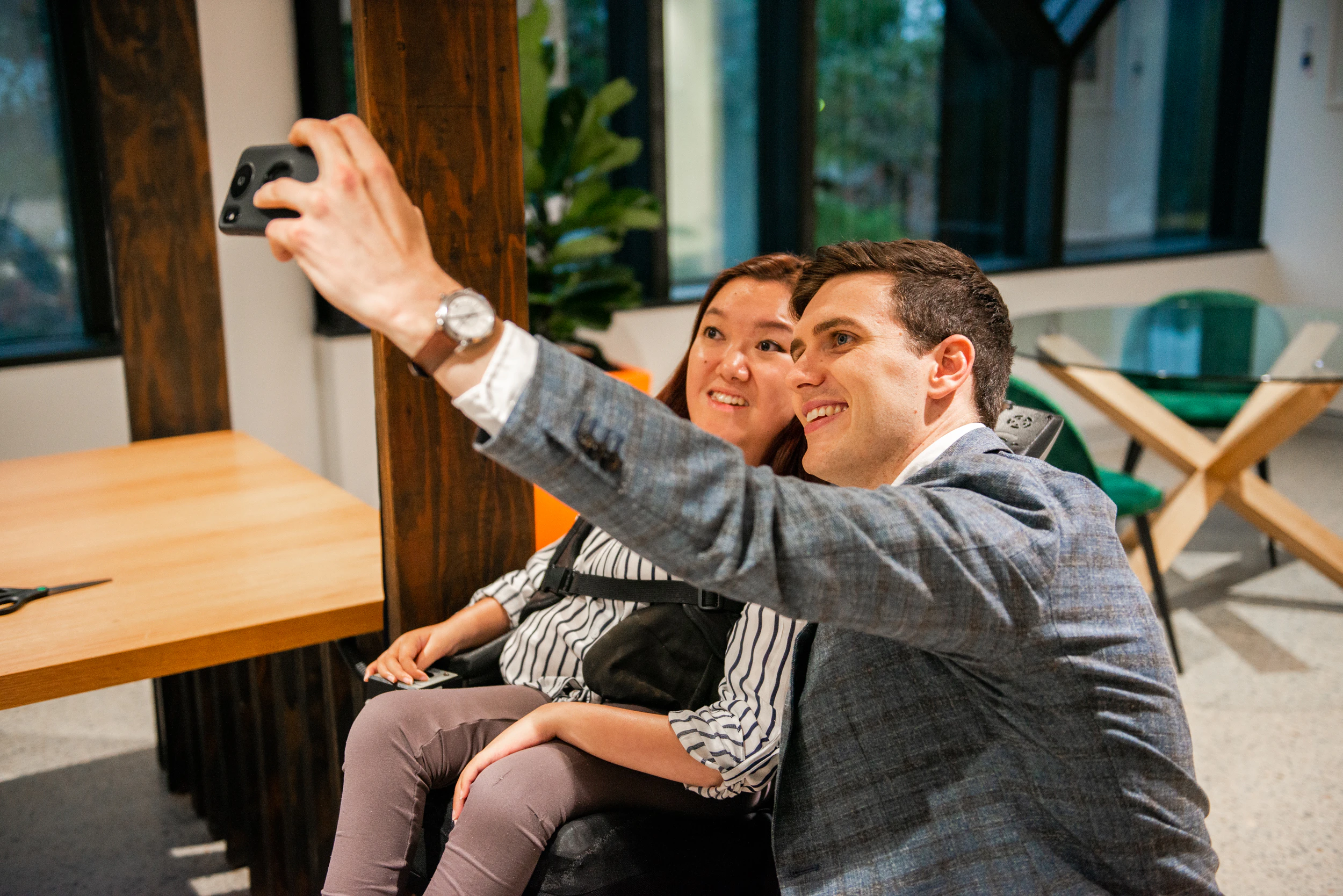
Image: Mel Tran and Jordan O'Reilly both believe education is key to making employment more universally accessible.
Mel Tran, a user-experience (UX) designer, believes access and inclusion go far beyond the physical space. “As a woman with a disability working in the tech industry, which is male dominated, access has been a real challenge.
“To me it’s about a cultural shift and a mindset. I feel I am constantly trying to work twice as hard to challenge the perceptions of disability and the stereotype, when in fact it comes down to education.”
This view is echoed by Natalia Hodgins, who lives with myalgic encephalomyelitis/chronic fatigue syndrome, and often faces a different type of discrimination. "Because of the way disability is portrayed in the media and popular culture, most people look for a visible marker, like a wheelchair or a guide dog. In reality, of the 4.4 million Australians living with disability, only 4.4 per cent are wheelchair users while 90 per cent are living with an invisible disability.”
"The most powerful thing a business or leader can say to someone with disability is, ‘You are absolutely the right person for this opportunity, what can we do to make it work for you?’ Natalia explains.

Image: West Australian-based Natalia Hodgins is one of the 90 per cent of people who live with an invisible disability.
“Humans are all different and unique and we don't all fit into the traditional work model of Monday to Friday, 9-5pm. Post-COVID, I think the businesses who will win the talent war are those who treat their employees as human beings and take a flexible approach. For many people with disability, they're not looking for expensive accommodations, they just need the ability to control how, where and when they work, so they can manage their condition while building a career."
The Hireup survey revealed that 6 in 10 Australians believe access to buildings, public spaces and facilities is difficult for people with disability, despite some of the work being done by government at local and state levels.
Many people with disability feel when the environment doesn't cater to everyone, it can make them be more aware of their disability. Inclusion starts when public environments are built and created with the concept of being usable by all people.
Hireup disability support worker Alax MacGilvray says, “I support a young boy, and when his mother and I take him to the movies, he needs to be changed on the floor of the cinema, in the corner so no one can see, because cinemas don't have larger change tables in accessible bathrooms. That’s really not something that should still be happening.”
Accessing emotional support beyond that of family and friends is important too, especially in relation to being able to undertake everyday activities. COVID lockdowns have shone a spotlight on the importance of social interactions and connectedness for wellbeing.
“Hireup will continue to do its part in providing support for more than 10,000 people with disability and their families each year. Coupled with the broader NDIS – a $30 billion nation-building project, which now covers 500,000 people – we have the opportunity to start addressing the issues highlighted in our research,” adds Jordan O’Reilly.
“With everyday Australians voicing the concern that governments should do more to improve access and quality of life for people with disability, we have a fighting chance of making real change happen.”