
Everyday language is, in a word, subjective. Each of us has a personal preference for how we like to express ourselves - and how we like to be described and perceived, by others.
In the disability sector, a question that often arises around language is: Should we be using identity-first or person-first language?
So we put the question out there to our community and this is what we got back:
Jax Jackie Brown
Disability and LGBTIQA+ rights activist, writer, and educator
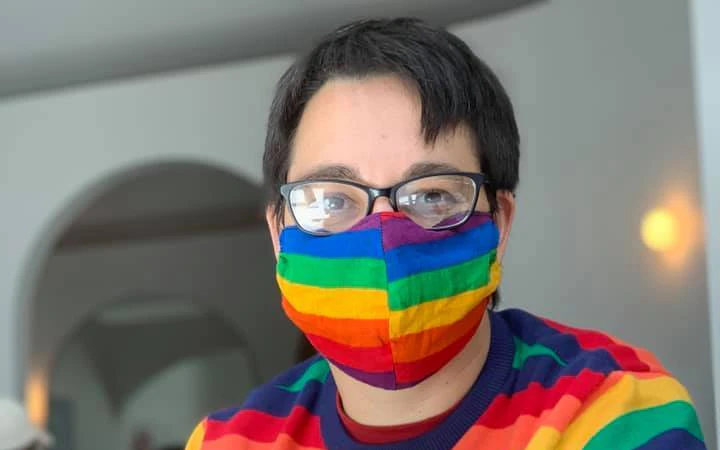
I personally prefer identity-first language. For me, saying 'I'm a disabled person' is proclaiming that I belong to a community of people. 'Disabled' is also a term of pride for me, it's about accepting and finding value in my disability and not feeling ashamed of it or wishing to minimise or apologise for it anymore. The term 'disabled person' comes from the disability rights movement and the social model of disability which says: I’m disabled by an inaccessible environment and by attitudes or assumptions, not by my body or mind. Saying 'disabled person' puts disability front and centre proudly, boldly and unapologetically.
Hannah Diviney
Disability advocate and Editor-in-Chief of platform, Missing Perspectives
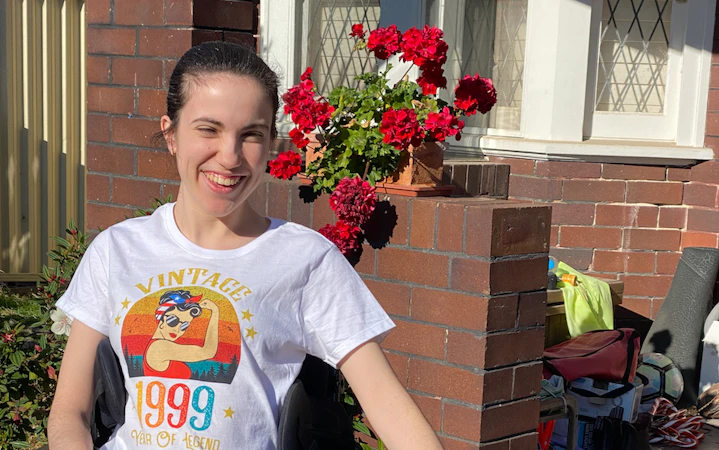
I have really interesting feelings around identity-first versus person-first language. When I was younger, I wanted everything person-first because I think I still very much subscribed to the belief that my disability didn't define me. I was desperate to be anything and everything other than disabled. These days, I use identity-first language because I've learnt that being defined by my disability isn't a bad thing. Of course it's going to define me, because it shapes everything I know and value in the world. Now, I am a disabled woman and...
Olivia Shivas
Digital producer at Stuff news NZ and co-host of the What’s Wrong With You? Podcast

For some people it's quite a personal decision, but I’m happy with both identity-first and person-first language when referring to myself. As someone who was born with a disability, I have always identified as disabled and I'm proud to be part of the disability community. I don't think of the word 'disability' as a negative, because I live as a disabled person successfully (in my opinion, anyway!) despite living in a world that is not designed for disabled people.
Steve Ralph
Tech entrepreneur, brand expert and spinal cord injury advocate
I feel like people’s style of language, regardless of disability, is a powerful way to connect and resonate. There should be high ethical importance placed on the way people refer to others.
My personal preference would be person-first language. I think it’s entirely up to the person and what they prefer, it’s very individual. Although, I prefer person-first language because it puts emphasis on what’s important – that everybody is a person and wants to be treated the same, regardless of their situation. Whether or not they happen to identify with or live with certain conditions or attributes is, and should be secondary to this.
Jess Cochran
Queer disability advocate, performing artist and speaker
It’s taken me a long time to become comfortable with the language that I use. I think for everyone, it’s a journey. I prefer identity-first language. I am a disabled person, just like I’m a bisexual person, you know? I wouldn’t go around saying that I’m ‘a person with bisexuality or queerness’. But I also don’t say I’m ‘a person with disability’ because it’s not something that I can pick up or put down, either.
It is a part of my identity, it’s part of my journey and in various ways it does define me. It’s made me who I am in so many ways.
Paul Micallef
Former aerospace engineer and founder of Autism Explained
Language is a controversial and highly sensitive topic. Are you a parent, or do you have children? It means exactly the same thing, yet many individuals have a strong preference for one over the other. So the most important thing is that individual preference is respected, we can’t make a blanket rule that fits everyone.
I personally strongly prefer to refer to myself as autistic. To actively choose to identify as autistic is a powerful statement around embracing our own identity and embracing autism, rather than seeing it as something that should be removed from a person.
Natalia Hodgins
Communications expert and disability inclusion advocate
As a communications nerd I love this question! Words are so powerful and play an important role in shaping how we understand the world - and how it understands us. I like to use identity-first language when talking about myself and in my writing, but I absolutely recognise that everyone has their own preferences when it comes to language.
I acquired a disability as an adult and because of the way things developed, I went through a two year period where my identity shifted from healthy, to chronically ill, to disabled.
Identifying as disabled and being part of the disability community have been incredibly positive experiences for me. I found my tribe and while there’s plenty to fight for, I feel much less alone than I did before. I felt like ME/CFS stripped away so much of who I was as a human, while disability has helped me build myself back up again.
One thing to steer clear of is nonsense words like differently-abled or diverse-ability. I’m proud to be disabled and I don’t need you messing with my language just because you find it confronting.
Austin Hasan
Senior legal officer with the Department of Justice in the Supreme and District Courts, Queensland
I should firstly say that the disability community is diverse, each one of us has language preferences they want used to describe them. I acknowledge that some language used to describe a person with a disability can be hurtful (whether intentional or not), outdated or plainly inaccurate.
My personal preference is person-first language. I prefer person-first as that’s exactly what I am. I am first and foremost a person, even though my disability/injury forms a large part of my life it isn’t what completely defines me as a person.
When in doubt about what language to use – just ask! The best authority and most informed people to determine the appropriate language to use are the people with disabilities themselves.