
Disability advocate Carl Thompson reflects on his schooling experience and shares his opinion on the proposal to phase out Special Education Schools.
It’s a choice no family should have to make. Parents of school-age children with disability in Australia must make the difficult decision between prioritising education outcomes, or their child being given adequate disability support.
For me as a person with disability, my parents chose mainstream education. It wasn’t an easy decision as some local schools wouldn’t even consider my enrolment, and those that would still had some reservations about the idea, usually to the tune of “…there’s a special school up the road, they'll look after him!”
My parents insisted and we persisted. Mainstream school it was.
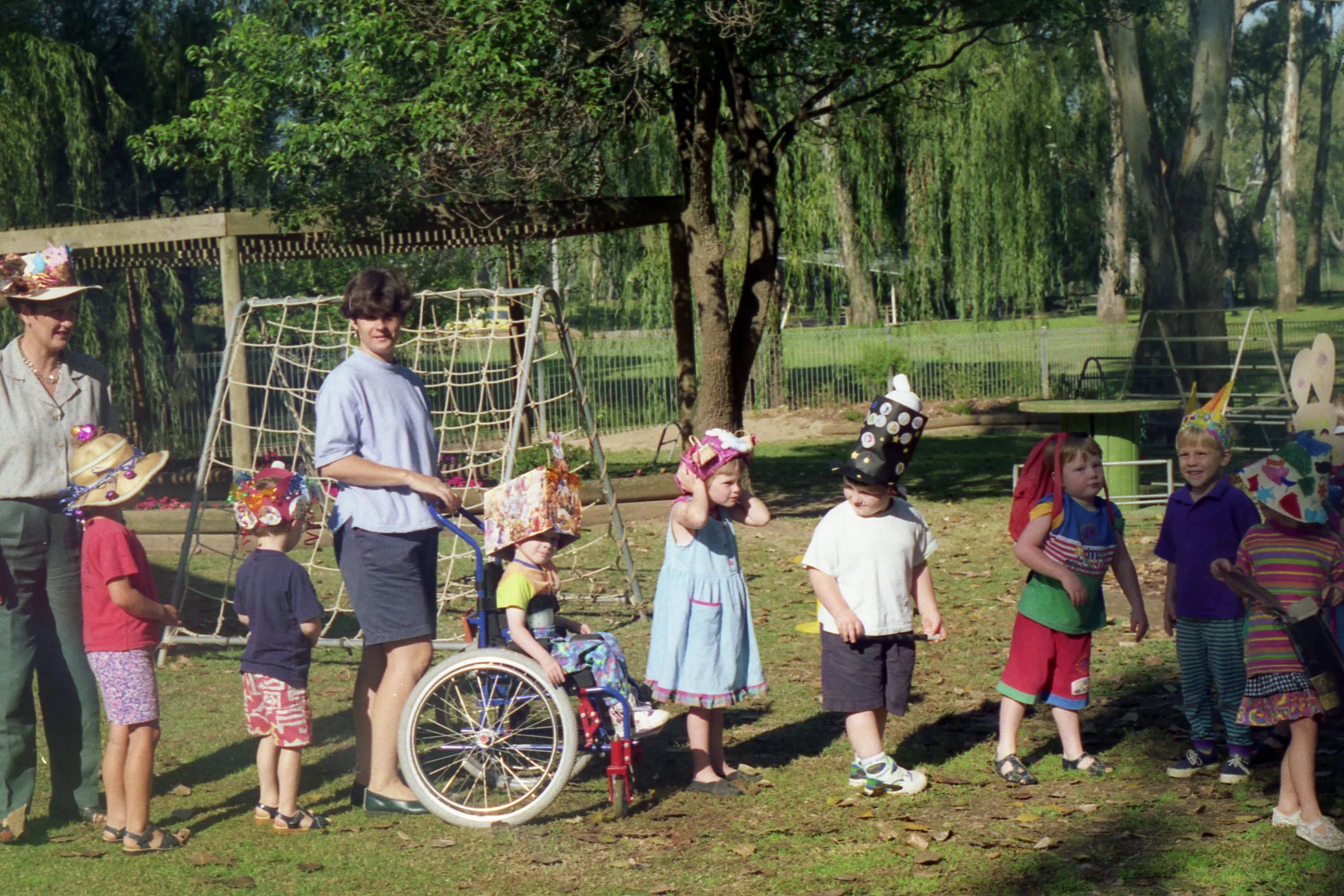
Image: A young Carl Thompson features in the middle of a line of school children wearing festive hats.
The sceptics had a point - my parents had to fight for me to have adequate support for my physical disability. We forced my primary school to build an accessible toilet. My secondary school needed to build a new ramp so I could access the classrooms. Throughout all my years of schooling I had to justify the need for a one-on-one integration aide to assist me with scribing and motor skill tasks.
Was it worth all the effort?
If you asked me at the time, I would have gladly skipped school and played video games instead. And yet, I did learn. I learned how to spell, write, maths, languages, chemistry and drama. Perhaps more importantly, I learned soft skills. I made friends, navigated social cliques, traded lunchbox snacks, was teased, teased others, took risks and learned from them, avoided girls then later discovered they weren’t so bad after all.
My mainstream school also asked me two important questions: what do you want to do for a job and what do you want to study at university? I later realised that it wasn’t so much the answer to these questions that was important, but rather the fact that I was asked them at all.
You see, many people with disability who have been through the Special Developmental School system are not even asked these questions. Many people with disability report that they didn’t even know that further education or employment in their chosen field could be an option. Instead, many disabled people either work at an Australian disability enterprise after their school years or go to a day program.
Not because they necessarily wanted to, but because it was expected of them.
For me, the expectation was that I would go to university and that I would work. Expectations can be a double-edged sword and I’m not naïve enough to think that my way is the only way. However, I truly believe that raising expectations is key to improving the lives of people with disability.
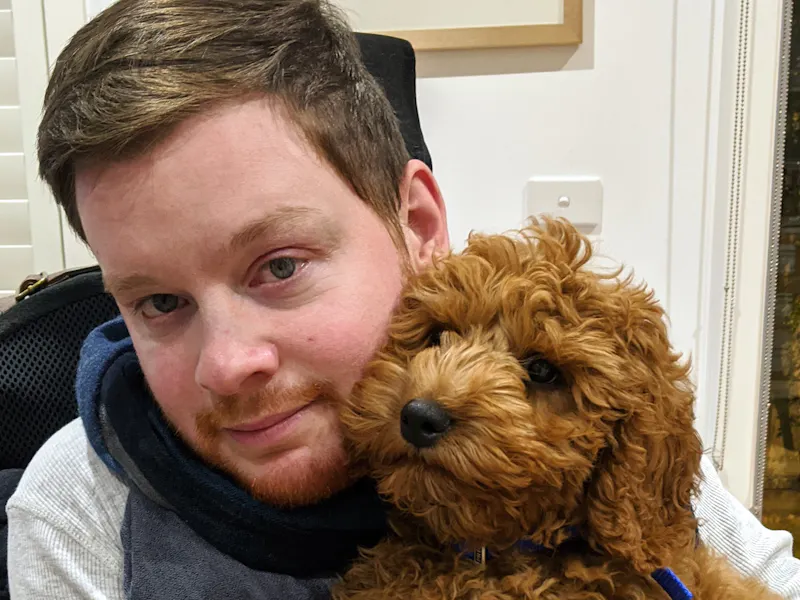
Image: Carl Thompson snuggles with his dog, Oscar.
Children and Young People with Disability Australia (CYDA) caused a stir with an announcement of their recent federal election platform. The centrepiece called for Special Developmental Schools to gradually close and for resources to be diverted into the mainstream education system to support students with disability.
Perhaps unsurprisingly, the announcement caused outrage on social media:
- “Disabled kids would get bullied at mainstream schools!”
- “Teachers struggle enough!”
- “They won’t make any friends!”
- “My cousin went to a special school and he loved it!”
I believe all these concerns can be addressed with one thing: support. If students with disability (and their teachers) receive the right type and amount of support, is there really any excuse not to include everyone in mainstream education?
This won’t happen overnight (CYDA themselves describe it as a 10-year plan) but if implemented, it would effectively remove the choice parents need to make by ensuring adequate disability support is provided at all schools.
Let’s raise our expectations - and ensure that every Australian child has access to quality education.

Carl Thompson
Carl Thompson is a power-wheelchair-using NDIS participant and Director of Sort Your Support, a provider of Support Coordination and NDIS troubleshooting. Carl lives in Melbourne with his partner, and his dog - Oscar. In his spare time, Carl makes videos about living with a disability, which you can find on his YouTube channel.