
Last week, Ronald Sackville wrote to the CEOs of Australia's airlines and airports. He hadn't had a flight cancelled, nor his bag lost. He wasn't writing about the lack of catering options, nor delays at airport security. Instead, the Chair of the Disability Royal Commission wrote to outline the serious issues many disabled people face when flying.
Good.
When someone with Sackville's authority writes a public letter, it's long-overdue proof that people are taking notice. Because despite how often issues occur, a lot of the world still doesn’t realise the trouble disabled people have when we travel—particularly by plane.
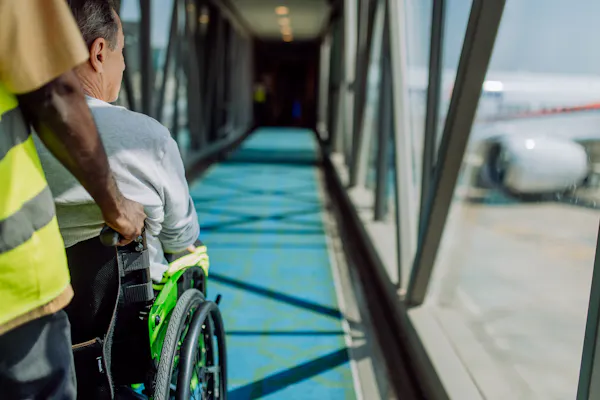
Whether it’s having our mobility aids lost or broken, being treated like inanimate objects, being disrespected or harmed, or not having our basic access needs met, it has a huge impact. And the world, for the most part, doesn’t seem to care. Worse: they often diminish our experiences and don’t believe us.
I know so many people who’ve had horrible experiences—and I’ve definitely had my fair share. But even with us speaking out about it, things don’t really seem to be getting better, and we continue to be dismissed.
Hopefully that’s changing.
Sackville's letter comes after the Disability Royal Commission held two workshops focusing on disabled experiences while flying, where over 60 participants shared their stories—myself included. Though we have different disabilities and experiences, all of us are fed up and tired of being treated poorly—and tired of airlines and airports getting away with it.
Change needs to happen.
Airlines and airports cause so much avoidable trauma. It is almost always humiliating in some way—and when issues do happen, the resolution process is convoluted, unclear and exhausting. Issues seem to resolve only when a story gets media attention, like I did when Qantas broke my wheelchair last year and initially refused to help. But media attention is obviously something that’s not accessible to everyone.
Whether we hear about these stories or not, they happen every single day, all around the world. In Australia, we’re not recording this data. We really, really should be.
According to US statistics, 29 wheelchairs are broken or destroyed every day, just in America. So, you can imagine how many are broken, if we look at the world. And that is just one kind of disabled experience while flying—not to mention people with invisible disabilities, people with service animals, people with specialist medical equipment, and those in the Deaf and Blind communities.
In amongst my bad and humiliating experiences, I had a relatively okay one recently, where I was actually treated like a human being. Mostly. And by that, I mean doing the absolute bare minimum: people referred to me as a human (rather than just “wheelchair” like I’m an inanimate object, security asked my consent before touching me for a pat down search (they often don’t), and a staff member asked before they grabbed my wheelchair. All very basic things—and yet, I was so shocked, because that had literally never happened before.
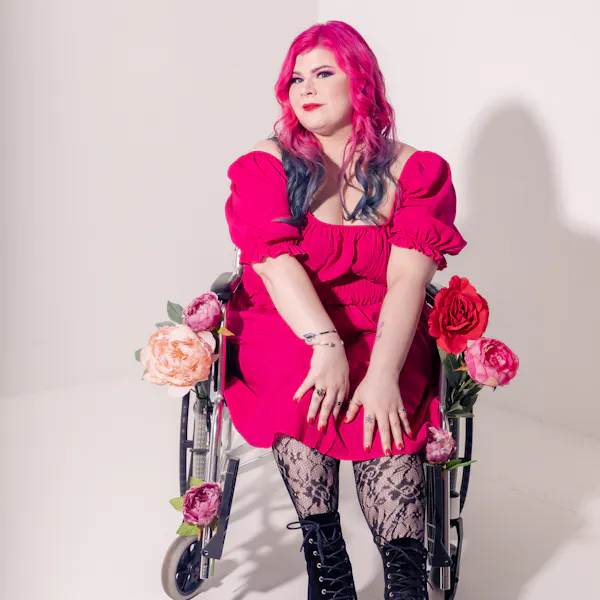
I ended up praising the airline, Virgin, online. It’s sad how much that experience differed from the norm. We shouldn’t be praising airlines for doing bare minimum. And if non-disabled people were treated the same way we are, there would be riots.
To me, the solution is simple: we need disabled people involved in leadership positions at airlines and airports. We need diverse, intersectional representation while creating policies and procedures, and reviewing what doesn’t work, while we together re-build a broken system. We need to ensure airport and airline staff are trained better about disability—with the training led by disabled people. And most basic: we need to ensure accessibility.
Some people might argue against this with lines of: change will never happen, it’s too expensive. But in reality, a few small tweaks won’t cost much. Plus, think of how many more disabled people would be able to fly! There’s a whole market of people currently too traumatised from past experiences to want to fly again. And with what the CEOs of those airlines are earning, I think they can spare it. Especially because accessibility benefits everybody. I dare say they’d save money, if only by dealing with fewer complaints, fewer broken wheelchairs, and fewer media storms when they mess up, as they regularly do.
Disabled people should not have to crawl off the plane.
Disabled people should not have to worry about whether their precious mobility aids will be broken.
We shouldn’t be worried about how we’re going to be treated.
But we do.
Disabled people deserve better. It’s time bosses of airlines take their heads out of the clouds and hear us.

Zoe Simmons
Zoe Simmons is an award-winning disabled journalist, copywriter, speaker, author and advocate. She writes to make the world a better place. You can find out more about Zoe on her website, or follow her on Facebook, Instagram, Twitter, LinkedIn or Tik Tok.