
Twenty-five percent of Australians with profound or severe disability don’t speak English at home but most of the information provided by the NDIS is in English. So how do people from culturally and linguistically diverse (CALD) backgrounds access the needed supports in their plan?
The term ‘CALD participants’ refers to participants of the NDIS who don’t use English as the primary language at home. Historically, Australians from CALD backgrounds have been underrepresented in the disability sector.
According to the National Dashboard in 2020, there were 40,391 people from CALD backgrounds; 9.3 percent of the 442,209 people nationally on NDIS.
And further data shows that CALD participants are utilising 66 percent of their plans on average compared to 68 percent for non-CALD participants.
A father, who is of European origin, spoke to this correspondent about his young daughter who has an intellectual and physical disability. He attended various workshops to understand the workings of the NDIS system and was confident that he had articulated the supports that his daughter needed.
“But what was put in the plan was different to what we had explained to the coordinator. It didn’t meet all of our daughter’s care and support needs so we had to further explain everything and go through a plan review process,” says the father, who wishes to remain anonymous.
“The planning process can be emotionally draining and very stressful, more so for CALD families with minimal information, resources and support,” he adds.
Many people from culturally and linguistically diverse (CALD) backgrounds struggle to navigate the NDIS system because there’s a lack of specialised assistance during the planning process. There’s complex and confusing language, and difficulties in obtaining an interpreter who understands the disability vocabulary.
Some people from CALD backgrounds just accept whatever is in the plan because they have limited capacity to advocate their case due to language barrier. A common sentiment that resonates with people accessing the NDIS is that the support funding they receive is related to how well the application is worded.
Many times, miscommunication and vital information lost in translation can result in inappropriate and inadequate plans, say disability advocates.
Dominic Golding, who is of Vietnamese-Chinese background and lives with physical disabilities and cerebral palsy says, “The biggest problem is that the Local Area Coordinator (LAC) tasked to explain the plan to a new or existing CALD participant relies on the interpreter service - only if they are proactive to do so.”
“Most LACs are not bilingual. What is needed is someone to break down that information in language that can be easily understood by a person with a disability from a CALD background.”
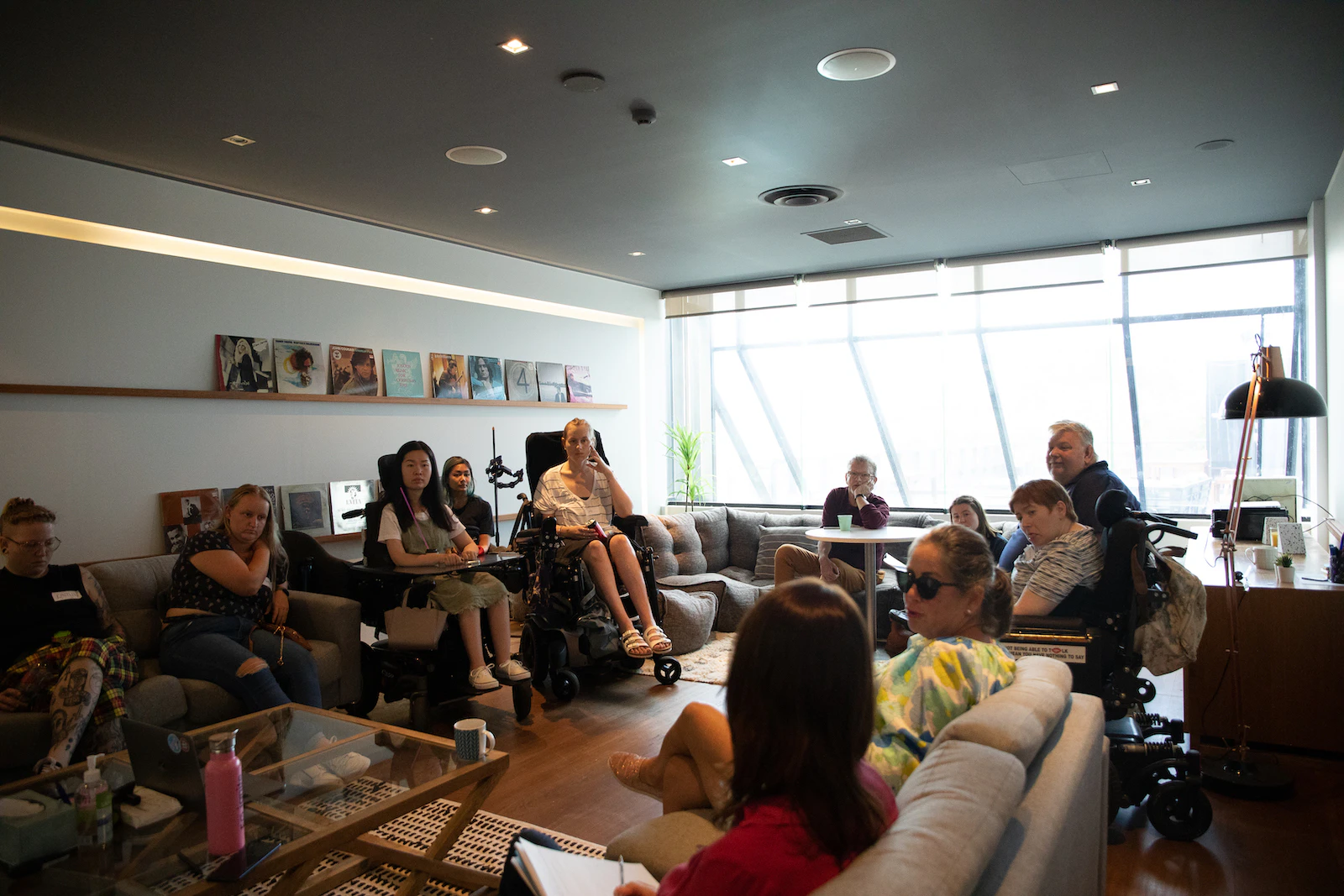
Dominic opted for a self-managed plan to begin with because he believed he had a good understanding of what supports were available for him. But he was shocked when he was told off for inadvertently spending on services he shouldn’t have.
“Nobody had explained the classifications in the plan to me. So even people, who are fluent in English and are able to advocate for themselves, can find their plans to be inappropriate, especially if they are seeking multi-disability support”, adds Dominic, who is Policy and Project Officer at the National Ethnic Disability Alliance.
Culturally, people in some communities feel shame or guilt that their child is born with a disability. Others don’t want to acknowledge the disability because of the stigma around it. These are additional layers of difficulty that certain communities face in accessing NDIS.
Sylvana Mahmic, Chief Executive Officer of Plumtree says, “Some individuals, from countries where there is no social welfare, are just grateful for being in Australia. They’re hesitant to seek help because they don't want to rock the boat by asking for disability support.”
“Others don't want to say that they are on NDIS because it's equated to being on a dole, which it is not. Tackling stereotypes and helping families to understand contemporary views of disability sensitively and positively is a beginning,” she adds.
The NDIA’s Cultural and Linguistic Diversity Strategy 2018 recognises that more work needs to be done to ensure that NDIS is set up in a way that it doesn't disadvantage CALD people.
Disability advocates emphasise the need for providing better advocacy, advice and assistance for plan development and coordination, especially for Australians from culturally and linguistically diverse backgrounds.
What can people do to ensure that they are heard during the planning process? Physical Disability Council of NSW’s (PDCN) Chief Executive Officer, Serena Ovens, shares some tips:
Pre-plan before the actual planning meeting:
People should know their goals, their individual needs, and the supports and services needed to help achieve those goals. This can be done by themselves or with support from an organisation such as PDCN or the Multicultural Disability Advocacy Association, which provides individual support sessions before people even get to their Planning meeting.
Ask for an interpreter:
If you’re not fluent in English, you can ask for an interpreter to be present at the planning meeting. It’s really important to understand what's being said and what's being asked in the Planning meeting.
Talk to your peers:
Check what's available in the community, a local peer group, or one of the many online forums. Each individual’s needs are different, but talking to others who have been through the planning process can help.
Take someone with you:
It can be difficult to spell out all the needs associated with a specific disability in a short time so taking an informal support person, friend, family member or a formal advocate can be helpful to get your points across.
Attend a workshop:
There are NDIA-funded organisations, which have some free capacity building workshops and courses that can help understand how to manage the plan, access services and learn the skills to be one’s own advocate.
At the planning meeting, participants can choose from one of three kinds of plans to manage their support funding. You can find out more about these options on Hireup’s Help Centre.

Neena Bhandari
Neena Bhandari is a an award-winning journalist and foreign correspondent. She writes for various international and national media outlets on a wide range of subjects, including health and science, disability and the NDIS. She has lived experience of polio and has written extensively on poliomyelitis and post-polio syndrome/late effects of polio, including for the British Medical Journal. Through her writings, she hopes to bring the focus on disability issues from the margins to mainstream media.