
Interview and story by Bee Penrose
Australia’s first legally blind fashion designer and founder of the fashion label Blind Grit, Nikki Hind believes that having a disability should be listed, as an asset, on a person’s résumé. Nikki started Blind Grit as a way of buoying her mental health and managing the effects of trauma. Connecting with what she loved – immersing in creative therapy, actively reaching for a dream, aspiring to make something new and different in a way that has a positive social impact – gave her a powerful way of enduring the challenges she faced. It also motivated her to continue to strive for her version of success.
Nikki’s passionate about inclusion and social justice, and those values inform how she goes about operating a business that happens to design clothing. Often, when disability and fashion arise in conversation, the focus is on adaptive clothing – which Nikki contends is not fashion, nor truly inclusive, at all. “There’s a lot of talk about inclusion within the industry, but not so many people with lived experience at the decision-making tables,” she says.
Nikki ardently insists that people with disabilities have many incredible contributions to offer mainstream arenas, referring to lived experience as expertise. As she points out, “people who live with disability are genuine, innate innovators,” compelled to live with courage and creativity, to function “outside of our comfort zone 24/7” and to “cope productively with disruption”.
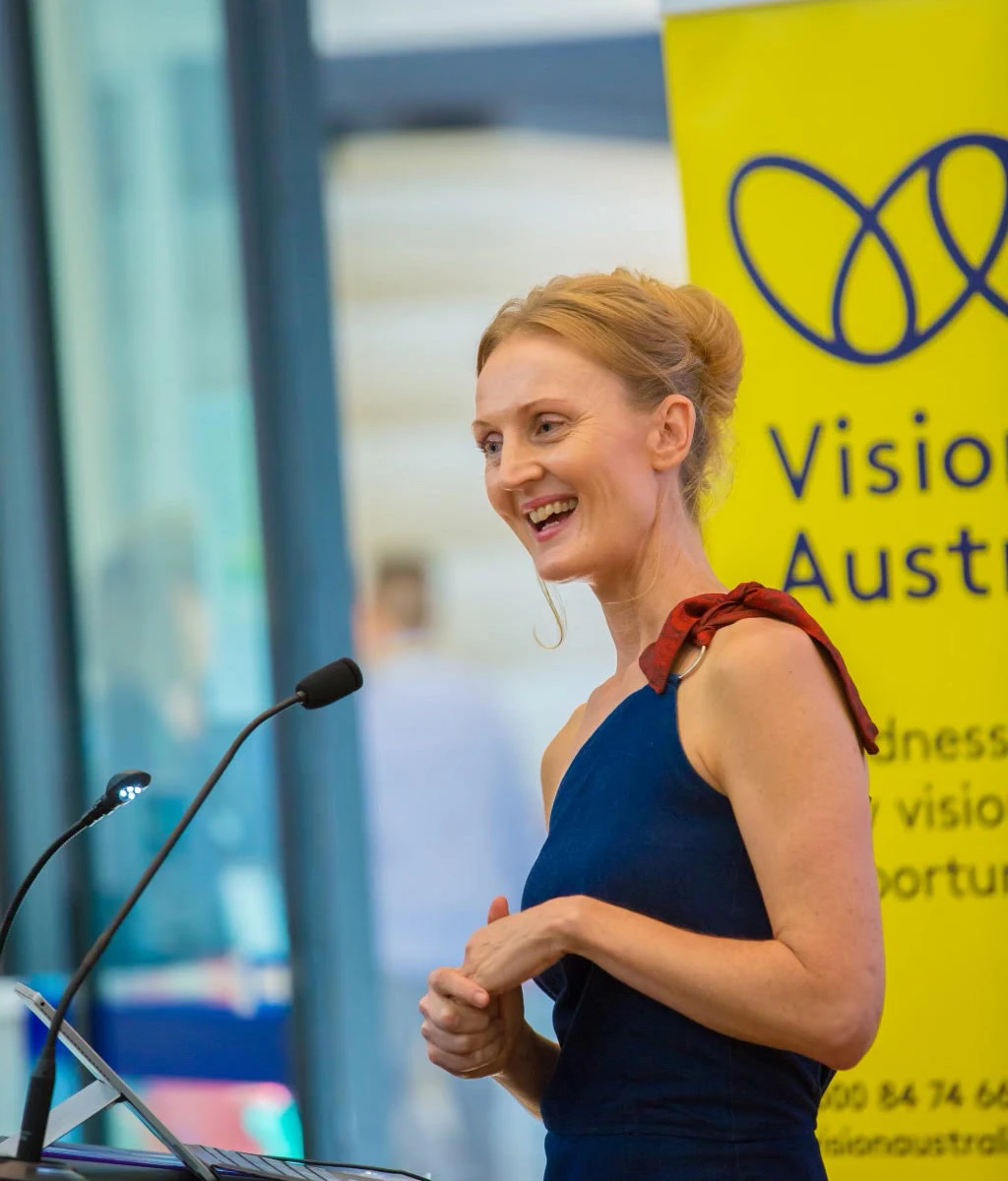
Nikki wants recognition of this fact, particularly in business
Her fashion label seeks to harness these assets and showcase the valuable and often unseen or undervalued strengths, talents and skills of people with disabilities and survivors of trauma. The concepts of aspiration, validation, and motivation at the heart of Blind Grit serve to unleash the potential of people with disabilities to have “more than entry-level positions”. Nikki is convinced of the power of positive, creative pursuits to influence society’s view of people, and perceives fashion as the most accessible and prized art form, making it the perfect vehicle to get these unseen attributes seen and acknowledged.
After all, fashion isn’t really about clothing; it’s about self-expression. It communicates our values, our affinities, our personality and ultimately, it centres around creativity. “It’s a great social communicator - it tells us what’s desirable, what’s beautiful, what’s important,” says Nikki. “When you have a visible disability, it’s the first thing that people see. When you don’t, the first thing people see is essentially fashion, even if you haven’t made an effort.”

Nikki’s vision for Blind Grit is to creatively incorporate people’s strengths and talents with “the universal power of art” to amplify the visibility of what it takes to live with disability and to have survived trauma. She aims to nurture creative expression and promote the commercially viable traits generated by living outside of a comfort zone. She wants mainstream society to pay better attention to the contribution people with disabilities can make when appropriate opportunities are made available.
Accessible clothing isn’t all that’s needed, though access is certainly valid. We need to tell our story from a strength-based perspective and be recognised for the incredible skill set that we develop in order to participate in a world that isn’t built with us in mind. As Nikki says, “It can be very serious to live with the scars of trauma and abuse and to live with disability, so to have something that’s fun, aspirational and glamorous, is important.”
Bee Penrose is an artist, aspiring author, and trauma survivor who lives and breathes neurodiversity.