
Like many women in the autism community, Elena Wewer has something to say about the treatment of a certain Aussie talent.
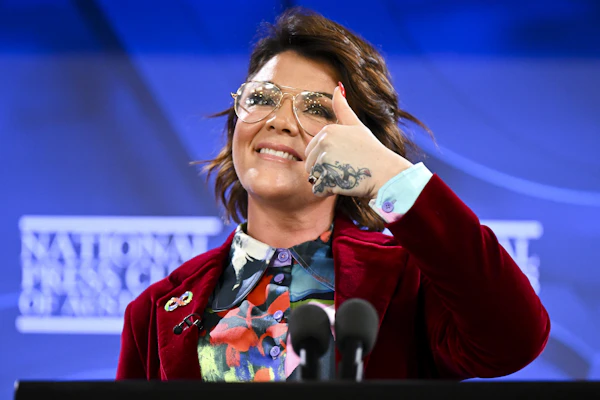
This week comedian Em Rusciano was accused of “faking” her autism diagnosis by fellow comedian Meshel Laurie. Though Laurie has since deleted her offending Instagram post, the damage was already done – the media picked up on the story and Em Rusciano addressed the accusation on Twitter.
“Being accused of faking having autism for attention was not how I imagined today,” Rusciano tweeted, adding that she “would not recommend reading the Daily Mail comments section, ever. No matter what. EVER.”
Sadly, Rusciano’s comments referring to the public’s reaction to the accusation is a hint at the number of people who agree with Laurie. For autistic women, the saga has been a depressing reminder that there are still people in the community who not only don’t believe we are autistic, but will go out of their way to convince others we’re “faking” it.
It’s an incredibly loaded accusation to make, not least of all because it seems to imply that women gain something by faking an autism diagnosis. When the truth is, for many of us, disclosing that we’re autistic can lead not only to public ridicule and social isolation, but professional and medical disadvantage.
So why don’t people believe us? It all comes back to gendered diagnosis bias, which claims like Laurie’s – that women are faking their diagnosis – only contribute to. Statistically, we know that women with autism are diagnosed later, if we’re ever diagnosed at all. Historically, autism was regarded as a condition that mostly affected boys, with an oft-cited statistic being that four times as many boys are autistic compared to girls. But even as this bias is slowly being addressed, more recent statistics still place the diagnosis ratio at three autistic boys to every autistic girl.
The reality behind these statistics – and the reason autism is missed in so many girls and women – is because, as Rusciano stated on Twitter, girls and women typically present differently.
Instead of the non-speaking, train-obsessed maths geniuses who struggle with social mores (a classic male stereotype of autism), autistic girls are far more likely to be able to communicate well, can expertly mimic their peers and have an intense love of more socially-acceptable interests, like horses, movie stars, or pop singers.
But being able to speak and understand what is socially acceptable doesn’t make being autistic any easier. For many autistic girls and women, we’ve always known we were different – and we’ve always known being different isn’t a good thing. So we “mask”. We pretend to be someone we aren’t just so we can fit in.
Take me, for example. I was a sad, easily-distressed child and, as I got older, my anxiety and depression only worsened. As did the vague, unsettling feeling that there was something fundamentally “wrong” with me. I wasn’t even a tween before I realised there were parts of me I should hide. From the tantrums I was too old to be throwing to my intense sensory sensitivity and separation anxiety, I knew I was not enjoying the childhood everyone around me was.

Still, I kept trying to fit in. I forced eye contact and voice inflections. I practised faces in the mirror. Though I desperately wanted to be left alone to read or collect leaves, I pushed myself to befriend people I didn’t really connect with. And, ashamed of my clumsy, weak limbs, I focused all my attention on school work, hopeful my grades would make up for everything else I was lacking.
But as much as I tried to fit in, the kids at school sniffed out my difference – and to them, that difference was a weakness. Though the name-calling and being pushed into brick walls eventually stopped, the knowledge that there was something different about me stuck. By high school, my self-confidence was at rock bottom. Even as I went off to university – having been promised I’d “find my people” – and reached adulthood, I found I was lonelier and more confused about my identity than ever.
It’s only now, in my late 20s, that I realise I’ve been masking autism my entire life. But it never really worked. Even though girls and women are socially conditioned to mask our autistic traits, we know we are different and, eventually, our masks will slip.
For many, like me, this results in some sort of breakdown (or breakthrough) eventually leading to an autism diagnosis.
Though a diagnosis of autism can make everything make sense, masking remains exhausting, hard work, and the reality is we can never fully unmask. As Meshel Laurie’s actions have shown us, it’s not even safe to – in a society dominated by neurotypical prejudice, trying to be your true autistic self almost guarantees social backlash.
At best, people don’t understand you. At worst, they don’t believe you. So no, women like Em Rusciano aren't faking their autism. The truth is we've been faking being neurotypical our entire lives, and now we no longer want to.
Elena Filipczyk
Elena Filipczyk writes about animals, autism and chronic illness. She is a rollerskating and music-obsessed vegan and intersectional feminist, who is autistic and has ADHD.