
Disability advocate and model Anja Christoffersen has VACTERL association, a rare disability that greatly impacts her bodily functions. Here, she shares her long and painful journey to finally accessing the supports she needs.
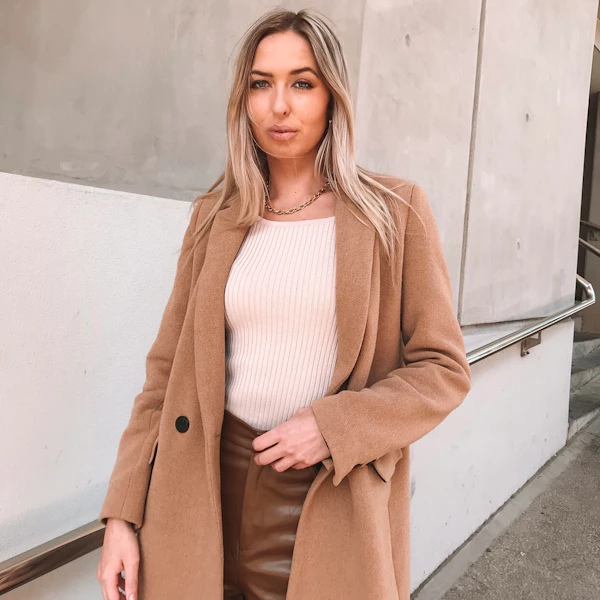
I was born into a life of disability, diagnosed from a scan 28-weeks into my mother's pregnancy. Receiving a clear diagnosis, albeit for a rare and complex condition, is a privilege many are not granted. However, it did not grant me a golden ticket into a social support and disability system.
As a child, my mother was able to get a healthcare card for me. She also received child disability carer payments - enough to cover a crumb of the costs of keeping me functional enough to attend school.
Turning 16 meant I suddenly ‘wasn’t disabled anymore’ in the eyes of the bureaucracy. The payments and healthcare card were taken away and I was left to fend for myself.
We spent hundreds of dollars on things that I needed to maintain continence - and reused a single-use catheter for years.
As I grew older, I struggled to find my place. I felt that I didn’t belong on welfare payments or deserve to be getting support for my disability. I used the fact that others were worse off than me to invalidate my own experience. I thought that getting the support I needed meant taking it away from someone else.
I found it hard to reconcile my experience of disability with what I saw in the media or plastered on accessible bathroom stalls. I wasn’t represented - and was bombarded with well-meaning compliments of how well I was doing or how great I looked.
In reality, my disability was invisible. And my functional challenges were, too. This was exacerbated by my learned ability to hide them and not ‘burden’ others or the system.
Struggles with swallowing, continence, sexual functioning, workforce participation, and not having any certainty about what the next week – or sometimes even hour – would hold, were all things I had convinced myself were ‘not good enough’ reasons to be supported.
But now I wonder, was the issue that I didn’t think I needed support? Or was it the system that, through its barriers to access, taught me I didn’t deserve to be supported?

I first applied for the National Disability Insurance Scheme (NDIS) in 2018. I’d spent most of that year in tears. I had crippling pain, debilitating fatigue, and - to save me from drastic surgery - was in need of medical equipment I couldn’t afford. I expected that my GP could just write my medical conditions down on the access form, explain how they impacted me, send it off and I’d be placed on the scheme.
Then I received my first rejection.
By this point, I’d realised that I couldn’t continue living without funding or support. I needed certain equipment to give me any quality of life. Self-funding it was near impossible.
I applied to the NDIS again in 2019, this time with an entire team involved. I had multiple specialist letters and endless pages of evidence. I included a heart-wrenching personal statement that described how I was impacted every day. I shared how I was unable to leave the house without the support I was struggling to self-fund, and the subsequent isolation and shame.
Again, I was rejected. My disability - and the fact that it’s lifelong - was recognised. Its functional impact was not.
I contacted some NDIS experts and they told me my advocacy and social media presence weren’t doing me any favours. Me saying that life could be good with a disability made it seem like I was coping when I wasn’t and this would all be weighted against me.
I felt torn between admitting my struggles and maintaining that I had a meaningful and purposeful life, as these things co-existed.
Come 2021, I’d lost most friendships. They’d become distant or strained by my inability to attend simple catch-ups or significant occasions – limited by my lack of access to supports and subsequent deterioration. The simple pleasures I had once enjoyed, like spending time with those I love or leaving the house, seemed like distant memories.
I never thought I would get to the point of feeling like I couldn’t go on physically or emotionally, but there were many times that I did.
My medical team rallied behind me and, after a long time on a waitlist, equipped me with an NDIS co-ordinator. Together, we began the application process one last time.
I didn’t think I’d be able to bear or physically survive another rejection. It felt like I had to get to the point of losing everything to get the support that I needed.
The next six months saw me looking at myself through the NDIS lens. Describing every way that my disability made me incompetent, a failure, a missing piece in society. This takes a toll that is rarely discussed. It’s not a dignified process.
We submitted and I tried to reconcile with what I’d written in that application, and what others had written in all of those supporting letters, knowing it was all true. My self-belief of being capable, independent and able to handle everything on my own was ravaged and would never be the same.
Then, third time lucky, I was approved. And the package I received was nine times larger than what I would have asked for back in 2018. That’s partially because I needed it, and probably always had. But it’s also because the disability system has left me to deteriorate so severely that it will take that investment to nurture me back to the person I once was.
Is this a scheme that is insuring people with disability and building up their capacity? Once they get on it, perhaps. But the barriers to entry do great damage and, in the long term, see NDIS dollars unnecessarily spent.
We have ‘a new hope’ in NDIS 2.0 - Bill Shorten’s NDIS review. My hope is that others won’t have to suffer, as I did, in the process of accessing the support they need.
Anja Christoffersen
Anja Christoffersen is one of Australia's most distinctive voices on disability and human-centred design. Born with a complex rare disability, she has spent her career building inclusive systems from the inside – as a researcher, co-design practitioner, and consumer health leader. She is the author of Behind The Smile and editor of In Crowd magazine.