
On a chilly autumn morning, the National Tennis Centre is buzzing with energy. Shoes sharply squeak, wheelchair tyres skid, and tennis balls whizz across the court.
Dozens of young people with different disabilities are trying out for the All Abilities Ballkid program run by Tennis Australia. Rod Laver Arena stands in the background of the day’s activities, its presence a motivator for the young people who dream of being on the court at the Australian Open in 2027.
The All Abilities Ballkid program is a new initiative from Tennis Australia, now in its second iteration after its roaring success at the 2026 Australian Open. The program was designed to show that just like the sport of tennis itself, the role of a ballkid can be adaptive and isn’t exclusive to able-bodied people.
Speaking from courtside at the trials, Chris Okely, the All Abilities Lead at Tennis Australia, says that diversity, equity, inclusion is at the heart of what Tennis Australia does.
“It really teaches people and the community that people with disability can do everything too and they've got their own unique abilities that I'm really proud to showcase at events like this,” said Chris.
“Tennis is a game for everybody. Behind me you've got kids who are deaf. You got kids in wheelchairs performing the same skill as those without a disability.“
Fulfilling the role of a ballkid requires a range of skills that need to be performed at the highest level. With a diverse range of abilities on the court, Tennis Australia quickly learned that the best way to adapt these skills was to consult the ballkids themselves.
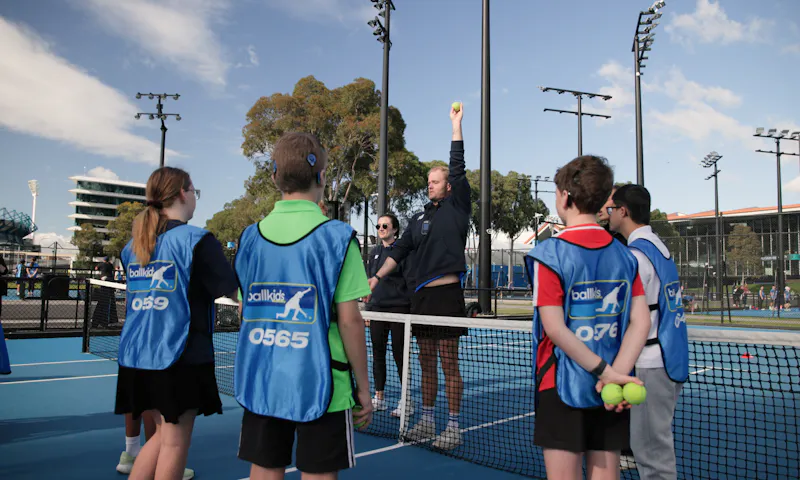
Daniel, a member of Tennis Australia’s Ballkid Operations team, says consulting the participants opened up new options for how a ballkid could perform their role.
“We ran the kids through a bunch of different drills,” he said.
“Things like rolling, servicing the ball, bouncing that to the player if they're able to. [We] make modifications where we need to adjust as best we can. People with disability know what works best for them.”
Matthew, who completed the All Abilities program last year and was an All Abilities ballkid at the 2026 Australian Open, says it was a surreal yet exhilarating experience.
"The best part for me of being an Australian Open ballkid is being so close to the players on court," he said. "The crowd was ecstatic. In my opinion, it's the best seat in the house."
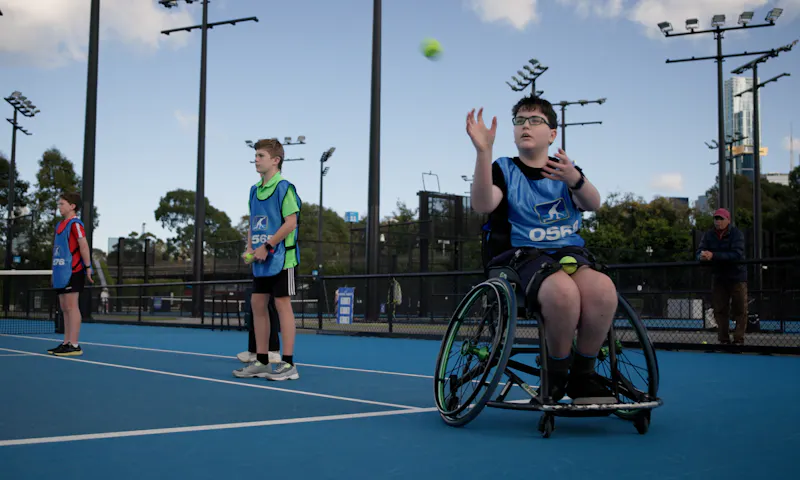
Returning to help and share his advice at this year's trials, Matthew showed other kids how they can adapt their style.
"[Matthew] showed us how you can hold multiple balls in one arm. That’s not necessarily the traditional way, but you can still do the exact same skill and it looks just as amazing on court," said Georgina, another member of Tennis Australia’s Ballkid Operations team.
For Chris, he hopes that this program is not only successful, but that it becomes so standard that his role will be redundant.
“What I hope is that in 25 years - I say this all the time - that I don't have a job because disability is embedded in everyone else's role. You can't be what you can't see. So, we're continuing to grow this program.”
“To hear from kids that never thought they would see themselves on TV or see themselves represented, it's just the best.”
