
Amy Cramb has surveyed almost 200 autistic women about how they are treated by mental health professionals – and the results show a need for more education and awareness.
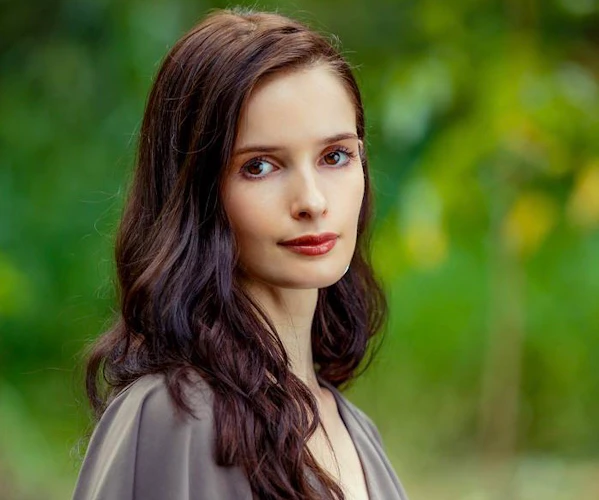
For as long as I can remember, I have felt like an alien. I often did not understand other people and they did not understand me. My differences became increasingly apparent in late primary school as I was rejected and bullied by my peers. These devastating experiences led to me seeing my first psychologist at the age of 10.
A decade of appointments passed with numerous different psychologists, yet no one could help me. My mental health was getting worse each day. I was eventually deemed a “complex case” with multiple overlapping diagnoses, which I now know to be misdiagnoses. What these practitioners could not see is that I was, and am, an autistic woman.
Unfortunately, my story is not unique. I recently explored the mental health experiences of 178 fellow autistic women and 11 autistic non-binary people through a survey. Approximately 150 of the survey respondents have sought help from psychologists, psychiatrists, counsellors, or other mental health professionals since identifying as autistic. When asked if these professionals have a good understanding of autism in women, a stark 40% of respondents said no and only 20% said yes.
How does a lacking understanding of autistic women impact the mental health support that we receive?
One autistic woman shared that professionals “seem to not take my autism into great account when talking about particular challenges... I often feel misunderstood or dismissed.”
Another described her experiences as: “awful, as they did not understand autism, so we could never tackle my issues. They tried to make autism the issue.”
These responses, amongst many others, indicate a common theme: feeling dismissed and invalidated by mental health professionals that did not understand autism and our lived experiences.
On the flip side, others described what they found helpful in mental health settings. A theme that emerged was the importance of seeing a professional that has lived experience with autism or is otherwise specialised in the experiences of autistic women.
For example, one autistic woman mentioned that, “Speaking to an autistic therapist recently has been a relief and very emotional, as it was the first time someone actually understood me.”
Similarly, another described that, “My psychologist is autistic, so believed me when others wouldn’t. She validated my identity with a diagnosis.”
Beyond understanding and validation, specialised autism professionals may use a more “autism-friendly” approach to therapy that considers our unique ways of communicating, understanding, and thriving in the world.
One autistic woman clarifies that, “My counsellor is very knowledgeable on autism... She is able to communicate with me in a direct manner, meets my communication style, gives me time to process information, gives boundaries, and does not use methods which invalidate my emotions.”
The take-home message? Be selective when seeking support. Many mental health professionals are not appropriately trained in autism, particularly autism in women. Therefore, when choosing support avenues, ask yourself whether the mental health professional has lived experience or specialised knowledge with autism in women. Hopefully, this will guide you towards feeling validated, understood, and appropriately supported in your life as an autistic female.

Amy Cramb
Amy Cramb is an autistic woman passionate about empowerment and advocacy from the autistic perspective. After completing a psychology degree and working in the autism support industry, Amy noticed gaps in the services offered to autistic females particularly. She is utilising her passion and lived experience with autism to fill these gaps with her business, Finding Autism.