
Lockdown has finally lifted in Melbourne for what will hopefully be the last time. Today, I was woken by my three-year-old jumping excitedly on me with exclamations of ‘’its Kindy day! Kindy Day! Kindy!!”
My partner and I aren’t essential workers, so our kid has been out of kindergarten for 78 days (but who’s counting? Me) this time around. She is very excited to return and see her friends, and I think, have some time apart from us, her exhausted parents.
When this all began 18 months ago (or to be more accurate, 263 days of lockdown ago) I was scared, as we all were, of catching this new and potentially lethal virus. But as weeks of lockdowns turned into months, I was also grateful for how it brought us together as a family.
The lockdown periods made us slow down and spend time together. When playgrounds were off-limits, we played in our own backyard, did more gardening, and got to know our neighbours better. Collectively going through this uncertainty has made a lot of people more empathetic, a little more compassionate, and more aware of others and what they might be going through.
Navigating this pandemic hasn’t had silver linings for everyone, but for a lot of the parents and kids I speak to in our local neighbourhood, it has had some positives. Children who are older than my little kid will play with her, and find games she can participate in. Before the pandemic, they wouldn’t have wanted to play with a ‘baby’.
It’s been a really tough time for kids and young people especially, and for some, this has sparked a sense of inclusion, understanding and connection towards other people. I do wonder, however, how far our empathy will extend in our rush to open up, and gain back our freedom.
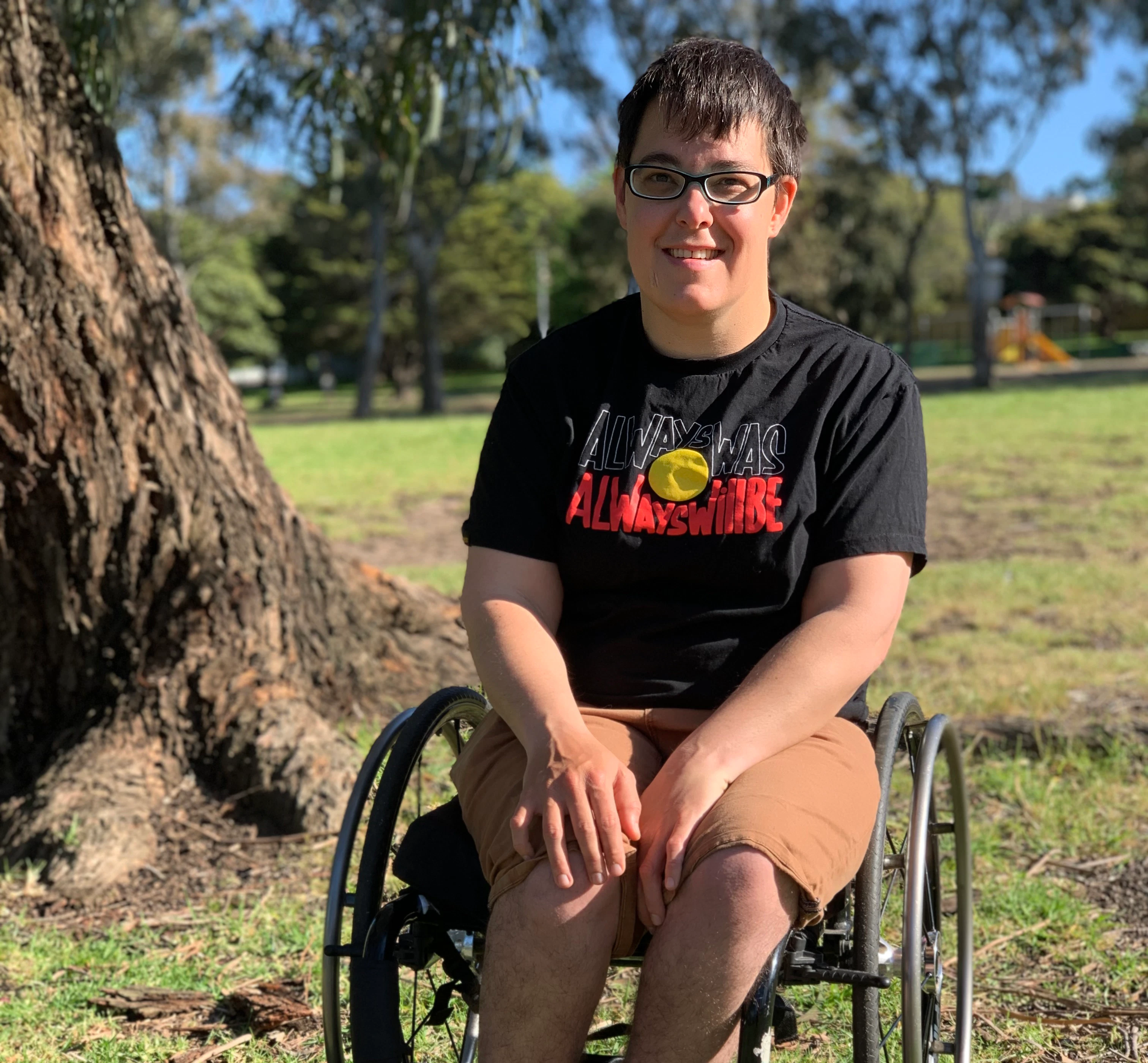
As a person with disabilities, I fear this time of ‘COVID normal’, or ‘living with COVID’, that we have now entered. What does ‘living with COVID’ mean for people with disabilities who, even when vaccinated, can be at greater risk of serious illness or even death? Who is deemed as expendable in our scramble to set a scene of normality?
As someone who has a non-normative body, existing outside the confines of ‘normal’ is something I am used to. I am always questioning: What do we mean by ‘normal’, who fits within its definition and who does not, and what being so-called ‘normal’ or non-disabled mean personally, socially and politically?
We are entering back out into a community with around 2,000 recorded cases of COVID on any given day. This is a huge number. Last year, when cases were at around 700 a day, I wasn’t leaving my front door. I was quarantining all the shopping which was home delivered before I’d touch it. Now we are being told by our politicians to be more concerned about the daily numbers of hospitalisations and deaths, and not the number of daily positive covid cases.
When we are so used to scanning the daily positive COVID numbers as a measure of safety, this recalibrating of what we should be concerned by or monitoring is hard to enact. We also know that hospitalisation and death are more likely for people with pre-existing conditions, disabilities or who are older folks. Watching those numbers rise is very concerning - and doesn’t make me feel safe.
I also worry for my child who is currently too young to be vaccinated. With such large numbers of COVID cases circulating in the community, she is almost certainly going to catch the virus before she is old enough to be eligible for a vaccine. I worry for her and for others who may suffer from the long-term impacts of COVID, many of which we yet to discover.
But even with these concerns, I feel I need to send her to kindergarten and take her to playgrounds so she can be with her friends and enjoy her childhood not cloaked by fear or restrictions - either placed on her by my concerns and attempts to protect her, or restrictions the government places on us in an attempt to slow the spread.
It feels hard, as a parent, to balance this want for freedom and independence with the unknown impacts of if (when) she gets the virus.
Alongside my worries and fears, however, runs excitement and joy.
Joy at being able to go over to my partner’s mothers place for a family roast this Sunday evening for the first time in months. Happiness at being able to plan a sit-down brunch inside a café for a dear friends’ birthday in a couple of weeks. Excitement at maybe - just maybe - being able to fly back to the Northern Rivers of NSW to celebrate my mum’s birthday in November, and take my child back to my hometown for the first time in over two years.
I’m excited to spend some time with my partner, too, without our child in tow, and hesitant but happy to relearn how to socialise and work again in the same physical space as people. What I’m looking forward to most is being able to plan things - catch-ups with friends, date nights with my partner, holidays - without the looming threat of a possible lockdown.
It feels strange and wonderful to be able to imagine such things again, and believe they are indeed going to happen.
Like many of us, I’m feeling hope, trepidation, fear and joy all at once.

Jax Jacki Brown
Jax Jacki Brown (they/them) is a disability and LGBTIQA+ rights activist, writer, and educator. Jax has written for Junkee, Daily Life, The Feminist Observer, Writers Victoria, ABC’s Ramp Up, Hot Chicks with Big Brains and Archer Magazine. Jax is published in the following anthologies: Queer Disability Anthology (2015), QueerStories: Reflections on Lives Well Lived from Some of Australia's Finest LGBTIQA+ Writers (2018), Kindred: 12 Queer #LoveOzYA Stories (2019), Growing up Queer in Australia (2019) and the forthcoming We’ve Got This: Stories by Disabled Parents (2022). Jax is interested in how we can build resilience, pride and community for people with disabilities.