
As Australians prepare to cast their votes in yet another federal election, I’m preparing myself for the predictable and ultimately fruitless debate: which party will appoint a person with disability as Disability Minister? This narrow conversation reflects our collectively limited imagination about disability representation in politics.
Do you know what I want more than a disabled Disability Minister? A disabled Treasurer who understands the economic realities of disability or a disabled housing minister who grasps the critical shortage of accessible housing, and disability representatives throughout the parliamentary system.
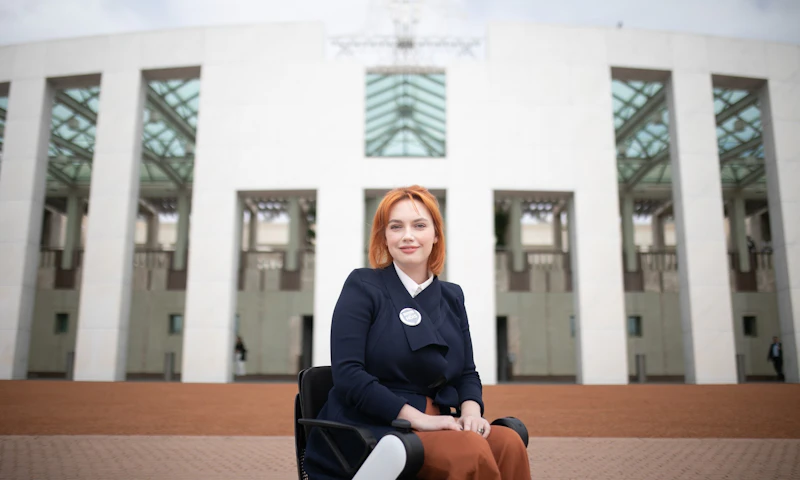
Image source: Supplied.
Raising the bar of expectations
But raising our collective bar of low political expectations raises the question we should be asking: why don't all our political parties preselect more disabled candidates for winnable seats, particularly in the House of Representatives?
The answer is simple yet disappointing. Political parties respond to voter demands, and voters have not yet demanded to see disabled candidates on their ballots with the same vigour that they now expect gender diversity. In recent years, it has become politically untenable for parties to field only male candidates. Voters have made it clear that they expect greater gender equality, and parties have responded accordingly, albeit imperfectly.
No similar pressure exists for disability representation. Australia has approximately 5.5 million people with disability – nearly 22% of the population – yet this substantial demographic remains virtually invisible on our campaign trails and as a result in our parliamentary chambers. This absence is not merely a representational issue; it directly impacts policy outcomes.
Consider the persistent crisis of accessible housing. Despite years of advocacy, less than 5% of Australia's housing stock meets basic accessibility standards. That's right – in a country obsessed with real estate and home renovation shows, we've somehow missed the revolutionary concept of "homes people can actually enter.”
A person with disability in a position of genuine power – not merely consulted as an afterthought – would have the opportunity to prioritise accessible housing with the urgency it deserves. Instead, we continue with incremental, insufficient progress while thousands of Australians remain inappropriately housed or institutionalised.
A need remove barriers on the campaign trail
Political participation for people with disability faces formidable barriers. Campaign trails are physically demanding and often inaccessible. Party preselection processes frequently favour those with traditional career pathways uninterrupted by discrimination or health concerns. Financial barriers loom large, as people with disability are more likely to experience poverty and have fewer resources to mount effective campaigns.
But these barriers are not insurmountable. They persist because we have not collectively decided they must be overcome.
A call for change
Imagine an Australia where disability representation is expected, not exceptional. Where a candidate's wheelchair or interpreter is as unremarkable as their suit or yard sign. Where lived experience of disability is recognised as valuable expertise rather than a liability to be overcome.
To achieve this vision, voters must demand change. We must question parties about their commitment to disability representation with the same persistence we now question them about gender diversity. We must reject the notion that a single ministerial appointment fulfils the obligation for inclusion.
The debate about who will be the next Disability Minister distracts from the more fundamental issue: we need people with disability throughout our political system, bringing their insights to every portfolio from defence to education, from treasury to infrastructure.
Political parties will preselect more disabled candidates when there is electoral advantage in doing so – when voters demand to see us represented on their ballots. Until then, we will continue with symbolic gestures while the substantive reforms needed to achieve genuine equality remain out of reach.
This election, let's elevate our expectations. Next election, let’s demand representation that reflects the full diversity of Australian society. And let's recognise that disability representation isn't just about fairness – it's about better governance for all Australians.
Curious about the accessible voting options on election day? Check out our article to learn more.

Elly Desmarchelier
Elly Desmarchelier is a disability rights campaigner.